Alternative UK home broadband network Trooli launches 5Gbps speeds
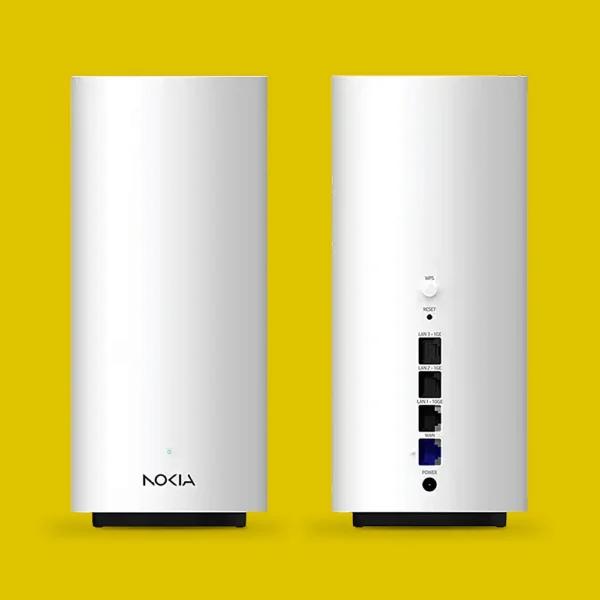
Alternative network operator and broadband ISP Trooli, which has so far deployed their full fibre (FTTP) network to cover 480,000 premises across parts of England and some of Scotland, has today announced a major speed boost with the launch of a new 5Gbps (5,000Mbps) symmetric speed package for consumers. The package is being supported by a new Wi-Fi 7 router.
Previously the fastest broadband package available via Trooli offered speeds of up to 2Gbps in areas they covered, but the new 5Gbps ULTRA residential package is clearly a big step up from that and will be available at £44.99 a month for residential customers on a 24-month minimum term. The ISP has also launched an equivalent business package, which is priced from £70.83 a month, excluding VAT.
The altnet’s infrastructure is currently found in various towns and large semi-rural villages across parts of Berkshire, Buckinghamshire, Cambridgeshire, Dorset, East Sussex, Hampshire, Kent, Norfolk, Suffolk, West Sussex and Wiltshire in England. Not to mention some bits of North Lanarkshire, South Lanarkshire and Fife in Scotland (formerly part of Axione UK’s network – here).
Advertisement
Suffice to say that the new package will be available to both new customers and as an upgrade for existing customers at eligible premises within the above footprint. Customers will also receive one of Nokia’s latest “next-generation” Beacon Wi-Fi 7 broadband routers (pictured).
Finally, Trooli has also launched Trooli Protect, which is their new online security service powered by F-Secure. Available for £3 per month, Trooli Protect helps safeguard customers’ devices, online activity and personal information against digital threats.
Lee Probert, Managing Director at Trooli, said:
“The way households use broadband has changed. Demand for speed and capacity is only going to increase; families may be streaming, gaming, working and making video calls across numerous devices at the same time.
Our new up to 5Gbps package combines our fastest symmetrical full fibre speeds with the latest Wi-Fi 7 technology. It gives high-usage households and businesses greater capacity today, while providing a more future-ready broadband experience as their connectivity needs continue to grow.
This is more than another increase in headline speed. It is a significant step forward in the broadband experience we can offer our customers, while continuing to deliver the reliability, service and value they expect from Trooli.”
Some other broadband ISPs and networks already offer multi-gigabit packages like this, although being able to fully harness such speeds at home can still be a challenge online due to various limitations with existing hardware, software and online services (Why Buying Gigabit Broadband Doesn’t Always Deliver). The multi-gigabit domain thus remains more of luxury, although at £44.99 per month it’s rapidly reaching mass market affordability.
Pushing the boundaries of modern technology is, also, part of what can make a provider exciting (marketing carries power) and as coverage matures then service performance / quality inevitably becomes the next battleground, alongside price. Technological evolution rarely waits for the slowest users to catch up and the capacity that new services like this can bring also helps to open up new possibilities for future services. This is why it’s important to build and offer the services we need for tomorrow, rather than just for today.
Advertisement






Mark is a professional technology writer, IT consultant and computer engineer from Dorset (England), he also founded ISPreview in 1999 and enjoys analysing the latest telecoms and broadband developments. Find me on X (Twitter), Mastodon, Facebook, BlueSky, Threads.net and Linkedin.













Advertisement
Leave a Reply
Privacy Notice: Please note that news comments are anonymous, which means that we do NOT require you to enter any real personal details to post a message and display names can be almost anything you like (provided they do not contain offensive language or impersonate a real person's legal name). By clicking to submit a post you agree to storing your entries for comment content, display name, IP and email in our database, for as long as the post remains live.
Only the submitted name and comment will be displayed in public, while the rest will be kept private (we will never share this outside of ISPreview, regardless of whether the data is real or fake). This comment system uses submitted IP, email and website address data to spot abuse and spammers. All data is transferred via an encrypted (https secure) session.

















Very keen prices, especially the business package.
Will they be making these speeds available to their wholesale customers (like Zen)?
I presume most packages are capped at 900mbps due to the ONT being only gigabit, with the influx of 2.5gbps switching kit coming out of China now I can see ISPs blooding to offer 2.5gbps and 5gbps packages to customers.
More bandwidth people DON’T need at more cost most households can ill afford. Splitting this between a larger community leaving space would be a task worth doing, to exact value for money out such speeds.
I personally would be on a 40mbps package if it meant paying less PM for it, I prioritise high reliability and low latency over high bandwidth.
“More bandwidth people DON’T need at more cost most households can ill afford. ”
Firstly, nobody is forcing people to buy the packages. Secondly, just because YOU don’t have a need does not mean others won’t. CCTV/Servers/Multiple people online gaming or streaming 4K/Cloud backups etc etc.
Fast cars still sell even though the maximum speed limit is 70mph.
And anothter thing, the ONT would be swapped out for a model that could cope with the speed tier, you must have heard of 2.5gbps or 10gnps WAN ports right? They even supply a router, but most people ordering that kind of speed tier would have their own kit and know about limitations of 1gig ports.
Altnets typically install a 10GbE capable ONT as standard, it’s just they don’t offer the higher speeds. All they need to do is send out a new router and change the speed profile.
Actually 900mb is now just average. Any xbox owner will tell you 40mb is far too slow as it would take hours upon hours to download games and do updates. I’d say 2.5git hits the sweet spot to cover most scenarios (i said most some need nigher). Just because you need just 40mbit doesnt mean that applies to the rest of us.
@FANNY ADAMS Year on year my choice of slower packages for cheap prices has been disppearing.
So when you say nobody is forcing me, in a sense with each speed upgrade, ISPs are taking away my options of cheaper packages. I would happily pay £15PM for a 40mbps fixed line connection.
I also speak out of frustration as I see single person households buying the fastest packages when they don’t even use the bandwidth they’re paying for.
Sorry for the spelling mistakes 2.5gbit and higher lol
Pricing doesn’t work how you think it does, the current lowest package offered by Trooli is likely the lowest they can sell for – there isn’t any saving they can make by slowing a 150Mbps service down to 40Mbps, in the same way that offering faster services on current infrastructure doesn’t really cost them any extra.
UK consumers are going to have to snap out of this idea that their internet should be under £30 a month – that’s what ADSL cost in 2002 on top of line rental. Services are too cheap at the moment to sustain the dream people have of multi-gig symmetric services from competing infrastructure builders.
Please correct typo from blooding to flooding.
Pretty decent price for 5Gbps symmetrical.
I expect this will push other Altnets in those areas to increase their speeds too.
Sadly, another ISP using decades old technology PPPoE. Even the fastest Arm or even x64 processor will be NOT be able to handle 5 Gbps without PPPoE offloading which restricts you to using the router they give you.
99.5% of routers do not have PPPoE offloading, and the very few that do, the moment you want to enable features like QoS, speed limits, particular firewall rules, you will disable the offloading and you will be lucky if you see over 1.5 Gbps.
I have 2300/2300 and I use a TP-LINK ER8411, and even through it’s enterprise, over £500 I can’t enable IDS or QoS due to PPPoE.
They use IPoE
Blame TP-Link, Ubiquiti etc. for shipping poorly designed hardware that processes PPP on the CPU. Ubiquiti clearly have the ability to use SoCs that offload it (UCG Fibre), if they aren’t doing it across the range then it’s a product decision they’ve made.
Jonny. The blame is with the ISPs not the hardware companies, PPPoE is dated technology that is no longer suitable with the speeds we have today. The issue isn’t isn’t just as simple as Ubiquiti or TP-Link adding PPPoE offloading engines, because the moment you want to do any sort of packet inspection, priority of packets, QoS, the offloading fails, because now the CPU has to inspect the packets, PPPoE for the most part is single thread, and multi threading attempts for the most part have failed, I’ve used processors almost 4700 in single thread passmarks unable to do IDS with PPPoE above 7 Gbps without the processor working extremely hard for something that is fairly simple using DCHP. I had the BPI R4 Pro which uses multiple offloading engines so you can have WAN offload, and LAN processing the packets with the bottleneck of PPPoE but the software was so much in development, I gave up.
PPPoE is just old, and there is no need to be wrapping packets the way it does. It’s because these ISPs are hell bent on upgrading their internal infrastructure.
I think you’ll find that quality equipment such as that provided by ISPs can handle multi gig PPPoE just fine.
“Home labbers” with grossly power inefficient x86 servers running OpenWRT/pfSense/OPNsense, or even worse – Ubiquiti equipment – might not be able to achieve the same performance figures. But that’s not a reason to dismiss PPPoE as “decades old technology”. There are good reasons to continue to use it.
‘But that’s not a reason to dismiss PPPoE as “decades old technology”. There are good reasons to continue to use it.’
What are they, Ivor?
The age of a protocol has no bearing on its suitability. ISPs using IPoE haven’t solved for peer-to-peer communication between subscribers in the same subnet, and moving house between network areas and/or underlying carriers needs a change in address, or a route table with loads of routes in for individual addresses. I get that it has performance impacts on non-optimised hardware but if the ISP can give you a free router that outperforms a £700 firewall then that’s the fault of the firewall vendor – PPPoE can’t simultaneously be old and something that these manufacturers don’t understand how to deal with. There are projects that will turn cheap OpenWrt devices into PPPoE bridges and pass the WAN IP out the other side as a DHCP offer if whatever you have connected downstream insists on single-threading it.
The ‘fix’ probably looks like IPv6-only networks with the v4 delivered as an overlay because then you can route full prefixes and it doesn’t matter what is on the WAN side of the CPE.
I think a lot of people have missed my point. When you start hitting 2.5 Gbps, 5 Gbps, 7.5 Gbps etc, even with PPPoE offloading the moment you start enabling QoS for VoIP, and other priority services, PPPoE offloading is disabled, with arm you won’t get above 1.5 Gbps and even with AMD 9950x3D or Intel 270K will struggle around the 5 to 7 Gbps mark, you will not be be able to get above without reaching 5.5 GHz to 6Ghz on new processors. I’ve tried it. PPPoE offloading is great until you introduce the features you expect all routers to provide, then you are screwed. DCHP remains the best protocol with barely any bottleneck. Why some of you would be advocating for a technology that literary consumes 100% of a core because it’s simply wrapping the MTU is beyond me. There is only two boards on the market, one is the BPI Pro R4 which offers multiple offloading engines which means you can split the wan and lan however the support for this board is shocking.
If you’re planning on accepting the router and do not care about QoS, Buffer Bloat and VLANS, sure, then go with their router, and enjoy 7 Gbps netflix lol
Or, if you’re a power user like me and want the 7 Gbps for a wide range of services, then PPPOE and even IPOE or anything that wrappers the packets, is something you should care about.
Jonny, I suppose you’re right regarding the lowest tier being the only profitable one they can provide. But that is what they want you to believe as opposed to what might actually be the case.
I’ve moved to 5G broadband and away from fixed line now, the cost and lack of 24M contracts has been excellent, I’ve been able to move from one SIM deal to another at the drop of a hat.
Understandably, this isn’t going to work for everyone but I think for those of us looking to save money and who have low speed requirements, 5G BB is becoming a great alternative.
This is Trooli renowned for poor support everyone from support and sales is in south Africa best of luck if you have any issues Best to Avoid there new sales leader Lee is just awful worked with him before has no idea how to manage a company