Freshwave claims UK missing out on £103bn boost from better indoor Mobile signals
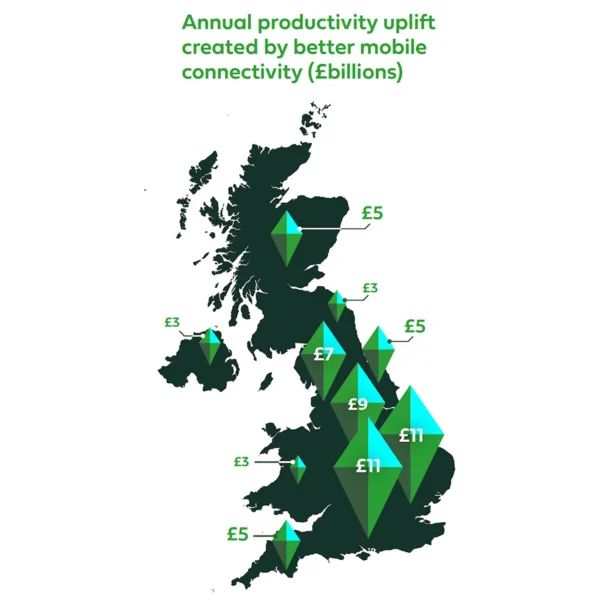
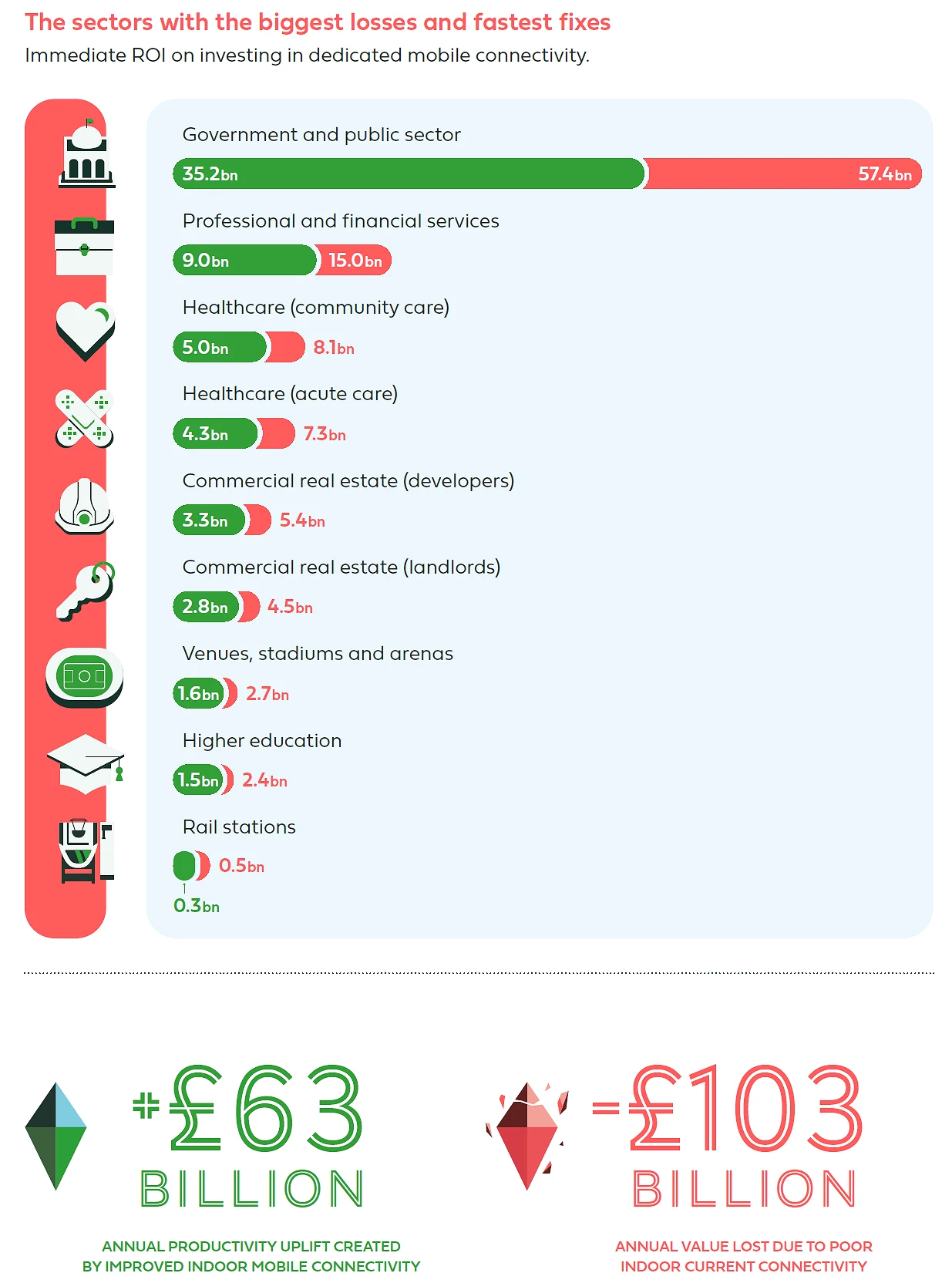
Wireless infrastructure provider Freshwave, which naturally has its own vested interests, have today published their 2026 Mobile Connectivity ROI Index that claims poor indoor mobile network (4G, 5G etc.) connectivity could be damaging the UK economy to the tune of £103bn a year.
The index itself partly represents the outcome from an annual survey of C-suite and IT decision-makers from multiple industries across the UK’s private and public sectors, which seeks to find out what they believe they stand to gain from improved indoor mobile connectivity. Apparently, the respondents believe that coverage “not-spots” caused by poor indoor mobile connectivity could be damaging the UK economy.
Advertisement
Leaders in 89% of organisations reported daily indoor connectivity problems, and more than 40% believe a 1-hour outage could cause major disruption or stop operations altogether. The problem originates in the buildings themselves, where energy-efficient glazing and insulation keep heating bills down but also restrict mobile signals, often leaving staff without reliable service indoors.
Across the UK, around 23% of organisational leaders rate their indoor 4G or 5G coverage as average or poor. In London the figure is 19%, but it rises to 27% across the North of England, 28% in the Midlands and 34% across Scotland and Wales. The widest regional gaps are in Yorkshire and the Humber at 39% and the East Midlands at 37%.
The survey indicates that the problem is not spread evenly, positioning poor indoor mobile coverage as part of the regional infrastructure gap that the Government is looking to close through increased devolution and other changes. But most organisations are planning to act and expect their indoor connectivity budgets to grow over the next 2 years.
Across most industries, respondents then pointed to real-time, continuous data as the “biggest opportunity to drive efficiency gains and accelerate digital transformation“. Examples of the real-time capabilities highlighted by respondents include enhanced passenger flow monitoring at rail stations, connected devices in community care, intelligent surveillance in commercial real estate and tracking of progress on construction sites.
Advertisement
In addition, AI is also becoming increasingly pivotal to these applications which all depend upon continuous, uninterrupted signal to work effectively. One London COO described “proper integration of AI into automation and analytical processes” as a challenge they’re currently facing due to poor indoor connectivity, while a London CIO cited “security and limited scalability for future growth” as concerns.
Simon Frumkin, CEO of Freshwave, said:
“AI presents one of the greatest opportunities we have to grow the economy, and the efficiencies it promises rest on the connectivity underpinning many of its functions. Treating indoor mobile coverage as essential infrastructure is what turns that opportunity into results.
We hope the new AI minister will look to improved indoor coverage as a priority for boosting the economy, particularly across a public sector estate that could stand to gain £39 billion a year.
Mobile operators invest heavily, but they have to be selective about where they go indoors, which leaves most of that estate with mobile “not-spots” inside buildings. The right indoor mobile infrastructure solution exists today, it extends the operators’ networks where it’s needed, and the payback is immediate.”
However, we always advise taking studies like this with a big pinch of salt, not least because there are vested interests fuelling it and they tend to make a lot of assumptions about service coverage, performance and economic benefits, which may or may not accurately reflect reality. For example, while poor indoor mobile signals can cause issues, it is worth noting that fixed phone lines, VoIP and Wi-Fi can mitigate a lot of that.
On the other hand, there are clearly positives to be had and few people will complain about the arrival of indoor signal improvements, regardless of whether they can be directly proven to result in significant economic or other positive impacts.






Mark is a professional technology writer, IT consultant and computer engineer from Dorset (England), he also founded ISPreview in 1999 and enjoys analysing the latest telecoms and broadband developments. Find me on X (Twitter), Mastodon, Facebook, BlueSky, Threads.net and Linkedin.









« London Internet Exchange Passes 1Tbps of Traffic on LON2 Network
Advertisement
Leave a Reply
Privacy Notice: Please note that news comments are anonymous, which means that we do NOT require you to enter any real personal details to post a message and display names can be almost anything you like (provided they do not contain offensive language or impersonate a real person's legal name). By clicking to submit a post you agree to storing your entries for comment content, display name, IP and email in our database, for as long as the post remains live.
Only the submitted name and comment will be displayed in public, while the rest will be kept private (we will never share this outside of ISPreview, regardless of whether the data is real or fake). This comment system uses submitted IP, email and website address data to spot abuse and spammers. All data is transferred via an encrypted (https secure) session.

















If there is no mobile coverage indoors then use wifi?
What a steaming pile.
The worry aught to be of anyone that believes this (words fail me, and of anyone taken in by it.
Maybe they shoudl suggest going back to landlines, let alone what they plug their computers into.
What a WoR.