Confusion as Trooli switch off FTTC broadband network in Kent UK village

Confusion appears to have gripped residents in the rural Kent (England) village of Hunton after Trooli, an alternative network operator and broadband ISP, informed local customers that they had been unable to extend their new full fibre (FTTP) network into the area, and now planned to switch-off their existing copper line infrastructure too.
The original article on this situation, which has been covered by the BBC News, is lacking some necessary context for all this. The legacy “copper” network being talked about here actually reflects a Sub-Loop Unbundled (SLU) service using Fibre-to-the-Cabinet (FTTC) technology, which was built by Call Flow Solutions (better known today as Trooli) some years ago. Trooli itself has never built an FTTC network and only does FTTP.
Regular readers might recall that we wrote about a similar situation in two other Kent villages, Stansted and parts of Fairseat, last year that use the same technology from Call Flow/Trooli (here). The move is partly related to the fact that SLU will also be impacted by Openreach and BT’s ongoing efforts to retire their legacy copper-based phone (PSTN) and line rental (WLR) services by the end of January 2027.
Advertisement
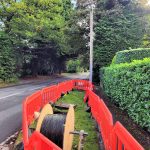
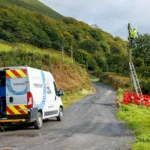
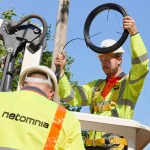
According to the BBC’s piece, work began in August in Hunton to replace the “existing copper broadband infrastructure” with fibre optic cables, but residents said it stopped after a few days and Trooli later informed them that they’d needed to find a new ISP. The same article also states that Openreach’s own “copper connections would be withdrawn” too, although this is incorrect as those cables will continue to exist (only the service that goes over the top is changing).
A spokesperson for Trooli said:
“Unfortunately, there are a few locations where, because of excessive costs, we have had to conclude [deploying FTTP] is simply not possible.”
Just to be clear, this doesn’t impact Openreach’s own FTTC (VDSL2) network because the operator has invested to adapt it via SOGEA technologies for the modern digital age, which go over the same copper lines as they already have in the ground around Hunton. However, Trooli’s focus today is on FTTP and they only have a tiny number of users on their legacy SLU FTTC network, thus adapting that in the same way as Openreach did with SOGEA clearly makes little financial sense.
An Openreach spokesperson said:
“Openreach has no plans to switch off services supporting broadband or phone lines in the village this October.
Decisions about Trooli’s services or its fibre rollout in Hunton are for the company and are separate from the closure of the analogue phone network.
Anyone concerned about their service should speak to their communications provider – the company they pay their bill to – about the options available.”
Despite this, it’s clear from the original article that locals have been left confused, probably due to all the talk of “copper” retirement, which means different things depending on the network and products you’re talking about. Trooli may be choosing to withdraw their service from the community, but Openreach’s copper lines remain via SOGEA (FTTC) and possibly SOTAP (ADSL) solutions in the area. Still, it’s fair to say that Openreach’s lines may not be quite as fast as Trooli’s old FTTC network, which supported speeds of up to 100Mbps.
So alternative fixed line solutions do at least exist via Openreach for local residents, which is before we even consider other options like 4G/5G based mobile broadband or Starlink’s LEO satellite service. Sadly Openreach don’t currently appear to have any plans to deploy FTTP across the community (so says their checker), although that may change in the future as their contract under the government’s £5bn Project Gigabit scheme is still expanding.
Advertisement
As for SLU FTTC, it was always a bit of a middle-of-the-road solution and one that never really took off at scale, although a number of providers like Call Flow did deploy some small networks using the technology. Such networks were typically focused on areas that had no plans for upgrades via any other solution, although these days many of those communities do have other options.



Mark is a professional technology writer, IT consultant and computer engineer from Dorset (England), he also founded ISPreview in 1999 and enjoys analysing the latest telecoms and broadband developments. Find me on X (Twitter), Mastodon, Facebook, BlueSky, Threads.net and Linkedin.






« Amazon Leo speed test reaches 400Mbps+ on Pro satellite broadband dish
Advertisement
Leave a Reply
Privacy Notice: Please note that news comments are anonymous, which means that we do NOT require you to enter any real personal details to post a message and display names can be almost anything you like (provided they do not contain offensive language or impersonate a real person's legal name). By clicking to submit a post you agree to storing your entries for comment content, display name, IP and email in our database, for as long as the post remains live.
Only the submitted name and comment will be displayed in public, while the rest will be kept private (we will never share this outside of ISPreview, regardless of whether the data is real or fake). This comment system uses submitted IP, email and website address data to spot abuse and spammers. All data is transferred via an encrypted (https secure) session.















There are no doubt many properties still served by SLU out there as companies have come and gone over the years. I think there will be some surprises next year when some companies have forgotten they are responsible for customers attached to this kind of infrastructure!
I think it is very regrettable that Trooli have also decided that because it’s too expensive they will simply wash their hands of it all, though.
Commercial decision. They are under no legal obligation to continue to provide service. If they should or not now that is another question…
Little different from the FWA suppliers with slow, EOL kit. It’s unaffordable to replace it (at least with pricing that the users are willing and able to pay….)
So service termination it has to be.
Are there any other SLU users left once Trooli give it up? Digital Region was the other big one but that’s long gone.
Can’t really force a company to provide a service that they no longer wish to provide (unless they’re called “BT Group”, apparently) but I suppose they could have had a more orderly shutdown, perhaps finding an Openreach ISP who would be willing to do a special offer to customers who wish to migrate etc.
While SLU is a niche product, I’d image an order for SoGEA could easily be placed by an Openreach ISP as the copper pair should still have an ALID. Could be wrong, but if right then it’s a switch order via OTS with no engineer visit to the premises (but maybe at the exchange?) plus a new router sent to site.
Trooli, muddli, deepli.
B4RK has already connected a handful of customers in Hunton and surrounding areas with high-gain 5G broadband.
Disappointing to see Trooli washing their hands and running away from their customers.