Amazon Leo speed test reaches 400Mbps+ on Pro satellite broadband dish
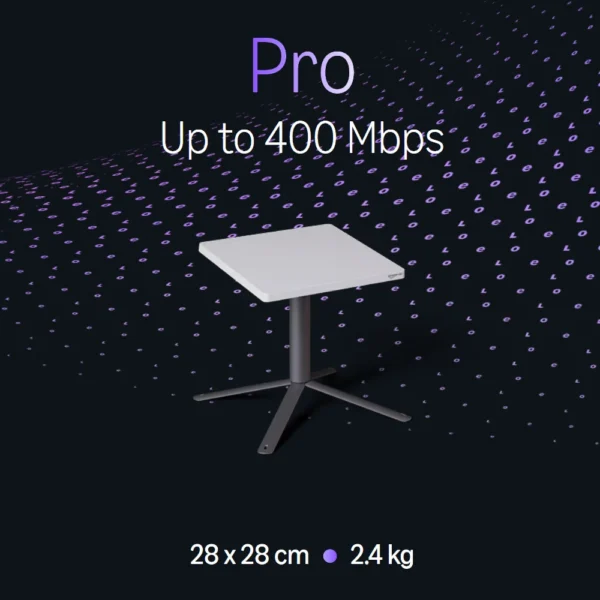
The Amazon Leo service, which busy deploying thousands of ultrafast broadband satellites into Low Earth Orbit (LEO) for the UK and globally to compete with Starlink, has successfully tested their Leo Pro dish (terminal) to slightly beyond its top rated download speed of 400Mbps (Megabits per second) in a beta test of the service.
The service, which has already launched 392 Kuiper satellites into orbit and is presently in its commercial beta phase (they need at least 500 for basic global coverage), is currently expected to start launching properly by around the end of 2026 to consumers, businesses and the public sector. A total of 1,000 satellites have so far already been manufactured for the service and more will soon be launched into orbit.
The network currently has approval to deploy and operate their own initial constellation of 3,236 LEO broadband satellites (altitudes of 590km to 630km), as well as 5,105 satellites for a 5G mobile service (here). As we’ve previously reported, this will be supported by three different terminals (dishes) to reflect different use cases – Nano (100Mbps DL / 20Mbps UP), Pro (400Mbps / 100Mbps) and Ultra (1000Mbps / 400Mbps).
Advertisement
Yesterday Amazon revealed that their Pro dish, which features a single phased array antenna (Shared (Tx/Rx) Aperture), had been successfully tested by the U.S. Army’s Combat Capabilities Development Command (DEVCOM) C5ISR Center at their Aberdeen Proving Ground in Maryland. “The demonstration used a laptop to send and receive data as newly deployed Leo satellites passed overhead, hitting peak download speeds exceeding 400 Mbps,” confirmed the announcement. Sadly there were no details on upload speeds or latency times.
The development isn’t particularly surprising as Amazon’s network isn’t currently under any significant network load and so they can easily push their ground hardware to test its designed capabilities (only a small number of enterprise and public sector users are currently testing it). But it’s good to know that the hardware itself can deliver what is being promised, even though we don’t yet know what prices and packages consumers can expect.






Mark is a professional technology writer, IT consultant and computer engineer from Dorset (England), he also founded ISPreview in 1999 and enjoys analysing the latest telecoms and broadband developments. Find me on X (Twitter), Mastodon, Facebook, BlueSky, Threads.net and Linkedin.













« Sky UK’s NOW TV introduces new membership options for Sky Sports
Advertisement
Leave a Reply
Privacy Notice: Please note that news comments are anonymous, which means that we do NOT require you to enter any real personal details to post a message and display names can be almost anything you like (provided they do not contain offensive language or impersonate a real person's legal name). By clicking to submit a post you agree to storing your entries for comment content, display name, IP and email in our database, for as long as the post remains live.
Only the submitted name and comment will be displayed in public, while the rest will be kept private (we will never share this outside of ISPreview, regardless of whether the data is real or fake). This comment system uses submitted IP, email and website address data to spot abuse and spammers. All data is transferred via an encrypted (https secure) session.
















The dishes are getting smaller and lighter. I mean the litle on is 1KG. I wonder how long before these come packed in phones as standard.