Cross party MPs tell UK Gov to consider Household Levy to replace BBC TV Licence
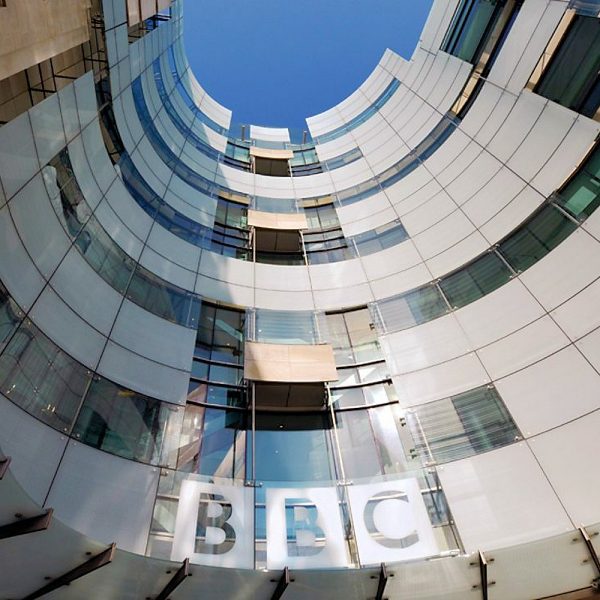
A new report from the cross-party Digital, Culture, Media and Sport Committee has warned that the “current TV licence fee is outdated and no longer fit for purpose” and that “all” of the alternatives have drawbacks. The report instead proposes a Household Levy that would no longer be linked to a TV set, could be cheaper than the current licence and would cover other services (broadband?).
The issue of the BBC TV Licence fee has always been a bit of a political hot potato, which recently entered the headlines again after a prior report from the Social Market Foundation (SMF) think-tank controversially proposed that the government could replace it with an £11 (monthly) “Home Internet Levy” on existing consumer broadband bills.
The latest development is that the DCMS Select Committee has just published their own perspective on the review of the BBC’s Royal Charter, which is due to set out how the broadcaster will be governed, regulated and funded from 2028 onwards. The committee’s report covers a number of areas, which among other things highlights some of the alternative options that have been considered.
Advertisement
“Options suggested were as an addition to the Council Tax, which, we were told, was “probably the least popular tax that has been introduced” and would be susceptible to differential collection rates in different councils, though there was more optimism about an additional amount on the broadband or utility bill,” said the report.
However, the report also explored what happened when Switzerland considered moving to a “household levy” instead, which was said to have created a public debate that caused “controversy where perhaps there wasn’t any before.” No surprise there.
Options for funding the BBC (DCMS Committee Report)
The current TV licence fee is outdated and no longer fit for purpose: it does not reflect the way people watch television now, and the amount of income it generates is declining year on year. If the government does not act now, and the pattern of non-payment of the licence fee continues, there will not be a BBC as we know it by the end of the next Charter period.
The best next step is for the government to reform the licence fee, so it reflects modern media consumption and is no longer linked to a television set. This would be an easier sell to licence fee payers if expanding the base is paired with a drop in the individual cost. There are strong arguments for a household levy, but it would be a difficult model to introduce in the short term given the significant implementation challenges. Nevertheless, the government should not have ruled out this option entirely.
We recommend that in the White Paper on the BBC Charter review the government sets out steps to broaden the scope of the licence fee in time for the start of the new Royal Charter in January 2028. At a minimum, the reformed fee should no longer be linked to a particular device or activity.
The intention of broadening the scope of the licence fee should be to capture a greater number of households, which in turn should lead to an increase in revenue. This should be done on the condition that the cost of the individual licence fee is decreased, as long as doing so does not reduce the sustainability of the BBC’s income and ability to fulfil its public purposes.
We urge the government to keep an open mind on a household levy as a potential future model for funding the BBC.
As above, the report continues on to highlight how “all of the other funding options have drawbacks“. For example, general taxation would risk the BBC’s independence. A levy on streaming services would
be unlikely to raise sufficient revenue and “could be counterproductive“. Advertising would also, it said, incentivise the BBC to focus more on commissioning commercial programmes and less on non-commercially viable content that is nevertheless valuable, while disrupting the business models of commercial public service broadcasters and radio.
The report includes an entire section on the proposed Household Levy idea (page 13 onwards), which makes the point that it is the most common alternative adopted in European countries that had moved away from a licence fee model. But the UK government previously appeared to rule out this option when it said they were “not considering replacing” the licence fee with “a new tax on households”.
Advertisement
Sadly, the committee doesn’t attempt to set out how this would actually work or what it might cover, instead noting that one of the biggest “challenges” from such a levy stem from finding a suitable collection mechanism. As above, there’s a clear suggestion toward the idea of applying it via utility bills (e.g. broadband).
However, much as our previous article on the £11 broadband levy idea revealed, applying it to internet bills would cause plenty of anger among the electorate and wider industry. We don’t wish to rehash our previous article, but, if applied via broadband, the idea would also raise technical questions over what kind of connections would be applicable (i.e. only fixed lines or also mobile, and what about Starlink?) and how ISPs would pay the charge, as well as who is going to cover the huge implementation costs (collection, enforcement etc.).
Broadband providers are commercial companies, not government agencies, and there’s a wider risk of discouraging fixed broadband adoption at a time when network operators are desperately trying to grow take-up. Some homes and small businesses on consumer-grade lines can also have multiple broadband connections, so would they end up having to pay multiple times? It’s unclear.
The ISPA also made the point that broadband providers, which would see no benefit from such a levy themselves, are “already under significant pressure to contribute toward easing the cost of living for consumers, including by signing the government’s Telecoms Consumer Charter, whilst also continuing to invest over £40bn in meeting the government’s target for nationwide gigabit-capable broadband.” One sure way to discourage investors is to force the industry to stomach a new tax.
Advertisement
As the report says right at the start, all of the alternative funding options have drawbacks, so whatever the government decides is likely to prove problematic and contentious. Any proposal will also need to be extremely well thought out and detailed well in advance of implementation, which historically has not always been an area where politicians excelled.






Mark is a professional technology writer, IT consultant and computer engineer from Dorset (England), he also founded ISPreview in 1999 and enjoys analysing the latest telecoms and broadband developments. Find me on X (Twitter), Mastodon, Facebook, BlueSky, Threads.net and Linkedin.










« Vodafone UK’s new TV service goes live for broadband and mobile users
Advertisement
Leave a Reply
Privacy Notice: Please note that news comments are anonymous, which means that we do NOT require you to enter any real personal details to post a message and display names can be almost anything you like (provided they do not contain offensive language or impersonate a real person's legal name). By clicking to submit a post you agree to storing your entries for comment content, display name, IP and email in our database, for as long as the post remains live.
Only the submitted name and comment will be displayed in public, while the rest will be kept private (we will never share this outside of ISPreview, regardless of whether the data is real or fake). This comment system uses submitted IP, email and website address data to spot abuse and spammers. All data is transferred via an encrypted (https secure) session.

















TV License should be scrap and just put all BBC channels advert on it, just like ITV and CH4 and CH5 did. No more TV bills.
Then I’ll stop watching it!
The BBC isn’t what it was as it’s dumbed down it’s content. However, it’s still better than the others.
The licence funds it’s radio, which is far superior to anything else available.
Adverts. OK. BBC exists but suddenly all the commercial rivals are wiped out as advertising would go to the BBC. Great plan /not.
It’s interesting, I wonder if the comments on this post are going to be similar to the previous BBC-related one ISPR. Normally the average post here gets 10-30 comments, but the last BBC one got over 100. Many seemed to be written by barely literate people. One might think that perhaps (if one were paranoid or deeply pessimistic) that there’s a concerted campaign by a foreign actor to scour the web for posts about a globally significant, relatively balanced news provider and spam comments about how it should be dismantled.
I’m not saying that all anti-BBC comments are unauthentic, but I’d be surprised if none are.
Alas as AI improves it will become harder to distinguish the Internet Research Agency stuff from genuine stuff.
I wonder if Mark has done any analysis on where the IP addresses were that posted on the last article. (Assuming they hadn’t made some cursory attempt to mask their actual locations.)
@Richard, if there was a levy or a fixed system that we would all have to pay, can you tell me why those of us who don;t watch BBC should pay for your entertainment? Because that is what it would be.
I admit I listen to a couple of radio shows on Radio 4, but it is certainly not worth paying £180 for.
TV advertising is no longer the licence to print money it once was, it would further dilute the available revenue and certainly would be to the detriment of ITV, CH4 & CH5.
@DL why is it so hard to believe that for a lot of people the BBC is no longer relevant and we object to being forced to pay for it?
You get a lot of comments on topics like this because a) people don’t like being forced to pay for something that is not a public service and has no relevance in their lives, and b) some other people very strongly want everyone else to pay for their entertainment. It takes two to tango. If only a) were true then people would post their objections get no response and the thread would die.
Also £11 broadband levy idea revealed will be a big NO, NO, NO!
Why don’t people read around. This wasn’t the BBC. They were against it.
It was a government “think-tank” that suggested it to the Labour government.
The bbc does not need more funding, it needs to be abolished
It’s astonishing how people are drowning in all sorts of increased costs of living including record tax burden and all this thieving government can think about is what more can they tax
When I first saw the headline, I wondered if any of the 2 Johns on here would post and here you are.
I don’t want it abolished, it upholds a whole system of jobs with independents, is involved in global media standards and technology, pays significant tax from revenue from BBC Studios/UKTV/Other and prevents content disappearing from British to American. Reform the management of the corporation, absolutely.
Lower levels of personal taxation than any neighbouring country. That’s why our services and infrastructure are so poor.
Also want to keep it. People will genuinely miss it when it’s gone.
Its not just about telly.
The BBC does a lot of R&D which people forget. They largely wrote DVB-T2 and also HLG which other like Sky use for live UHD sport.
People have gotten far too comfortable with Tech Companies telling you what you should think and syloing you off into an echo chamber where everyone agrees with you.
The BBC upsets everyone and that’s simply because it’s impartial.
There’s literally nothing impartial, nor valuable for that matter, about the BBC
See the perfect example of “news” that they broke out last weekend about not having painted nails being “white supremacy”, or their “reporting” with the news anchor flipping off the audience, or their gotcha 5 year old level “interviewing” with the Elon Musk, Netanyahu and Andrew Tate interviews
End the whole thing I agree
Forgot to add their ruining of culture staples such as Dr Who and they punditry of complaining that the Royal Family is “too white”
@FANNY ADAMS, The BBC should be able to cope with what it has, if they can;t cope on the £3.5billion they get from the licence and from what they get from the commercial side then they need to do what others do and cut costs. If they still can’t cope, then so be it. They should not have the right to to say everyone should pay for it.
If people are dropping the licence, then maybe they should look at the reason why?
Ad47uk, for a commercial company you can just cut services. The BBC cannot as it has a Charter. Everything has to be ofcom/government approved. The BBC has cut opetationsl costs by closing lots of buildings, newer technology but you can’t get away from fact that streamers tied to big tech companies has pushed up production costs and electricity to run lots of electrical components like encoders and transmission chains to name just a couple. They had to absorb costs of world service, pensioner licenses for those who qualify, and several other things like digital switch off, S4C, initial funding of superfast broadband in 2015 whilst having flat line license thst equates to a reduction of 40%. The info plus a lot more is all in public domain.
@FANNY ADAMS , but the BBc are cutting services, there is talk now of Radio 3, which be be a stupid thing to do as there are a lot of people who like Classical. I use Classic Fm, just a shame they are not on FM anymore.
Cutting services requires Ofcom/Government agreement, especially for network established stations like Radio 3. The ones likely to be under threat are BBC Three, BBC Four (Though this does not cost much to run), Radio 4 Extra, BBC Scotland, possibly BBC Parliament, though the latter will raise protest by MPs. Local Radio will share a Breakfast show instead of 18 local ones. CBBC may merge with CBeebies onto one shared mux. I don’t know if all of this will happen, but this is my current thinking. I can’t see Radio 3 going and would be surprised.
As most people still pay their TV licence fee, this idea will be sadly very popular with the public – predictions of a backlash are wide of the mark. The majority will say “great, my £18 a month or whatever it is will be replaced by an £11 monthly charge”. Those of us who have internet but not TV will be the ones who lose out.
I don’t have an ideological objection to public broadcasting, but the BBC’s content isn’t really what I want. They’ve removed a lot of local and regional stuff, their news is quite tabloid in tone (so much true crime type stuff!) and their TV output is a lot of fairly unpleasant violent dramas that I don’t want to view. So I object to being asked to fund it via my internet connection, which I don’t use to watch British TV programming, or my council tax which is already a pretty regressive charge.
The BBC is poop no0w and have been for a few years, now and again they may come up with something that looks good, but it seems to full of people dancing around, something called Traitors, that looking at the description of it is certainly not what I would watch.
People say use Iplayer, to watch more, but more decent stuff should on Freeview.
Come on – “something called Traitors”? I don’t watch telly and I know what Traitors is! This is just performative.
Ad47uk, Traitors is a highly successful game show with drama. It’s well made, and was a new format for effectively a game show. It’s not my cup of tea, but it is successful as has been Strictly, Line Of Duty, Peaky Blinders, Ludwig, Amandaland and a host of other programmes. Top Gear is likely to be back soon too.
I just read the description of it and it is not something I would watch. I did see some info about it and it is not even a British thing, is it based on a Dutch show.
@ MissTuned, I don;t watch Tv, well linear TV as I don’t have a licence, I have heard about it Traitors,, as I said i had a look at what it was about.
Seems a like a load of poop, like a lot fo stuff on the BBc these days, sadly they try to compete with the commercial channels and that is the problem, end up getting the same sort of poop as the commercial channels.
That is one of the reason I refuse to pay for the BBc.
here we go again ,make sure we pay for a bloated BBC ,to pay for strictly which is full of no bodies ,commercial radio and tv is just as good ,make the BBC a streaming service they might even get more money in if its allowed world wide just make the iplayer pay per view,the BBC is not relevant any more its had more scandals than any other broadcaster, i resent paying £180 a year and even paying £11 a month on my broadband is even worse because it would not stop at £11
Here’s a great example. Why are the commas after the spaces? Poor old George (lower case G) W. It’s almost as if he’s not a real person.
Hi George, it seems you are struggling with your English and grammar so i have fixed that for you, in the meantime might i suggest this? https://www.bbc.co.uk/learningenglish/grammar
“Here we go again – make sure we pay for a bloated BBC, to pay for Strictly, which is full of nobodies. Commercial radio and TV are just as good. Make the BBC a streaming service; they might even get more money in if it’s allowed worldwide. Just make iPlayer pay-per-view. The BBC is not relevant any more; it’s had more scandals than any other broadcaster. I resent paying £180 a year, and paying £11 a month on my broadband would be even worse, because it would not stop at £11.”
Mr Dalek,
The letter ‘i’, should ‘I’, upper-case.
Hope that helps!
However they do it, they’re going to screw us, there should always been an option to opt out, I watch zero live tele, those already struggling will just struggle more, we already have one of highest prices of “necessary services” for just being able to have a roof over our heads. Those companies have yearly record breaking profits. It’s just another way to take more money, it’s not like we’re taxed on what we earn, save and then spend oh wait..
Couldn’t agree more
Allow BBC to operate commercially, adverts, paid streaming service – they have a massive back-catalogue they could use. If the BBC wants to survive, they have to become competitive.
The wider problem here, is the BBC and its funding methods is in a no-win situation.
Adding Adverts to programming will cause a conflict with the commercial sector, as there is so much ad-money to go around; remember that Ad-money comes out of peoples pockets from the goods and service which people buy as its reflected in the price of the goods.
Dissolving the BBC will also kill off considerable ecosystem, which supply and produce TV, Radio an other media. within the UK there are 2 or so million people employed in this sector; across the UK in various forms, from direct, indirect, supply chains etc. Imagine if 2 million were suddenly unemployed what implications would this have on the economy and also tax system in the short to medium-term.
So the choice is – either the BBC becomes a subscription based service or remains a publicly funded entity; but which ever way the service goes, the broadcaster needs to be smaller in size.
One extra thing. Subscription means chasing the most popular types of programming only and ditching anything that does not bring in 1000’s of viewers. Look at some, they make few programmes nowhere near as many as BBC, but all (mostly) drama to try and bring numbers in.
The problem for them, hence the price increases every few months, is a business model based around many subscribers binging on content for a month then cancelling before waiting for a super cheap special offer to join for another month. It’s not long before minimum term comes in like 12 or 18 months for streamers. You can’t have a succesful business model off monthly.
Whether it’s £18, £11 or just £1 the idea of a new tax when Burnham is making a point of reducing household bills just won’t fly.
A streamlined BBC may be a good thing. The BBC is good at some things, and fills some holes that other broadcasters don’t cover.
I suspect it will just get folded into general taxation. The Tories will make a fuss. And everyone will forget about it in a few years time.
You hit the nail on the head, this is the reason why they said they are not going to add it to streaming because of the cost of living crises, if they added it to anything else, that would be the same thing.
If they added it to broadband, I know some people who would drop broadband, myself included.
Does this mean I’ll pay £22 because I have two internet connections?
Preposterous. Needs to be commercialised, not taxed
@Gognizant:
“Commercialisation”: “He who pays the piper calls the tune”, and sometimes been a problem in Channel 4’s editorial choices (Channel 4 being the “other” public service broadcaster owned by public but with a commercial revenue source. Same problem with payment via general tax income that isn’t “hypothecated” to a specific less political revenue stream and stabilised for the life of the charter.
2 connections = £22 pounds? Means testing in action, I say; if one is for business use then it’s a business expense; if for a second home then you presumably also pay a very heavy council tax supplement as well.
Means testing? That’s got nothing to do with this?
How presumptuous of you. I have two connections for resiliency as there are two full time remote workers here, it’s a very cheap backup (giffgaff)
Fair point on independence, but my objection is more basic: I don’t accept that everyone should have to pay for the BBC whether they use it or not. Media consumption has moved on, and the committee’s answer is to widen the net so even more households pay. If the BBC is as valuable as its defenders say, let it prove that with a subscription model rather than a compulsory charge.
“[household levy] would be a difficult model to introduce in the short term given the significant implementation challenges”
Assessing an internet-linked fee is very simple to introduce. Just increase VAT rate on telecommunication services (fixed broadband, 4G/5G mobile–subscription/top ups, and Starlink; exempt voice only fixed lines). increase from 20% to 30%-35% should raise a similar amount to £11 fixed home levy, if mobile phone bills are in scope a 25% rate may be enough; especially if Pay TV/streaming service subs are in scope (with Amazon prime needing some sort of agreed % allocation of value)
Neatly has a means tested feature (social tarriffs and cheapest PAYG/SIM only deals pay less, second homes/roaming caravans pay more). Static caravans that get service via a shared connection in their park fees would probably not be included, ditto any internet access fees and phone charges in hotels.
Commercial entities can generally reclaim the VAT as “Input VAT” (and the minimum revenue for VAT regist
NOT everyone has a SMART /SPY phone, or wants one, but you think it’s ok for those with no internet access to fund the state propaganda machine?? No they should leave as is or put their crap behind a subscription paywall
Not watched BBC in years apart for university challenge and weather. If they claim to be running short of cash, then put in adverts.
Proof that you dont read other postings as the reason for adverts not working has been explained. Another poster who thinks only their agenda or thinking is accurate.
Ads not working because people are not watching is an argument for defunding the BBC not to steal more money from people
The proposal is what we’ve come to expect from political types. How to bring in more money, rather than why.
They need to have a good public discussion on what the BBC is for nowadays. Those who like it often talk about its “quality”. There is nothing quality about its news service any more. Watch the programme that’s supposedly the news at breakfast time – it is dumbed down consumer pap with a lot of sports to pad it out. We’re bombing fast down the motorway to even more global warfare, but you’ll not be subjected to any information about that.
I support public broadcasting, where that is solid journalism. The old idea of bias-free is good, they need to get back to that. There are lots of alternative sources for entertainment programming now.
If your argument is that the BBC is great and good value for money, then you don’t have an argument against it becoming a subscription-based service.
Unless you’re worried that people will deem it not to be good value for money, of course.
People here will bash Netflix when people are free to opt out but then defend forcing everyone to pay Huw Edwards and Gary Lineker for the bbc
Here we go, more agenda trying to be served up as factual.
Gary Linekar is correct as too much money paid. Most would agree.
Huw Edwards was good at his job for years. His personal life situation was not in control of BBC or any organisation. When info come to light, he was removed from duty but legally they had no way to demand repayment after investigation by police. You have to remember innocent until proven guilty else you get sued in court for license fee payers money. These are just basic information if anyone followed the news.
That is what I have said for years, if it is as good as the BBc says, then people will pay for it. If it is so popular, then they will not lose any money, if it is not popular then they will.
when Freeview first started the reason slots in set top boxes was done away with was to make it more difficult to have a subscription service for the BBC.
bbc defenders will simultaneously defend it but reject a subscription model
if you say it cannot survive a paywall like netflix then it does not deserve to exist
People often grumble about paying £11 a month for the BBC TV licence, but with the national minimum wage at £12.71 an hour, just one hour of work covers it. Streaming TV, radio, presenters’ wages, and other expenses all need funding—you can’t get something for nothing. The problem in this country is that everyone wants to take without giving back; it’s about time we all contributed more.
I think you’re looking at this in a flipped way, Sam; rather the BBC is trying to push for a self-serving situation in that more people could end up “paying for nothing at all” because the BBC doesn’t have anything for them, among other self-contradictions from them and the government. The BBC are trying to chase the impossible now; they must stop rejecting reality for what it is and adapt with it
The whole consultation has been executed in such a heavily business-first manner that it has left non-consumers completely out of the frame.
I’m certain that if the chosen method going forward involves forced payment, it **will** lead to nation-wide disobedience on both the domestic and business levels.
People are contributing more. The licence fee goes up every year.
Unfortunately, the BBC are contributing less.
Going up after being frozen for years resulting in real world 40% reduction at a time of increased wages because inflation and increased electricity for lots of kit in transmission chain, and increased production costs caused by streamers owned by big tech companies, conservative government pushing the world service to be funded by license fee along with BBC Monitoring, digital switch off cists, superfast broadband levy around 2015 and S4C to name a few things…..
Atleast I can stop using a VPN – It’s about £11
I don’t use BBC services nor do I want to pay for London slanted news/propaganda.
Lets not kid ourselves, most of their money is for big names and entertainment – which can be provided via a subscription or adverts. They can also close down BBC 3 / BBC 4 and BBC Scotland easily.
Bottom line, if you enjoy the rubbish they produce – vote with your wallet not mine.
Public broadcasters in Germany are funded by a household levy, no need to have broadband or a tv or a radio, of course you pay extra for your car radio if self employed.
Have you ever listened to German radio? Awful! Endless cheesy 80s hits interspersed with naff jingles and so many traffic reports.
It seems from the above comments that the BBC is all about entertainment. The BBC has an obligation to broadcast parliament and still has an expensive news gathering operation. Government funding for the world service was withdrawn but it still has to operate. We licence payers have to support most of that as well as ‘entertainment’.
The BBC TV channels broadcast to the world (not normally available in the UK) do carry some advertising.
Over the years, in my opinion, the government has tinkered with the BBC ‘charter’ and thus a degree of independence of material whilst cutting their funding. I think that the government has found the vexed issue of funding national broadcasting too difficult and have kicked the problem into the long grass for far too long. From the report, it seems it still does not know what to do.
I still look to the BBC for accurate news reporting as I don’t trust Youtube or other internet resources for honest reporting. That said, the quality of BBC’s stories is not what it was.
Lord Reith must be spinning in his tomb at the mess of today’s broadcasting. Where are the forceful DG’s that can get politicians to make a decision?
Tax the rich. That’s it. Solved.
If my ISP increase my BB price for this I’ll leave them, and find an ISP that won’t do this pandering to GOVT if i don’t watch the GOVT propaganda outlet that is full of paedophiles, i’m NEVER going to pay for it nor should i have to
why not a subscription arrangement like sky or Netflix?
This appendage to an existing utility bill is too Orwellian