UK ISP BT Criticised Over Failure of Broadband Battery Backup During Power Cuts
Broadband provider BT (EE) has been criticised by a resident of the remote Outer Hebrides (Scotland) island of Scalpay after they found that the Battery Backup (BBU) device, which the ISP provided for their internet and Digital Voice (phone) service, failed to work in two out of three recent power cuts. A bit of a problem as the house also gets no mobile signal.
The need for a BBU is relevant because the industry is now in the final process of retiring legacy phone services (PSTN/WLR) by 31st January 2027 (details). But one key advantage of the old method was that copper phone lines could be powered from an exchange, thus BBU’s were not usually required. Sadly this is not possible with most modern internet-based digital phone equivalents (especially if fibre optic FTTP lines are involved as these cannot carry electricity).
Internet and phone providers like BT thus optionally provide a BBU to “vulnerable customers” (usually for free) who have taken their IP-based Digital Voice (phone) services. The BBU is designed to ensure that the customer’s router and optical modem (ONT) still works when there’s a power cut, which means they’re able to make an emergency call using an existing handset. Regular customers can also get one of these, albeit for an additional cost.
Advertisement
However, in the aforementioned case on Scalpay, Jane Roberts and her husband said (Stornoway Gazette): “There have been three power cuts recently and the broadband has only worked in one of them. It’s leaving no communication for emergency services … BT and their new digital voice system are going to be responsible for possible fatalities in the future when they are predicting everyone will be on it by the end of 2027.”
According to Jane, BT’s BBU system failed during the first power cut, had worked during the second power cut – on Boxing Day – and then failed again on the third, which came just 20 minutes after the second power cut. We assume the system in this case is setup correctly, since it did at least work on one of those occasions, but it’s hard to tell with so little detail and only some very anecdotal feedback from one user.
A BT spokesperson said:
“UK landline providers are switching from analogue to digital services, as the old technology is increasingly unreliable and no longer fit for purpose.
We recognise the concerns raised and encourage any customers experiencing issues to contact us directly so we can review their setup and provide a tailored solution. At BT, keeping customers connected is our top priority and we remain committed to supporting vulnerable customers through the switch.”
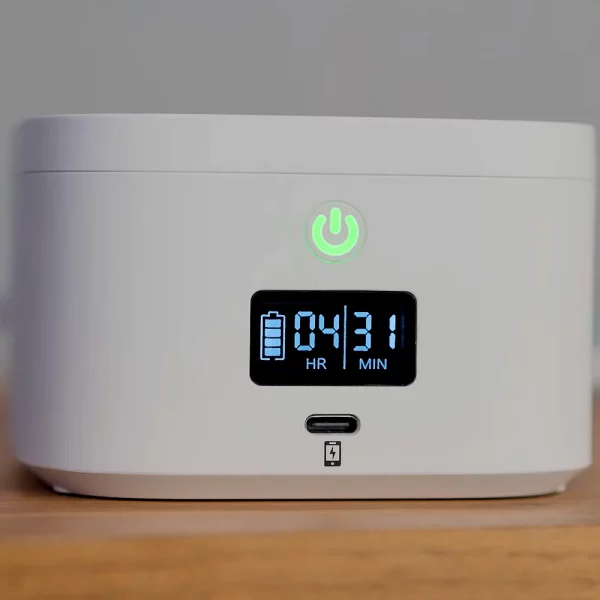
Sadly, the article doesn’t provide any solid details to help us examine the circumstances around this case, such as precisely which BBU unit Jane has (BT supply two different solutions), what her setup looks like or how long the power cuts lasted etc. BT’s latest BBU Plus kit (pictured) launched last year alongside other providers (Vodafone, Zen Internet and KCOM) and is designed to last for 4 hours (here), before going into an idle mode that reserves just enough power for an emergency call.
The article suggests that Jane had switched to the new Digital Voice service late last year, and so we assume her home would have been provided with the latest BBU Plus kit. But obviously if any of the power cuts lasted longer than 4 hours then that might become a problem. In addition, if any of those power cuts also impacted BT / Openreach’s wider network, then it wouldn’t matter if the BBU itself was working or not as there’d be no connectivity either way (not even an old legacy phone would have worked in that circumstance).
Advertisement
Suffice to say that more detail and context is required in order to properly assess what actually caused the system not to work, which is important because many other people will be installing similar systems and expecting it to work.
In the meantime, consumers can of course optionally buy a larger portable power station [affiliate link] online for more money, but we recommend only getting one that uses a LiFePO4 battery, as they last longer and are better at holding a charge. However, if you have deeper pockets and also want to save money on your electricity bills, then a whole-home solution (e.g. GivEnergy, Tesla Powerwall etc.) that charges up at cheaper off-peak rates could be another option, but the latter does tend to cost several thousand pounds.
Otherwise, the move away from the old legacy phone network is a somewhat unavoidable change, due both to the roll-out of full fibre connections and the fact that the legacy phone network is now rapidly reaching “end of life“; it’s already becoming unreliable and sourcing replacement hardware when parts fail is difficult. Suffice to say that the change isn’t going to be reversed, so it’s now much more important to consider having a backup.






Mark is a professional technology writer, IT consultant and computer engineer from Dorset (England), he also founded ISPreview in 1999 and enjoys analysing the latest telecoms and broadband developments. Find me on X (Twitter), Mastodon, Facebook, BlueSky, Threads.net and Linkedin.











« Gigabit Broadband Cover Reaches Nearly 90 Percent of the UK in H2 2025
Advertisement
Leave a Reply
Privacy Notice: Please note that news comments are anonymous, which means that we do NOT require you to enter any real personal details to post a message and display names can be almost anything you like (provided they do not contain offensive language or impersonate a real person's legal name). By clicking to submit a post you agree to storing your entries for comment content, display name, IP and email in our database, for as long as the post remains live.
Only the submitted name and comment will be displayed in public, while the rest will be kept private (we will never share this outside of ISPreview, regardless of whether the data is real or fake). This comment system uses submitted IP, email and website address data to spot abuse and spammers. All data is transferred via an encrypted (https secure) session.














They never would have noticed if the old line was out during power cuts but broadband going down is a lot more conspicuous.It could just be a faulty battery backup that needs replacing but I do think that if it’s infrastructure there’s a limit to the amount of subsidy that can be given to people who choose to live in these ultra remote places – some outages to be expected.
Some of us have no choice in where we live -your comment highlights you as a total self important #######
Plus last several power cuts all mobile signals failed too.
It does pay to manually test your UPSs, etc. every now and then.
I had one that seemed to pass all the tests but when the time came it failed.
Not excusing BT, just giving some basic advice.
I can remember reading about this over on the EE community website and the conclusion seemed it was beyond the control of EE as the issue was more about how the infrastructure of the island was connected to the main land rather than any customer equipment or EE/Openreach’s
We won’t get such a balanced report from the clickbait news outlets. There are too many questions that we don’t know the answer to. For me, if something goes wrong, I look in the mirror first, Too many people believe that everything is someone else’s fault.
Indeed, but ” as the old technology is increasingly unreliable and no longer fit for purpose.” is a just a monumental understatement from BT (when it doesn’t have connectivity for ANY reason regardless of location.) It is 2026, not 1950 after all.
Also depends on what kit your ISP has in the local exchange, I’ve posted here before that OFNL don’t have a generator backing their kit in our exchange, only UPS with a short runtime, my home 1500va APC unit lasts longer than theirs….. so for other users a BBU wont make a huge amount of difference for more than short durations.
I guess the obvious major issue with this and old phonelines is that most people have DECT handsets, these power backup banks don’t usually provide power to the dect base station as well as the router and or ONT. I Wasn’t too impressed with the how secure the power connections on this unit where on 2 of these units that I’ve seen. However when connected properly one ones I’ve seen work as advertised powering the router and ONT.
What BT do when issuing a BBU is also issue a wifi phone which will obviously work in a power cut via the voip
It used to be a regulation that you had to have 1 phone in your house that would carry on working in the event of a power outage, this seems to have fallen by the wayside as mobiles have proliferated.
DECT phones can connect directly to a BT hub with not all features.
Surely the issue is the amount of power cuts they have, and the strain that puts on their equipment?
If the food in their freezer melts and is now inedible, is that Tesco’s fault? Why are BT being held responsible for the power company’s failings?
According to the article, it failed on the first power cut, so that should have still worked.
The third one may be iffy if the second power cut was long enough that it didn’t have a chance to recharge.
To use your analogy, Freezer manufacturers may say they ‘will keep frozen for x hours’, now if you have a single power cut in winter with reasonable ambient temperature and the food defrosts instantly, you might be putting in a complaint.
I’m repeatedly saying this. Why should telcos brunt the cost of the power companies issues
@Luke I guess it’s because the telcos used to provide a service independent of the electric company, they are now removing that facility. People have not had to worry about comms working before, even if they are sat round a candle and can’t cook. They have been used to being able to use their phone line to call the electricity company
BT are being held responsible because Ofcom is making them responsible. Ofcom have placed the obligation on service providers to maintain telephone service in the event of a power cut.
Really the telcos are being held responsible for not only the electricity companies failures (of power) but also the unacceptably poor mobile phone coverage. If people had decent reliable mobile phone coverage they could fall back to that in a powercut for making emergency calls, but instead the wrong (my opinion) approach of giving out limited battery power packs has been taken instead. Poor decision by Ofcom I presume.
Low cost BBU devices are less reliable as they react less, and lack line interactive, the cost for a very reliable device is likely prohibitive. What type of failure are we talking about though, one where it doesnt stay on during power cut but can still power on devices manual after, or a complete failure where the battery doesnt work at all? If its the latter, then thats an actual issue.
I believe if someone wants to live in a remote island such as Scalpay, they should be prepared to accept either risk reduced capabilities in possibility of emergency service communications during power outages or purchase in equipment at their expense which in this article looks like they did but didn’t work anyway but should also consider multiple options such as a generator to power their house during an outage or a satellite phone.
iPhones 13 and above comes with SOS satellite texting as standard so the resident may already have this capability this whole time.
Its’ iPhone 14 and above not 13
Large parts of the UK have a poor mobile signal *inside* buildings. Anyway, the towers don’t have a diesel generator as BT exchanges have had for 50/100 yrs.
With copper being a conductor, this fortuitous fact has ensured that landline phones possibly work for days after the mains elec goes off. Any calls can be made, not just emergency ones. Here our elec was off for nearly 4 days in Oct 2002, yet the phone still worked.
Maybe FTTC could have been organised with backup batteries. Even half a day’s telephone service if the elec goes off would still be better than a few hours only.
Power cuts are set to become more frequent not less, for obvious reasons. But OFCOM executives chose a brave new world. Naturally they will all be retired by the time the chickens come home to roost.
Many mobile base stations have generators and more are being added. FTTC cabinets have batteries, maybe a 4 hour capacity.
There is/was a petition to maintain a copper network. Who would pay? And virtually large new builds are FTTP.
Everyone is saying FFTP and VoIP is progress and yes it may well be , however if it does not work without battery back up surely this needs to be robust and as fail safe as possible before copper lines and exchanges are withdrawn . There will never be an occasion where power cuts can be totally prevented and surely the industry needs to pull together to ensure that the equipment they provide customers has the essential back up required especially those who have vulnerabilities or are isolated . 4 hours back up is not enough as how many instances is power off for far longer than this especially in isolated areas. We could be talking about life or death here , or emergency situations that require rapid response surely the industry should be sure the equipment they supply , peoples lifelines , access to get assistance , are fit for purpose
Why is that the problem of the telecoms industry and not the problem of the electricity industry who are responsible for these things not working? Why isn’t the onus on them?
Rather than providing battery backup for every ont and router along with the head end, it would be far more efficient to rely on your mobile phone which has a battery built in, then only the cell site needs battery backup.
Yes exactly, rather than a bodge of giving people battery backup units to power their ont, router, and dect base station, a surely better approach would have been to ensure every property has a decent reliable mobile phone signal indoors at all times (and arguably roaming for any network, even if just during known powercuts). BBU seems the wrong approach to have been taken.
This is going to sound awful, but if you live in a situation where the phone is of vital importance, you get a mobile phone as well. If the signal is so very bad there, you need to get together and set up a local radio network for emergency use only, along with the council.
But mobile sites generally have minimal power backup at the moment — see https://www.ispreview.co.uk/index.php/2025/02/ofcom-refines-thinking-on-cost-of-adding-power-backup-to-uk-mobile-sites.html for more details.
Starlink’s direct-to-cell service is an obvious solution to this problem.
I live in a town that is quite remote (still a town, still thousands of people, not anywhere near as remote as the place quoted in this article) but usually have no mobile signal indoors from any network during the day, and only weak at night (when I presume people are asleep and less users) I often can’t even send a text message or get any connection during a powercut or if my internet is off/down, and my phone shows (greyed out emergency satellite showing on my iPhone). Because of this I’m still on a landline just for emergency access, but at some point I know that will come to an end – I just hope the mobile signal is improved before that happens in the next year…
I do agree though, mobile should be the approach taken for emergency calls. BBU approach seems to me to be the wrong choice taken (forced upon?) the industry.
In my experience most people who live in very remote places have backups like HF/VHF radio tuned to a communal channel that everyone shares. The harsh conditions that cause power and fixed comms to break also make those things hard to fix. No BBU is going to function for a week, but an HF transceiver hooked up to a 12V battery probably will.
It’s worth pointing out that iPhone 14 onwards and the latest Samasung and Google Android phones have satellite emergency messaging, assuming this works in the Outer Hebrides. I think I’d consider Starlink as a backup too, possibly shared between neighbours.
This issue doesn’t just affect a small number of people in ultra remote small communities like the area in this story. I live in a town of thousands of people, yet all the mobile networks are awful coverage (weak signal, congested), during a powercut, which happens surprisingly often as it’s a rural town, I simply can’t get mobile signal, either due to the weak signal or so many users all dropping off their WiFi to the 4G signal. Most people won’t have a bbu as they aren’t “at risk”, so don’t know the issue they are/might face of not being able to make an emergency call, as they’ve not had to. I think it’s a bigger (more affected people) than the industry knows/accepts. Of course most places will have good reliable mobile coverage, but the places that haven’t are going to become more and more of an issue as more find they have no way to reach anyone during future outages.
“which happens surprisingly often as it’s a rural town,”
How do you assume that rural must mean an unreliable mains supply? I grew up in a rural area, every UPS I ever used cooked its batteries before there was a power cut of any real length. Normally it’d be back on by the time I’d got out a phone to look at WPD’s website.
“so don’t know the issue they are/might face of not being able to make an emergency call”
this is an issue that has existed for the best part of 40 years once cordless phones became popular, because many people have never paid attention to the advice to keep a corded phone around. They might not even have a landline phone service!
(in reply to the general story) like others I think the devil will be in the detail. Did the BBU itself fail in an unanticipated way, or did it simply shut down because the power cut exceeded the intended runtime, or was actually a network issue?
Realistically this stuff isn’t 100% foolproof. The PSTN wasn’t that foolproof either. Generators can fail or run out of fuel. Off-mainland locations with chains of microwave links (as would be used for islands before the fibre went in) would have multiple points of failure.
@Ivor ” “which happens surprisingly often as it’s a rural town,”
How do you assume that rural must mean an unreliable mains supply? I grew up in a rural area ”
Because what I said was about the rural town I live in, my experience. The town regularly has powercuts (more so than the less-rural or urban towns), mainly because it’s fed by overhead powerlines (not the big pylons) and when a (more-?)rural overhead line has a failure it knocks off the town until they can auto re-route power, some are short powercuts, some a few hours, some go on several hours in to the next day. Admittedly UKPN does their best to get it sorted for as many people as possible, including me in the “town” as opposed to the area around the town (the more-rural/villages) but during that time I’ve got no mobile connectivity and at the moment a PSTN line where I could make an emergency call, but soon, when my PSTN line eventually does go, I’m concerned (worried/scared?) what will happen, as a BBU of an hour or a few hours won’t cut it for me, and the powercuts aren’t just a once in a blue moon occurance based on my lived experience here.
(And I’ve also got through UPS batteries like you’ve described)
4 hours is nothing for a rural power cut, power may well have been lost overnight so by the time people get up the battery is already flat. Within living memory power cuts of 10 days have happened here on Dartmoor.
The annoying thing about this article is the fact that the general public are not educated on the infrastructure that provide their services.
That power cut probably knocked out the sub Hob/L3 cabinet (which are normally fed by a lamp post) that feeds their home so having a BBU ain’t going to do much because the modem is not being fed a working service.
Ppl complain too much without knowing how stuff works. These folks need satellite backup/service.
They need it, they just don’t want to pay for it.
yes but this stuff has been forced upon the users of it. Not everyone is a tech whizz like you. We are an aging population. My 92 year old Grandmother in law just gets me to do everything it’s not fair.
@84.08Khz I am not saying it should be the responsibility of just the telecommunications industry however they are the ones making the changes to their service so surely they should carry ultimate responsibility along with the other services including government , , however it seems there is never a joined up approach
Telecommunication companies don’t have a choice, old copper PDH/SDH are obsolete and needs switching off. It’s surprising they are still chugging away.
Believe me, those people’s services have went out before during power cuts when they had copper. But nowadays everyone wants things are full proof. Nothing is full proof. Some times we as consumer need to take responsibility and do things ourselves.
I think the cost BT etc charge for these is a joke and should be free to vulnerable people. Not everyone gets decent mobile signal which I can’t believe I’m saying in 2026. I just feel the focus should be ensuring there is decent 4G service for everyone as much as possible.
Completely agree. Focus should be on ensuring decent reliable mobile signal not BBU in individuals homes and hoping it’ll work throughout powercuts.
They are.
They charge £0 (to vulnerable users), Sam. Doesn’t seem like much of a joke to me?
Define “decent” 4G coverage – should it work perfectly through the foot-thick walls of a stone cottage, for example? How long should a cell site work in a power outage? Should every cell site get a battery backup? Most? What about generators? Who will pay for all of that for this normally unfrequent use case – given the price-conscious nature of the average consumer?
No sympathy. Decide to live in a remote Hebridean island, then make sure you have adequate backup. A portable VHF radio would work well. It doesn’t have to be reliant on Elon or some crappy BBU
God helps those that help themselves.
Cambridgeshire (England), rural town of thousands of people. Poor mobile signal, but not yet moved off old phone line (but know it’ll be coming). So are you saying I should get a VHF radio to contact 999 (and ukpowerneteorks) during a powercut/emergency, just because my mobile signal (all networks) is so unacceptably poor, and a BBU can’t be relied upon?
This isn’t isn’t just ultra remote locations like in the story. It’s just people in locations, that have made the change, are now finding the real world problems they face and that the BBU approach really isn’t the solution.
Surely the mobile networks should be forced to ensure reliable mobile network coverage.
@Simon M – in an extended power cut, the mobile network can’t be relied upon anyway. Irrespective of patchy coverage. Many towers simply have no generator backup, so they’ll fail after the batteries go flat.
Neither can the terrestrial network be relied upon. It’s pretty easy in stormy weather for a tree or a car accident to take out a pole etc.
So what then – you either go satellite (again not infallible and doesn’t work indoors) or the alternative which is VHF/UHF ideally charged up portable unit. They don’t cost megabucks either.
We live in an extremely inter-connected world, but also very complex and utterly fragile. Surely the past few years have taught us just how fragile.
If the power supplies were all USB-C it’s be simple to shop around for a more suitable unit, and have more than one if needed
Hubs and ONTs are 12v.
“Hubs and ONTs are 12v”
Quite handy them being 12v, can use a car battery or a portable power station. These usually have a car cigarette socket, a 5.5mn DC socket and power delivery usb-c ports. PD can output up to 20v with the correct lead.
There are leads that boost a normal 5v usb to 12v albeit at a max 800ma but that should be enough to power most BB routers.
so there was no blackout and everything worked according to the plan and as expected? seems like the energy transition is going just fine.
What do you expect when it is government policy to shut down reliable power generation in favour of renewables which do not work when there is no wind and no sunshine? There were reports a year ago that the grid operator was just minutes away from having to start rota disconnections.
The sun is pretty reliable. It’s a star.
On March 25th 2025 two of your ‘reliable’ generators at Drax unexpectedly dropped offline and the slack was taken up entirely by pumped water and battery storage. Future grid resilience requires us to transition away from dwindling fossil fuels controlled by foreign powers.
Wishful thinking. Wind and solar cannot be relied on, particularly during winter fogs. See https://www.energydashboard.co.uk/historical which is updated continuously.
If the issue related to the energy mix seems odd only those small areas saw outage not the entire national grid. Not a big balancer cutting off a remote island.
On the report mentioned it’s nonsense. Before rolling blackouts were considered they’d shed commercial load. There would be serious grid interruption before they went as far as considering rolling blackouts including regional action. Generation and demand are a long way from balanced and over 10 GW flow from north to south routinely. Prior to those extremes we’d see voltages sag as the grid failed to keep up with demand and before the balancing kicked in. To have ‘minutes’ to decide on whether or not to initiate rolling blackouts the grid would have been sitting on the edge. These are usually caused by faults and from start to load shedding is seconds or a very few minutes in response to voltage drops.
Still people will believe what they want to believe, especially when it confirms their own biases.
Full report here https://watt-logic.com/2025/01/09/blackouts-near-miss-in-tighest-day-in-gb-electricity-market-since-2011/
Traditional wired phones were powered via the telephone line, and hence worked regardless of whether there was mains electricity at the customer premises. With fibre-to-the-home the ONT and hub require local power. This is why it’s a new issue, and OFCOM makes the telco/ISP responsible rather than the power network.
It’s not just people in extremely remote areas that don’t get a mobile signal. My parents live in a village in a rural valley (a few miles from the nearest town) and it’s a 5-10 minute walk up a hill to catch signal.
I live just outside Cambridge, and the mobile signal is very marginal indoors, so rely on WiFi calling. This is pretty common, and “WiFi calling” is the mobile company go-to workaround for poor coverage. But of course that relies on broadband and power to ONT and hub.
A quick check tends to indicate he small island has good mobile coverage
Have you been there and checked or are you relying on the Ofcom/Mobile providers rudicrously overstated website “coverage” maps?
Even if some of the coverage was correctly recorded as several people have pointed out mobile signals deteriorate during power cuts due to the extra demand.
All the altnets are full fibre. What do they supply for vulnerable people?
Some are wireless.
Most of the Altnets dont provide a telephone number by default which solves the problem for them.
If they offer a phone service they provide what Ofcom requires them to. The responsibility for availability of the phone service lies with the ISP providing the digital voice not the underlying network operator. If the Internet fails, tough, only the digital voice part has regulated battery backup.
They’re not all full fibre. Some use FWA of one form or another.
Some operators provide a BBU, free or charged, and some decline to offer telephone service to be people identified as vulnerable.
@Polish Poler and of course the dilligence of hte regulator in ensuring (ahead of failure…) rather than being sat back waiting sor someone to point out a failure in their domain.
@Simon M “I’m concerned (worried/scared?) what will happen, as a BBU of an hour or a few hours won’t cut it for me, and the powercuts aren’t just a once in a blue moon occurance based on my lived experience here.”
A few hours is how long it will continuously power the router/ONT after power loss. However, it shuts off with 25% battery remaining so that you can manually switch it back on if you need to make an emergency call.I don’t know how long it takes to drain the battery in the off state but I would imagine it’s weeks at least. So there is nothing to worry about, assuming the exchange itself has power, but if it didn’t neither would the PSTN system.
Very few exchanges have back up generators. If power fails they rely on the batteries which will at best last 24 hours. If power cut is likely t last longer they will try to move a mobile generator in
All exchanges have generators Bob. Why do you think otherwise?
I’ve come to the conclusion BT don’t care about protecting vulnerable people, only if it’s for PR purposes.
They knew I’m disabled and when I changed to full fibre I was told my old line would still work for a while. But in reality they shut it off the same day.
I’ve never been offered a BBU solution, even when I’ve mentioned it on their forum. I don’t mind paying for it. But would need help fitting it.
But over the many years they have never approached me.
What do you mean by “they knew I’m disabled”? Is it formally noted on your customer records? Mentioning it in a forum post won’t be enough.
e.g have you signed up for this https://www.bt.com/content/dam/bt/help/including-you/BT_Free_Priority_Fault_Repair_Scheme.pdf
Just corporate business risk assesment, done well or otherwise, IF we get caught the consequence £££s might be..
I think many are missing the point, old systems resilience in cose of power outage by the new improved all singing dancing replacement, which aint as resilient, period.
It is farcical that basically government sanctioned move to digital was not on the ball in terms of resiliency, power or other wise, and ouf course implimenting multi layered power resiliency shoudl be cost of who?
Fankly should if/when someone dies as a result of not being able to make an emergency call it should be seen as corporate manslaughter for not replacing existing systems by inferiorilly resilient new ones, that consumers have no choice of, and stop debunking the resilienc, oh and to have as potentially reliable new as old system, get a mobile, and assuming it has network coverage and power resilliency !!! If that isdeemed to be the case then the ‘new’ ‘improved’ (oops) should be provided with said mobile. And don’t forget older generations and their ability to (have to) adapt, that is ageist and deliberately, by intent or ineptness excluding. Shoddy inclusive change management.