Zen Internet CEO reveals state of the UK’s alternative broadband networks
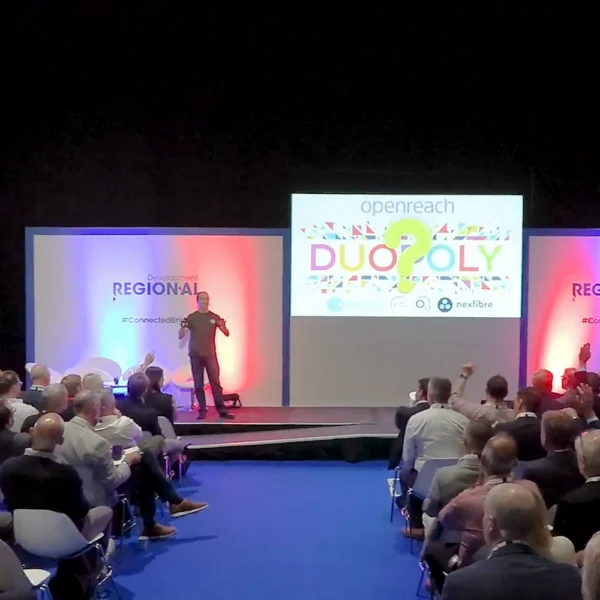
The CEO of broadband ISP Zen Internet, Richard Tang, has today published the seventh edition of his entertaining ‘Full Fibre Wacky Races‘ presentation, which summarises both his and the wider industry’s views of how the UK’s troubled market for alternative fixed broadband networks (altnets) has progressed and what the future may hold.
Altnets have of course faced a troubled few years due to rising build costs, strong competition from rivals (i.e. overbuild and the challenges of growing take-up) and the difficulties of securing fresh investment during a protracted period of high interest rates. The situation has left the industry holding billions in debt and the need to make painful repayments on that.
In response many altnets have stopped or slowed their network expansions in order to focus on commercialisation (i.e. growing take-up of what they’ve already built), albeit often more as a strategy to buy time and make themselves more attractive while seeking out consolidation partners to help grow scale.
Advertisement
However, consolidation as a whole has been moving much slower than expected (ISPreview’s Altnet Consolidation Tracker), partly due to some operators harbouring unrealistic expectations of their underlying asset (network) values. Despite this we have seen a fair few normal consolidations taking place, but more recently we’ve also seen the odd deal occurring post-administration and after investors took a big hit (e.g. here).
The longer consolidation takes to fully materialise, the greater the chance of less favourable outcomes for investors like the example above, which can perhaps also be seen in how investors for G.Network (here), toob (here) and Gigaclear (here) approached the challenges. For example, Gigaclear’s creditors took control of the business, which also resulted in lenders taking a significant haircut on debts. In another example, KCOM recently took a huge c. £530m write down in the value of their assets (here).
Suffice to say that it’s become increasingly difficult to know where the UK’s fixed line broadband market will end up. Some have even suggested that we might end up back where we started with a duopoly market dominated by Openreach (BT) and Virgin Media (inc. nexfibre etc.), particularly after the parents of the latter (inc. Infravia Capital) reached a deal to buy one of the biggest altnets, Netomnia. Richard’s presentation even put this to an audience vote, which saw roughly 40% of the represented industry say they expected a duopoly outcome, with the remaining 60% predicting a more competitive future.
However, it remains unclear whether Virgin/nexfibre/Infravia would have the financial flexibility to secure more deals like the one they did with Netomnia, particularly in light of the recent news that they’re looking to find £600m in cost savings (here). Lest we forget that the market’s largest altnet, CityFibre, are reportedly also preparing to fight back (here). In other words, we may yet see a more competitive market dominated by 3-5 infrastructure providers emerge long-term, but it’s currently a difficult one to predict.
Advertisement
All of this is well covered in Richard’s new Full Fibre Wacky Races‘ presentation from last week’s Connected Britain 2026 conference, which we’ve pasted below for your viewing pleasure. Interestingly Richard doesn’t include his usual summary of network build progress and instead focuses everything around the context of the Netomnia deal’s impact upon the wider market, which is yet to be decided by the CMA. Many altnets are currently awaiting the outcome of that before progressing their own deals and strategies.






Mark is a professional technology writer, IT consultant and computer engineer from Dorset (England), he also founded ISPreview in 1999 and enjoys analysing the latest telecoms and broadband developments. Find me on X (Twitter), Mastodon, Facebook, BlueSky, Threads.net and Linkedin.












« Comms Council UK publish data-sharing guidance for tackling telephone fraud
Advertisement
Leave a Reply
Privacy Notice: Please note that news comments are anonymous, which means that we do NOT require you to enter any real personal details to post a message and display names can be almost anything you like (provided they do not contain offensive language or impersonate a real person's legal name). By clicking to submit a post you agree to storing your entries for comment content, display name, IP and email in our database, for as long as the post remains live.
Only the submitted name and comment will be displayed in public, while the rest will be kept private (we will never share this outside of ISPreview, regardless of whether the data is real or fake). This comment system uses submitted IP, email and website address data to spot abuse and spammers. All data is transferred via an encrypted (https secure) session.















The altnets have been great in allowing a faster rollout of services in many parts of the country but the biggest issue I have is each one using their own last mile network, their own cables, their own ONT etc. I would hate to have to keep having a new cable run through my wall, and termination box, just because I switch providers. It would get very messy, very quickly.
Imagine if this happened each time you change energy provider?
But not all available in every area so you only realistically going to have max 2 maybe 3 in some cities. Openreach, Virgin and someone else CityFibre. the whole point in altnets was to compete on last mile against Openreach
Exactly this. It’s why more… *ahem* civilised countries with forward-thinking governments and local councils have invested in publicly-owned, open-access fibre networks. ISPs pay an access fee to use the shared infrastructure rather than each having to build their own.
The result, when it’s done properly? World-class internet, freedom to choose your ISP, and one shared fibre connection into your home instead of duplicated installations and additional holes through your walls. Build the network underground, and you avoid the forest of new telecoms poles, too.
In the UK, though? The broadband landscape and infrastructure are a largely dystopian farce.
My prediction is that there will still be only two truly nationwide providers (Openreach, Virgin), with CityFibre’s post-administration successor in a few places (they probably will never get close to their 30% target, much less hit it), and small patches covered by local/regional providers like KCom and Wildanet.
An awful lot of people will have lost an awful lot of money for the average person to see no real increase in competition.
Am i the only one who sees AI art in the slide deck and the instantly ignores everything the person is saying? Mainly due to my intense eye twitch. Pay for a marketing dept and make actual decent art!
Why pay for someone to take days to design art when the AI can do it in SECONDS and adjust to feedback with a snap of a finger. Astra especially is insane at this. The artists with degrees decided to strap bananas to a wall calling it “art”. Modern art is ugly and will get replaced
What the whole series of wacky races presentations and the use of AI for the images will make more sense.
Richard obviously does pay for a marketing department, a pretty sizable one in fact. But, the whole point of this series of presentations is that it’s 100% Richard, no marketing teams, no branding police and no corporate bull. Straight from the horses mouth
I’m still convinced we’ll end up with 3 players.
OR, VMO2 and a VF3 backed CityFibre come 2030/32.
Where does KCOM fit into that mix, or are they a regional 4th?
I don’t otherwise disagree, although maybe there is room for one more (perhaps more business connection focused).
And/Or maybe Infracapital Partners (Wightfibre plus a few others round UK/Europe).~
If I was running a significant business in/near my home, passing my door I would have a choice of OR, G.Network and Vonus–no VMo2: close but not close enough). Question is where will G.network and Vonus end up in a consolidation.
Three seems to be about right to me.
In Weston-super-Mare Openreach, Virgin Media and CityFibre cover many areas. Grain have just started building. Overbuild?
The most cost-effective way for consolidation to happen in the UK broadband sector is for purchases of assets out of CVA procedures by those that have the free cash and/or the backing of opportunistic and willing creditors.
Mergers/acquistions performed via other means will not solve existing leverage problems and will add to operating costs over a two- to three- year period while potential acquisition partners consolidate, so that avenue, in the main, given prevailing financial and economic circumstances, is now unrealistic.
The UK government is unlikely to allow the market to consolidate to only two principal competitors, so the major players will have to shed additional costs to stay sufficiently profitable to maintain investment levels.
Of the three major players, both Vodafone and BT Group, plus their respective new backers, are in positions to engage in acquisitions for morsels that are sufficiently discounted to make teheffortsworth while.
That graph at 12:48 is something of his own invention with no hard data to support it.
I would also point out that the market competition that he is so enamoured of is financed by the largesse of external backers and would not exist without their involvement. If they walk away, the competition to the major plyers with evaporate overnight.
Richard is ignoring the potential intervention of external players seeking European scale. BT Group might be the top dog as far as the UK market is concerned, but in reality it is now too small to survive as an independent. The big Europeans are tied up in rationalisations and debt refinancing at the moment, but in the years to come, they will be seeking to extend their reach across all of Europe to benefit from scale of operation and buying power.
Déjà vu for me and see https://shorturl.at/syLKo
I read it from the previous occasions you posted it, but it is still not relevant.