Openreach Expands Scotland’s Project Gigabit Broadband Rollout Contract UPDATE
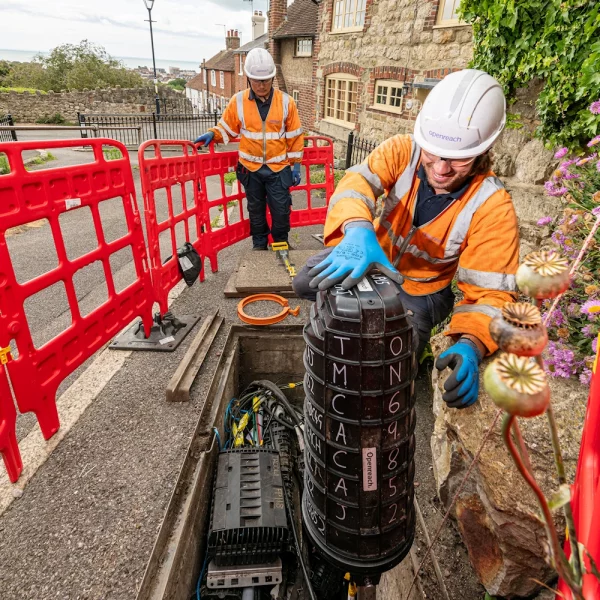
The UK Government’s Department for Science, Innovation and Technology (DSIT) has issued a contract modification notice for Openreach’s £157m (public subsidy) Project Gigabit broadband roll-out contract in Scotland (Call off 6), which originally aimed to reach 65,070 premises in remote rural areas. But the change means it will now be expanded to tackle 77,639 premises.
The original contract was officially awarded back in May 2025 (here) and formed part of Openreach’s Single Supplier Framework agreement with the Builder Digital UK agency (here), which saw them being chosen to deliver all of Project Gigabit’s Cross-Regional (Type C) procurements. At the time this reflected “up to” £800m in total state aid to help upgrade c.312,000 premises in rural areas of England, Scotland and Wales to full fibre (FTTP) connectivity (the previous Type A [local] and Type B [regional] contracts have all gone to smaller providers).
However, back in August 2025 we reported that the government had boosted the value of the Single Supplier Framework to around £1.2bn (here), which meant that it was likely to be used to reach even more premises in Type C areas in the future.
Advertisement
Just for context, Type C reflects remote areas where no or no appropriate market interest had previously been expressed before to BDUK, or areas that have been descoped or terminated from a prior procurement. Such areas are often skipped due to being too expensive (difficult) for smaller suppliers to tackle.
The contract that Openreach secured for Scotland under this scheme was focused on upgrading remote rural parts of the Scottish Highlands (Applecross and Durness etc.), as well as several remote islands off the west coast of Scotland, including thousands of premises across the Outer Hebrides – a chain of over 100 islands where currently just 7% of premises can access gigabit broadband – as well as the isles of Skye, Islay and Tiree etc.
The Contract Modification
According to the latest contract modification notice for Call off 6 (Rest of Scotland): “The awarded contract value has increased by £18,456,308 to £175,561,598 from the original value of £157,105,290. The awarded premises have increased (rescoped) by 12,569 to a total of 77,639 from the original 65,070.” The notice confirms that this is as a result of “additional scope” being added to the contract, following an agreement between BDUK and Openreach (note: the roll-out phase for call off 6 only began recently).
At the time of writing the government have yet to update their public contract details page with the latest changes (here), thus we’re unsure precisely where the extra 12,569 premises of gigabit broadband coverage will be delivered. But given the scale of this modification, we’d expect an announcement about it to surface in the not too distant future (smaller modifications happen all the time to other contracts and thus rarely warrant a mention).
Advertisement
The work is designed to complement the Scottish Government’s own £600m R100 programme, which is separately working with Openreach to reach another 113,000 premises in hard-to-reach rural locations by 2028 (the vast majority of this will get FTTP) and they’ve technically already done 96,347 premises (here). On top of that GoFibre also hold a couple of Project Gigabit contracts for different parts of Scotland (here and here).
UPDATE 22nd Jan 2026 @ 3:40pm
The Scottish Government has revealed that Dumfries & Galloway will see the main benefit of this expansion.






Mark is a professional technology writer, IT consultant and computer engineer from Dorset (England), he also founded ISPreview in 1999 and enjoys analysing the latest telecoms and broadband developments. Find me on X (Twitter), Mastodon, Facebook, BlueSky, Threads.net and Linkedin.











« Ofcom Sets Out Current Progress and Future Plans to UK Prime Minister















We seem to be “in scope” for GoFibre (as per the Project Gigabit announcement made last July), according to their postcode checker, but Openreach is also digging up our streets right now and their checker says that fibre is coming soon. While I’m not complaining at the prospect of two fibre networks where we currently have none (Banchory, Aberdeenshire), I’m a little confused as to why that’s happening.
Interestingly some postcodes a few streets away show as not being on scope for GoFibre, but are still due to be getting Openreach (which was listed as a commercial rollout here some years ago, though some of the entries on the roadworks checker site show references to “Project Gigabit”).
I’m on the Isle of Skye. Ten months ago, UK government (and subsequently ScotGov) announced that a part of Skye (and Applecross across the waters on the mainland).
Since then, it’s been nigh on impossible to get anyone to actually say which part of Skye we are talking about. Skye is about the same size as Northumberland or bigger than the entirety of Greater London.
No one seems to know or willing to share this, as if it’s some sort of top secret thing.
Announced that a part of Skye… ???
That a part of Skye …would get the the Project Gigabit installation