Chameleon Tech Uses Home Broadband to Solve UK Smart Meter Connectivity Woes
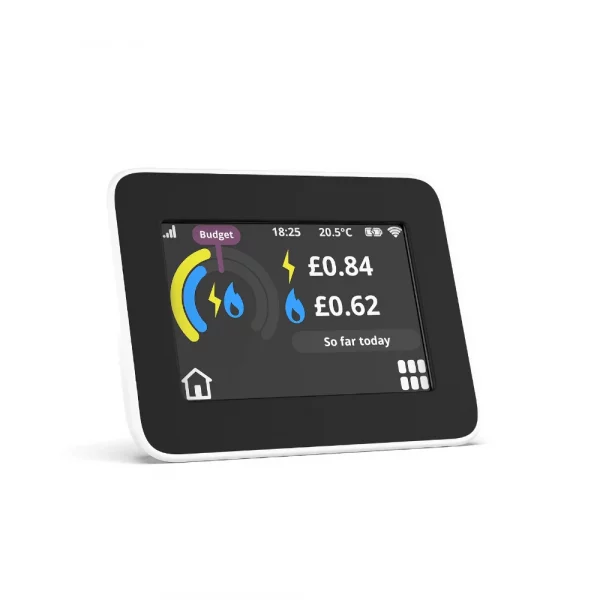
Chameleon Technology has just become one of the first to provide a Virtual WAN (VWAN) solution to help resolve the problems that over 350,000 hard-to-reach UK homes have with Energy Smart Meters, which sometimes struggle to send data back to suppliers via their mobile networks. The new solution will instead use your home broadband (WiFi) service.
Regular readers may recall that we covered this problem a couple of times last year (here and here). In short, not all Smart Meters are within range of the wireless networking solutions (2G, 3G, 4G or LRR) that are used to send data back to the centralised Data Communications Company‘s (DCC) Smart Meter Wide Area Network (SMWAN), which in turn provides that information to energy suppliers.
Back in December 2023 the previous Government’s Department for Energy Security & Net Zero (DESNZ) started to tackle this by issuing a new consultation. This included proposals to create arrangements whereby communications with Smart Metering Systems installed in premises with no Wide Area Network (“No-WAN premises”) could be established via the DCC through use of the customer’s own broadband connection.
Advertisement
At the start of 2025 this was followed by the current Government proposing to implement such a programme (here), which included new architectural arrangements – factoring in the need for tight security – for a new Virtual Wide Area Network (VWAN). Today Chameleon Technology has launched the IHD7-VWAN, a Wi-Fi enabled device (i.e. an “upgrade” for their in-home displays) designed to unlock smart metering for over 350,000 hard-to-reach homes by harnessing your existing home broadband/Wi-Fi network.
The solution uses in-home displays (IHDs) to help boost the data to the DCC, allowing more homes to benefit from smart meters. This new iteration can create two Wi-Fi connections – one a secure tunnel to the DCC, carrying the smart meter data, and one to the Chameleon cloud to enable product support. Consumers will also need to give their consent for this to work on their home broadband connections.
Kyle Brown, Chief Commercial Officer at Chameleon Technology, said:
“The Virtual Wide Area Network is a vital development for smart meter connectivity, and the launch of our IHD7-VWAN demonstrates Chameleon’s commitment to supporting this next phase of the rollout. We are continually pushing to help bring the benefits of smart metering to as many homes as possible and feel very proud to be working with the energy industry and the Department of Energy Security and Net Zero to continue helping the industry overcome connectivity challenges. Chameleon is leading the way in enabling a more connected, data-driven home energy ecosystem.”
The Smart Meter pictured on this article is a regular IHD7 (IHD7-PPMID) from Chameleon Technology, rather than the new IHD7-VWAN. Just to be clear, the IHD7-VWAN is installed as part of a new deployment and paired with a 4G communications hub where required, so it’s not an add-on if you have an existing IHD7-PPMID display. But either way, it’s an important development that could help resolve the connectivity problems of some Smart Meters.






Mark is a professional technology writer, IT consultant and computer engineer from Dorset (England), he also founded ISPreview in 1999 and enjoys analysing the latest telecoms and broadband developments. Find me on X (Twitter), Mastodon, Facebook, BlueSky, Threads.net and Linkedin.










« Stop Killing Games Forms Sister Campaign to Stop Killing the Internet
Advertisement
Leave a Reply
Privacy Notice: Please note that news comments are anonymous, which means that we do NOT require you to enter any real personal details to post a message and display names can be almost anything you like (provided they do not contain offensive language or impersonate a real person's legal name). By clicking to submit a post you agree to storing your entries for comment content, display name, IP and email in our database, for as long as the post remains live.
Only the submitted name and comment will be displayed in public, while the rest will be kept private (we will never share this outside of ISPreview, regardless of whether the data is real or fake). This comment system uses submitted IP, email and website address data to spot abuse and spammers. All data is transferred via an encrypted (https secure) session.














This has always seemed such a logical solution to the issue.
It should be more widely available instead of relying on radio wave transmission.
I understand why they want to do this, but there are problems with this. For a start, routers are sometimes changed and people may forget about the smart meter when changing SSID and passwords. Also it is up to the consumer to keep the connection up and running. Security could be another problem.
This is all about not spending money, it is the government and energy companies that want us to have smart meters, so they should make sure they work without using the consumers broadband.
My broadband, I pay for it, so why should I allow them to use it? Not that I have a smart meter.
Ad47uk, smart metering is not exactly a mission critical application. If it is down for a few weeks because of a router change for example usually nothing terrible happens (you might need to submit a meter reading yourself). If it becomes an issue for the utility provider, they can develop an UI where the customer can reconfigure it, and send automated alerts about it, etc.
Generally speaking I wouldn’t want any of these devices on my network. However, if there was a local REST API available where I could access all the metering data from the device directly, I could be easily convinced otherwise.
@htmm, you are right it is not mission critical, well for most people, but for those that has time-of-use tariffs, it could cost them, certainly if they have a EV.
At some point, I can see the time of use tariff being the norm.
Connect into my network?…nope.
So I get a possibly unsafe device on my network plus the cost to run it (yes its tiny but thats not the point) all to enable companies who profiteer from energy instability to save a few bob?
thats a no from me.
The irony here is that Octopus has been offering its customers a Mini in lieu of an IHD for a number of years. The Mini is linked to the smart meter comms hub and the home internet. Smart meter usage data is sent by the Mini to the Octopus Cloud and the data is then available to customers via the Octopus App. As of now, this data cannot be used for billing purposes even though it is 100% accurate. Will this change? Moreover, it works with all existing SMETS2 (2G) communications hubs.
@Mark – you might like to ask Octopus.
They’ll need to update it for the VWAN before it can do everything consumers need.
The mini is only for the consumers, it can’t be used for billing.
Not sure why anyone would want to know how much energy they are using in real time, but there you go.
Great, I’ll charge a standing charge for use of my Broadband to make their business profit. Oh wait, they will just charge it back again.
Near my network? No thanks, not creating another SSID on a VLAN for it.
How long before uptime is written into supply contracts saying “though will keep broadband active at all times” or charges for manual submissions of meter data during outages or other reasons (like de-cabling network to move router to a different room etc or upgrade of router).
What with this and delivery of TV over IPTV and not keeping Freeview or Freesat, those internet ISPs are going to be rubbing their hands all the way to the bank knowing people dependent upon broadband. Captive market looming.
Just waiting for the industry spin doctors to come along and gloss up why this is fantastic…..
Octopus sends my smart readings over my wifi with their home mini… So it’s not a new thing by this provider…
https://octopus.energy/octopus-home-mini-faq/
You can’t use it for official supplier billing, and it doesn’t work across different suppliers, so it’s not the same as the VWAN. Hopefully they’ll update it, but for now it’s not a proper solution.
It seems Mark, people don’t realise that it can’t be used for billing.
Interesting, I didn’t know it couldn’t be used for billing, that wasn’t made clear at all by Octopus!
They actually said the opposite and said it would resolve the signal issues
I had smart meters fitted 2015,all good. Two years ago I stopped being billed for gas. Gas meter display blank. Both meters and display replaced,all good.Just been told they need to call to update new meters. There are millions of the things and I guess I’m typical,how much is it costing? As for connecting to Internet hub, good luck with that, you can’t rely on it. And trying to use it to watch TV is near impossible with it pauses and buffering, hopeless!