Streetwave UK Reveals Quality of Mobile Network Coverage in Neath Port Talbot
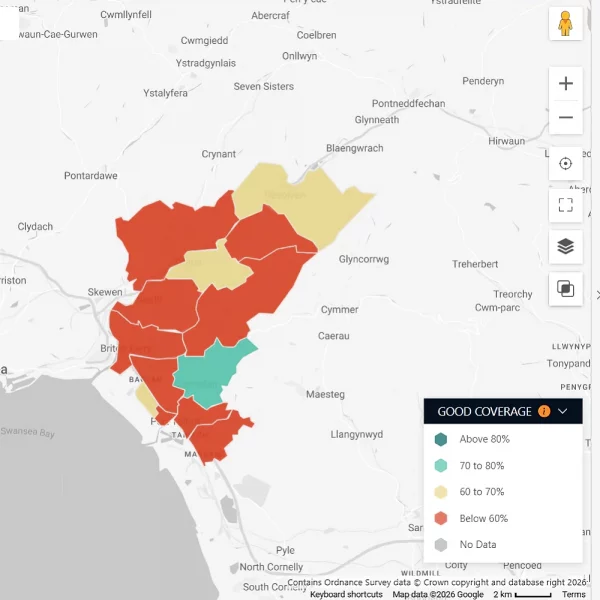
Network analyst firm Streetwave has published the partial results from a new study, which compared real-world mobile network (4G, 5G) coverage and mobile broadband performance across the Neath Port Talbot Council (NPTC) area in Wales, which sits just next to Swansea and is home to around 145,000 people.
Just to recap. Streetwave works by harnessing waste bin (refuse) collection lorries to map mobile network coverage and data speeds across various parts of the UK (e.g. here, here, here, here and here). In this setup, refuse trucks are installed with several off-the-shelf Smartphones using special software, which run continuous network tests (once every 20 metres in rural areas and 5m in urban areas) as the vehicles go around their routes.
The data they collect is often then used by local authorities to help identify areas that may require additional intervention in order to improve local mobile coverage and or network capacity, while also giving locals access to some of this data via address-based coverage checkers and interactive maps (https://app.streetwave.co/coverage-checker/) – this now includes the new data for Neath Port Talbot.
Advertisement
The survey of the Neath Port Talbot area collected data from all four of the primary mobile networks (EE, Vodafone, O2 and Three UK) and across over 800km of roads in the council between 5th to 26th March 2026. Overall Streetwave found that the average Basic Coverage scores for the operators across the council were 71.5%, which fell away to 54.5% for Good Coverage. “In some wards and parishes, the average ‘Good Coverage’ falls below 35%, highlighting the ongoing digital divide many rural communities in the council face,” said the brief update.
Sadly they haven’t included any operator specific results this time or data for download/upload speeds, but you can find location specific figures on the aforementioned map. Streetwave defines Basic Coverage as reflecting locations where the mobile network provides users with data speeds of above 1Mbps download, 0.5Mbps upload, and below 100ms (milliseconds) of latency (i.e. supporting only the most basic of use cases or needs).
The company defines Good Coverage as being locations where the mobile networks provide at least 5Mbps download, 1.5Mbps upload, and less than 50ms latency – supporting a wider range of everyday tasks including video calls, remote working, and higher quality streaming. The results were as follows.






Mark is a professional technology writer, IT consultant and computer engineer from Dorset (England), he also founded ISPreview in 1999 and enjoys analysing the latest telecoms and broadband developments. Find me on X (Twitter), Mastodon, Facebook, BlueSky, Threads.net and Linkedin.













« Broadband ISP Olilo Sign UK Government Charter to Stop Unexpected Bill Hikes

















This sort of task is what Ofcom should be doing rather than obsessing over making it easy to switch between equally poor providers. Test an area, if the observed coverage differs significantly from the coverage the network advertises then level punitive fines. If this keeps happening start revoking licenses. How we spend so much on regulators that fail to achieve any meaningful progress is baffling to me.
Revoke licences? It would be good to have serious sanctions available and applied when necessary but revoke licences? There are only three operators so you could quickly end up up with none in some areas
It’s tidy Mun – Next 🙂
It would be good if Streetwise gave us an understanding of their standard test setup in the vehicles. Where the device(s) antennas are, etc.
An antenna on the roof of of a 4metre high lorry cab is different to a an antenna on a 1.5metre car roof or even inside a car or van.
Street*wave* do not fit/place external antennas on the test vehicles. The four off-the-shelf phones/sims are place inside some ruggedised plastic box, pictures of which can be seen in many news articles.