Virgin Media O2 Ponders UK Cost Cutting to Tackle £22bn Debt Mountain
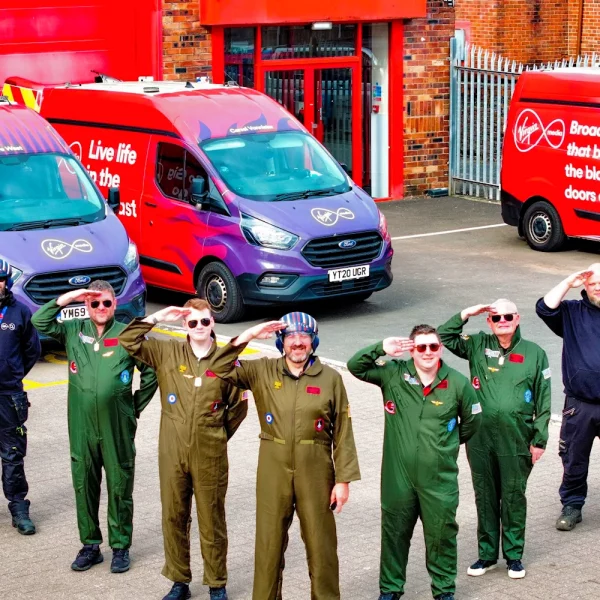
Multiple news reports appear to be indicating that the owners of UK broadband, mobile and TV provider Virgin Media (O2), Telefónica and Liberty Global, may need to execute a significant round of cost-cutting (e.g. job cuts, reducing capital expenditure and cutting dividends etc.) in order to get the company’s £22bn debt mountain under control.
The latest situation appears to have been triggered, at least in part, after the price of Virgin Media and O2’s c.£1.1bn of senior unsecured debt plummeted over the past few weeks (one $925mn bond fell as low as 57 cents on the dollar), which has also coincided with soft earnings (i.e. customer losses to rival networks) and the £2bn deal – supported by InfraVia Capital – to buy alternative full fibre broadband network Netomnia (it’s feared this may further squeeze free cash flow); the latter agreement is currently going through a fast-tracked competition review (here).
In short, investors appear to have become much more worried that they might not get all of their money back, which tends to increase the risk associated with debt held by the company (i.e. issuing new bonds and refinancing existing debt becomes more expensive and difficult). According to the FT (paywall), VMO2’s safer senior secured bonds are also being said to have “fallen sharply” (i.e. the price of a $1.4bn note reached 76 cents, down from 92 cents in early 2026). A similar story also cropped up on TelcoTitans.
Advertisement
The situation appears to increase the possibility that Liberty Global might need to go through a similar strategic review and bout of restructuring as co-parent Telefónica did this last year (here).
Michael Fries, Liberty Global CEO, said last Friday:
“Finally, just a word on our capital structure in the UK … The most important message I want you to hear from me is that both Liberty and Telefónica are completely aligned on our commitment to this business long term. While we appreciate that leverage today exceeds our original targets and as a result of slower growth in our decision to reinvest more in our networks, I would urge you to remember that we have many tools at our disposal if necessary, both organic and inorganic to drive greater free cash flow, stronger operating performance and lower leverage over time.”
At present it’s too early to say how big any cuts to the business might be, although VMO2 currently claims to have around 16,000 employees in the UK (inc. engineers that also work as the build engine for nexfibre) and that number could potentially be reduced in the future. VMO2 have also been making greater use of AI to improve service features, but we could now see that accelerate in other areas to help cut costs and partly offset any reduction in workers.
At this point it’s worth noting that some of the recent fall in VMO2’s consumer broadband base is seasonal, which at least partly reflects the return of students coming home for summer and ending their special contracts. In that sense it’s possible we might see a recovery on this front in the next set of results, but that won’t be enough to completely correct for the wider concerns with the business.
Suffice to say that VMO2 will be looking to cut costs in the near future and this may also dampen their appetite for making further big consolidation deals like the one they’re still trying to complete with Netomnia.
Advertisement






Mark is a professional technology writer, IT consultant and computer engineer from Dorset (England), he also founded ISPreview in 1999 and enjoys analysing the latest telecoms and broadband developments. Find me on X (Twitter), Mastodon, Facebook, BlueSky, Threads.net and Linkedin.








« Vodafone UK Aim to Improve Mobile Signals in Lancaster After Vandal Attacks
Advertisement
Leave a Reply
Privacy Notice: Please note that news comments are anonymous, which means that we do NOT require you to enter any real personal details to post a message and display names can be almost anything you like (provided they do not contain offensive language or impersonate a real person's legal name). By clicking to submit a post you agree to storing your entries for comment content, display name, IP and email in our database, for as long as the post remains live.
Only the submitted name and comment will be displayed in public, while the rest will be kept private (we will never share this outside of ISPreview, regardless of whether the data is real or fake). This comment system uses submitted IP, email and website address data to spot abuse and spammers. All data is transferred via an encrypted (https secure) session.

















I’m curious how much of an impact their door to door salesman have?
Even if I wanted to sign up to VM, I doubt I’d ever go with a door to door salesman considering the issues I’ve heard about them over the years and how annoying they can be.
£25k a year, plus car, plus hotels, plus massive bonuses and load of them are dodgy as bugger.
I’d get rid of them first and concentrate on retention and pricing.
Had an EE door salesman try and reel me that the council are removing my local substation, and that substation supplies the WiFi for my street! So they need to replace the line to my house so I don’t loose internet!
He failed to notice that the two drop lines to my house were both fibre lines not copper (Kelly removed the copper line when they installed the Openreach line).
@Jack, I have not had anyone come to sell me broadband for years, I had Sky a fair few years ago and when Openreach FTTP was first laid here and some rubbish from Vodafone posted in my door, saying, now you can access full fibre, please choose us. I was not planning at the time to even have full fibre, never mind Vodafone.
It is amazing really, in all the years I have lived here I have had very few people come to the door, most have been energy companies.
I know a way to save £2bn straight away…….
What would that be Dave? 😉
Cutting the execs inflated salaries may help give a chunk back, improve customer service and empower staff to make decisions to reduce churn rate and reduce number of expensive incentives to get new customers, actually make FTTP upgraded areas where HFC is, orderable by customers new and existing (HFC).
No, lets go back to cutting staff instead, makes management look like they are doing something.
I was thinking more along the Netomnia lines…
I find it amazing that a company famed for it’s appalling customer service could be up to its neck in debt. How on earth could that be? The other problem is that its Pay TV model (and Sky’s for that matter) is rapidly being superseded by streaming services that doesn’t need costly hardware & engineers to make work.
I was thinking the same thing. Pushes that they are only buying to remove competition more too.
That said if you’ve tried to get full fibre in a mustang area then that is not showing the cheap smooth upgrade path VMO2 might have had you believe.
Been trying to sort for a relative, second visit they’ve got the fibre to the house now, but now two weeks before they come to do the final internal install. The external work is VMO2 not Kellys and the team didn’t even know where the new fibre cabs were!
The Substantial deal will put £950 million net of cash and a few hundred million of equity in nexfibre into VMO2 along with saving them billions in overbuild costs so be interested in how it’ll save them £2 billion.
There is a LOT of overbuild in VM areas where Netomnia use PIA. In those areas, VM already has ducts and chambers and cabinets which are vastly cheaper than paying for PIA. Sure, some might be full of old cables and require taking out non live cables and replacing with fibre ones. For those areas of overlap, it must be cheaper to do that that continually pay PIA for Netomnia overhead cables in the overall sale figure.
£2bn is the cost of staying in the game. The number of Virgin Media customers switching to Netomnia has been phenomenal—I was one of them. If the deal completes, don’t be surprised if broadband prices start creeping up as they try to recover that investment.
Unfortunately it’s a very ageing network with very little investment given to maintain or improve it.
Most of the original leadership and experience of this industry has already left leaving inexperienced people managers and accountants to run the business. Decision making flip flops in each business qtr so there is no medium to long term strategy.
The O2 JV was just pure toxic.
Recent OFCOM findings (and fine) show awkward consumer policy with the brand license a few years to go they will have to call it the company another name.
No way would Virgin Management licence there brand to this outfit now.
NTL called it a day with £14bn of debt so VMO2 are likely to run out of steam at £22bn+ of loans.
Must be giving John and Mike a bit of a headache on how to offload the business.
It’s too big, needs eye watering amount of investment and debt weight is way to high. A hard business to sell for sure.
The expectation is that LG will sell up when the time is right. Telefonica has established a corporate office in the UK to assert greater influence over the UK operations, and this would seem to align with expectations.
The JV is likely to be rebranded and integrated into Telefonica’s European operations. The financial implications for Telefonica of such a reorganisation are, however, another problem. There are also the operations that do not fall under the JV that will also need a resolution. The outcome, however, would be beneficial for both parties and would help to further reduce costs without sourcing and the winddown of the fibre rollout.
@Far2329Light Given the sale of assets by Liberty Global in the recent years (spinoff of Sunrise in Switzerland, Selling off of UPC cable companies, planned spinoff of a combined Telenet and VodafoneZiggo next year etc.), it does look likely they will exit VMO2 at some point in the not too distant future. I’d be surprised if they still owned shares in the business by the end of this decade.
I wouldn’t be surprised too, if Telefonica acquire the entire business, they were to rebrand it as O2 and drop the Virgin altogether.
@yeehaa
That is pretty much what I am thinking. There are other indicators as well about improving returns on investments plus focus elsewhere, which suggest that LG might be expected to divest. The timing is another matter. I think it will be based on opportunity, rather than a fixed deadline. I do not think Telefonica is in a position ot handle the acquisition financially on its own for the foreseeable future. However, it might be achieved in conjunction with a potential European merger partner.
I expect the business to be rebranded as Telefonica, with the O2 brand being retired or refocused. Virgin Mobile, IIRC, is contracted to LG, so if they sell up, it will be the end of the brand in the UK. Branding it is telefonica would fit with the group’s consolidation initiatives across Europe.
They’re going to start offering fixed line services under the O2 banner, Virgin will phased out and O2 will become the brand.
@Network Nemesis
I have not seen any confirmation of the 02 brand becoming the consolidated brand in the UK. The licence for the use of the Virgin brand still has another 10 years to run by my reckoning. The latter could be terminated early if the VMO2 JV were to be branded O2, however, it might be more desirable to leave matters as they are until there is a definitive outcome on the two JVs.
I wonder how much they’ve given their shareholders while they were building that massive debt pile
Begs the question how the shareholders agreed to “we’re in quite a bit of debt, but we think it’s a good idea to increase it by around 10% to buy another company”
So now if they fall over brcause so much debt they will take a credible altnet with them reducing rather than increasing competition. Ofcom / shareholders are you happy?
Broadband (and maybe Telco/Broadcast/streaming more generally) is following a similar investment and profitability path to the railways in the 1870’s-1920’s timeframe in the UK. On that timeline I reckon Broadband is circa early 1900’s, maybe a little later.
There will be a wave of grand consolidations in a similar manner to the “grouping” in the 1920’s (and yes I know the railway grouping was driven by government forcing smaller railways together to ensure sustainability for loss making, mostly rural, parts of the network).
In that analogy, VM02 is taking the role of GWR (in terms of arrogance and transition to a grouping as a mostly unchanged entity, not in terms of engineering quality). I’ll let others decide which network is the analogue of LNER, LMS, Southern, etc., if the analogy even holds to that extent.
I left Virgin Media as found there service unreliable for loading webpages. Often needing to hit refresh. Have switched to OneStream using OpenReach and the difference is day and nigh. Webpages open first time. Virgin media was grate for downloads, but for responsiveness in every day tasks Open Reach trumps them. Also OneStream where grate helping me setup my router, talking me through the steps on the phone.
I think they should try outsourcing cost centres, which are not contributing to the profitability of the company, like customer service, to a third world country…Oh!…
Given the level of leverage on the JV and the need to improve cash flow, I expect they will need to increase revenues, reduce headcount, divest under-performing operations, cut investment, and outsource somewhat more than just Customer Services.
There is no doubt that there are growing risks for LG and Telefonica around the acquisition of Netomnia, given the developing turbulence on the debt markets and the implications for the UK economy as the situation deteriorates. The current UK government has not helped, and has in fact only made matters worse since Burnham’s appointment. However, VMO2 will benefit from the acquisition by accelerating the fibre rollout and from the increased cash flow arising from cuts to both investment (or redirection of priorities)and operational costs.
Many businesses are having the debt re-evaluated, with Oracle being perhaps the most prominent to date. In the UK, VMO2 is not the only business that will be subject to scrutiny. There are many other businesses in the sector that are likely to be deemed to be at greater risk.
I wish them a happy bankruptcy.
Just shows that even the larger companies are struggling.
We don’t have Virgin here, we were going to have Nexfibre around here until they pulled out, not that I would have gone with them.
I’m with Youfibre at the moment and very happy…..BUT if Virgin/O2 take over I’ll be very worried,nobody has a good word about Virgin/O2 so I’ll be scouring the market for an alternative ISP…
Back when they were the only option for high-speed internet access they could charge what they wanted. They are now getting squeezed between Openreach FTTP and a myriad number of AltNets on one hand and the consequences of underinvestment in both their network and their people on the other. Whoopsadaisey.
Perhaps if they spent more time on fair renewals to existing customers rather than chasing new customers via expensive advertising etc they would reduce churn and save on unnecessary CS interactions too.
“VMO2 have also been making greater use of AI to improve service features”
Improve isn’t the word I would use.
Dont care. Hope they go bust and altnets can pick over the carcass to get access to the physical infrastructure.
The whole topic is about firing people, so that “the market” awards them with a raise of the share value. It will do nothing to help the company financially. Even if we assume that each of the 16,000 engineers is on an £80k/year package, which is absurd, that works out to £1,28MN/year. So even firing every engineer would save them literally peanuts.
This is the world we live in. Companies fire people so that “the market” is kind to them.
It is absurd, £80K is a senior manager level. They’ve already got rid of loads, new build has all but stopped. Fibre Up/Mustang continues but NetEx has all but wound up.
No, it is about cutting costs for a business operating in a market sector which has far too many zombie players, resulting in most being underwater and even the better performers struggling to make a profit.
That is the real world.
Don’t forget that the cost of the employee is significantly more than just their salary and benefits. Employer NICs/Apprenticeship Levy, cost of HR, cost of absence, cost of training, share of immediate manager’s salary for day to day tasking, appraisals, recruitment and onboarding, and general inefficiencies of managing a pool of employees, etc.
20% on top of salary and bens as a very rough amount (mostly Employer NICs and the levy)
To build trust in their brand, which frankly will be exceptionally difficult, VM needs to do something radical as regards to their utterly awful customer services based in india. Remove it!! Look inwards why the inconsistent pricing structures and speeds. But sadly, indian scammers have our entire database.
Pretty predictable, they overspend on netomnia just to kill competition, and then they need to recover the costs.
Maybe the CMA can help them out here by barring the merger.
The acquisition is about moving forward with the fibre out and cutting costs, not about eliminating competition. No business can afford to borrow a few billion just to buy another business just to eliminate competition.