Vodafone UK partners under pressure from Oct 2026 withdrawal of legacy copper services
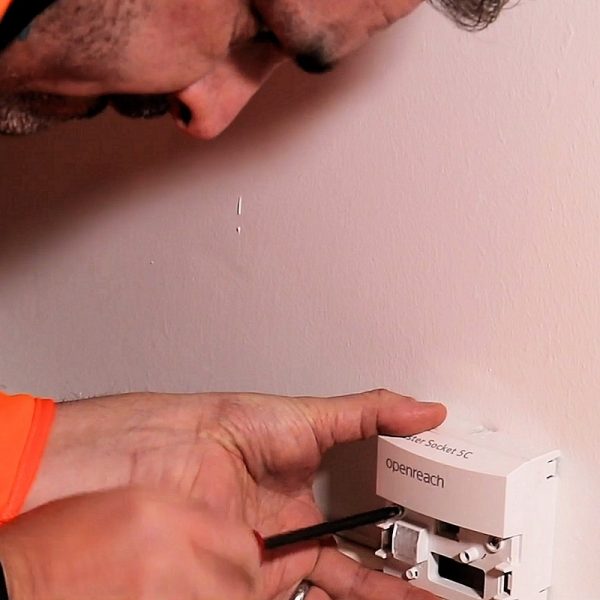
The wider industry is currently heavily focused on Openreach and BT’s looming end date for the old analogue phone and legacy broadband network (PSTN/WLR), which is due to be switched-off on 31st January 2027. But wholesale provider Vodafone (VodafoneThree) has set a more ambitious target of 1st October 2026 and it’s putting pressure on some of their ISP partners.
Broadband, phone, telecare providers and councils are currently working feverishly to migrate everybody across to IP-based voice and modern broadband connections (SOGEA / FTTC etc.) before the 2027 deadline (details). But the main focus of this remains on the people who use vital home telecare systems (e.g. elderly, disabled – vulnerable users), which aren’t always compatible with newer IP-based digital phone services (telecare providers were slow to adapt).
In most cases this upgrade usually involves a fairly seamless change of service, managed by your broadband or phone provider, which often results in customers needing to connect their home phone into the back of either a broadband router or Analogue Terminal Adapter (ATA); instead of directly into the socket on your wall or skirting board (NTE5 sockets). Special solutions also exist for telecare users.
Advertisement
However, Openreach recently warned that there are still about 1.5 million UK lines left to migrate within just a few months, which is putting a lot of pressure on retail providers. But some wholesale broadband and phone suppliers, such as Vodafone, have been encouraging their partners (e.g. other retail ISPs) to migrate as early as possible by bringing the date forward from January 2027 to next month (i.e. migration orders submitted after 30th September 2026 cannot apparently be guaranteed to complete before the existing service is ceased).
Vodafone informed ISPreview that this is intended to reduce the risks associated with ageing PSTN infrastructure, which is becoming increasingly difficult to maintain and more prone to faults. As a result, October 2026 marks the point at which VodafoneThree plans to begin formal service withdrawal and cease notification activity for customers who remain on legacy services, subject to contractual terms and applicable customer protections.
The approach is designed to provide sufficient notice and time for customers to migrate to suitable replacement services ahead of the final industry closure deadline. But some of Vodafone’s partners have expressed general concern to ISPreview about the impact this may have on their older and more vulnerable customers, as well as on some other customer groups.
Despite this, Vodafone told us that they were continuing to engage with partners on migration planning, alternative service options and customer support arrangements, while operating a structured communications programme to ensure customers are informed well in advance of any changes affecting their services. The provider added that protecting vulnerable customers will remain a priority throughout this process.
Advertisement
The operator said they were still committed to working collaboratively with their partners, customers and industry stakeholders to ensure the transition to All-IP services is “completed safely, responsibly and with appropriate protections“. Vodafone has encouraged those partners that do have concerns about end-users to raise them so they can help support service continuity where needed.






Mark is a professional technology writer, IT consultant and computer engineer from Dorset (England), he also founded ISPreview in 1999 and enjoys analysing the latest telecoms and broadband developments. Find me on X (Twitter), Mastodon, Facebook, BlueSky, Threads.net and Linkedin.











« Government considers £11 monthly UK broadband fee to fund BBC TV UPDATE
Advertisement
Leave a Reply
Privacy Notice: Please note that news comments are anonymous, which means that we do NOT require you to enter any real personal details to post a message and display names can be almost anything you like (provided they do not contain offensive language or impersonate a real person's legal name). By clicking to submit a post you agree to storing your entries for comment content, display name, IP and email in our database, for as long as the post remains live.
Only the submitted name and comment will be displayed in public, while the rest will be kept private (we will never share this outside of ISPreview, regardless of whether the data is real or fake). This comment system uses submitted IP, email and website address data to spot abuse and spammers. All data is transferred via an encrypted (https secure) session.

















Ridiculous with 4 months to go that this is still even an issue. They have had a decade to sort this out.
Not really. There are still vast areas of the country waiting to be upgraded to fibre and while this is technically a different issue, most people expect to do both things at once. This is especially true for customers that only use telephone services without broadband (older customer and businesses) where there has been no technical solution available until very recently.
Re Blue Shirt Guy’s post:
“Not really. There are still vast areas of the country waiting to be upgraded to fibre and while this is technically a different issue, most people expect to do both things at once.”
This is to be expected, because just about every press release urging phone users to switch to digital includes the misleading inference that copper lines are to be replaced by fibre, rather than be repurposed for voice over broadband, at least for the short term.
With the rush I presume that this is Vodafone acting as a reseller of WLR rather than offering their own analogue voice services as Sky or TalkTalk do. (were the C&W MSANs ever capable of that?)
They said never have put this back before
Have trained everyone to assume it will be put back again and hence no action taken
It’s going to be painful now, may as well have taken the pain before