New Survey Claims to Show Demand for Satellite Connected Smartphones

A new survey from Viasat and the GSMA (Global System for Mobile Communications Association), which questioned 12,390 mobile phone users across twelve markets (including the UK), claims to have revealed the “booming consumer demand” for Direct-to-Device (D2D) satellite services (mobile calls, texts and internet data).
Several satellite-based broadband operators are currently developing services that can directly connect to unmodified consumer Smartphones via regular mobile spectrum bands. Some examples of this include Starlink (Direct to Cell), AST SpaceMobile and Viasat (i.e. they have a vested interest in the survey). In fact, some phones, like the latest iPhone series from Apple and Samsung, already have a basic communication system that can work via satellite (e.g. for emergencies).
Suffice to say that Viasat and GSMA Intelligence were keen to know how much interest there might be in such services. In order to do this, they surveyed 12,390 mobile phone users about their existing terrestrial coverage, their awareness and interest in satellite-based services, and their willingness to pay for these services and to switch mobile network providers to access these services.
Advertisement
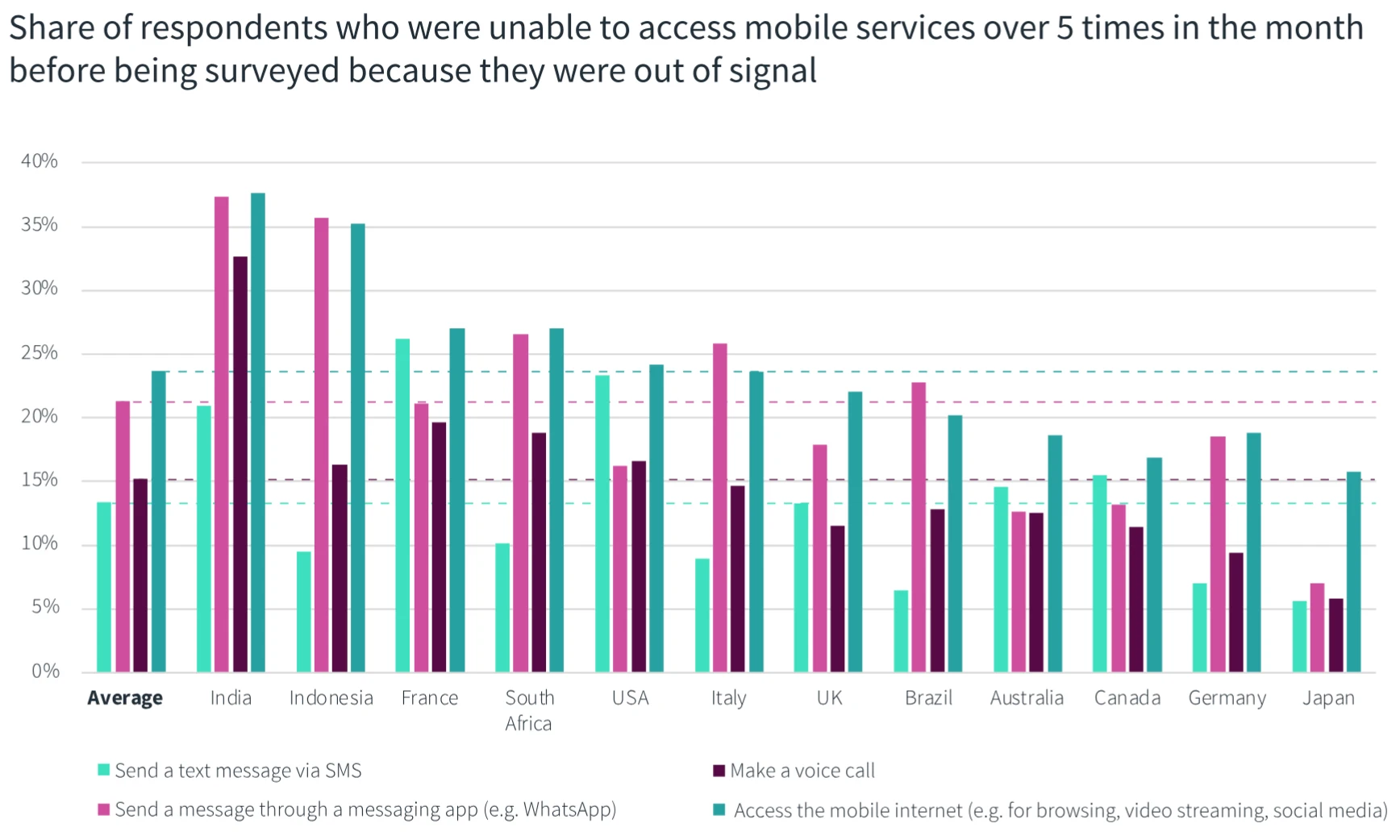
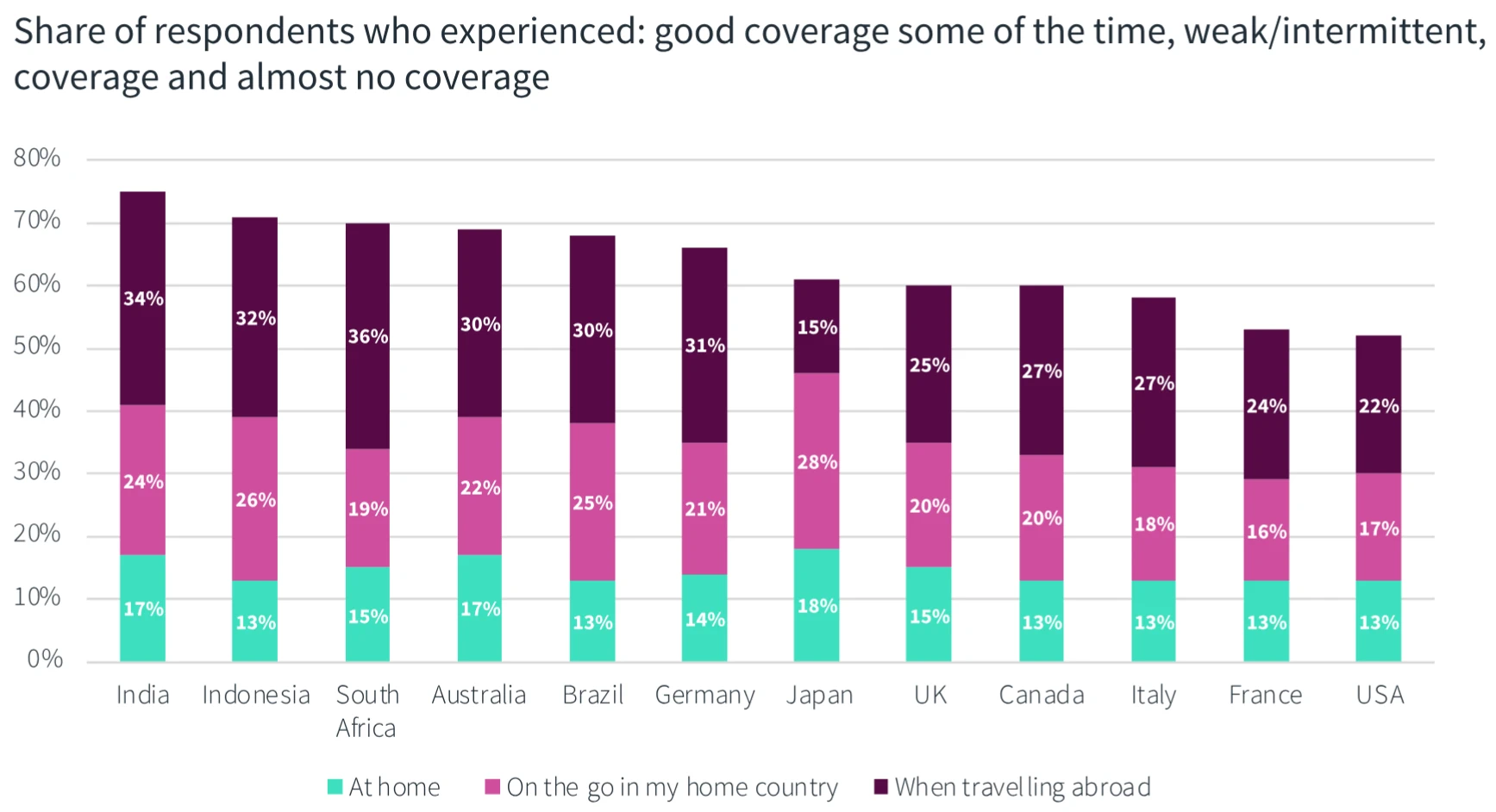
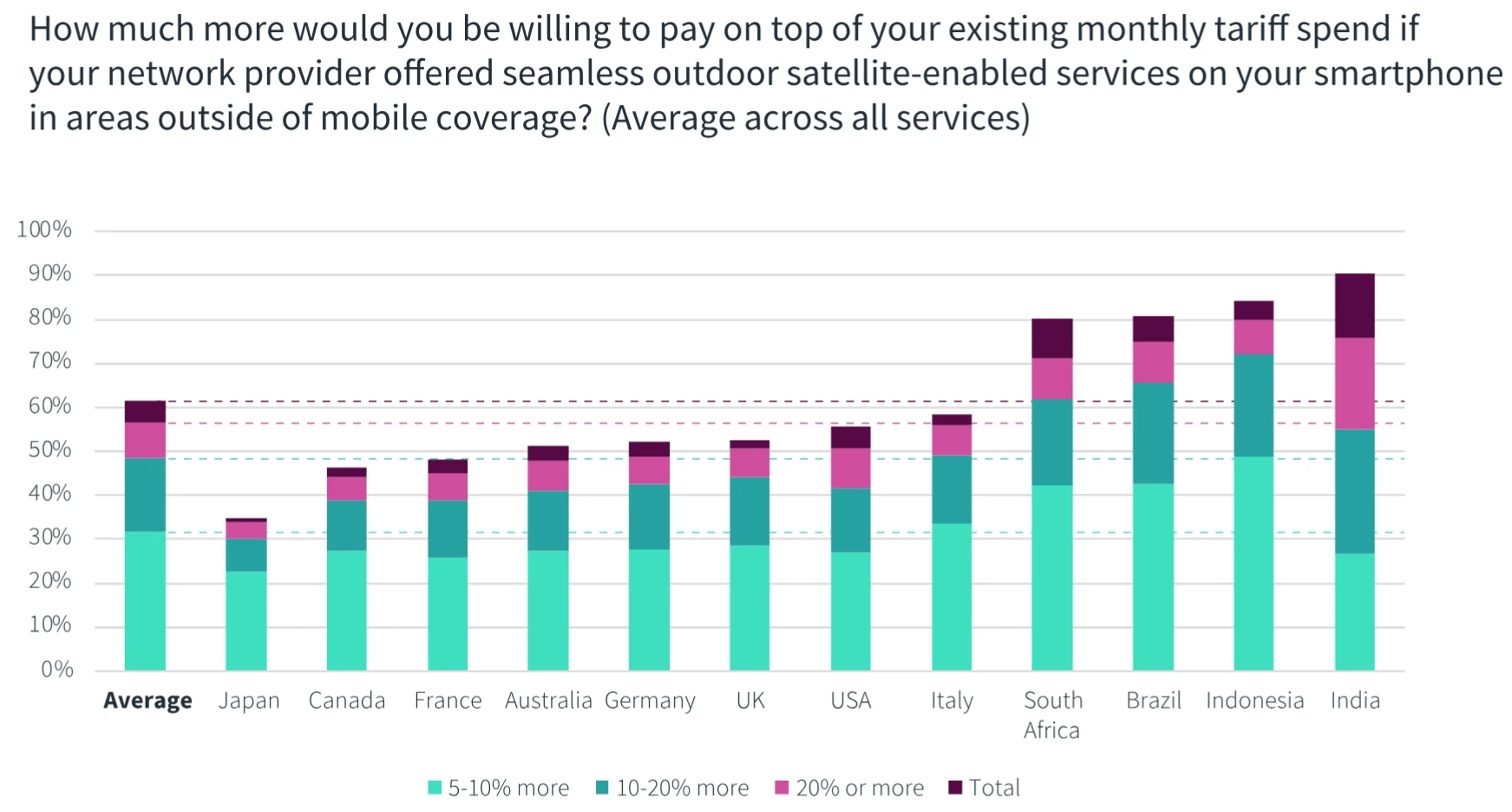
The survey found that, on average, more than a third of consumers report losing access to basic mobile cellular services at least twice a month. Perhaps as a result, 60% of consumers are willing to pay extra for satellite services, while 47% of global phone users stated they would switch to a different operator if they didn’t get cell coverage in traditional dead spots.
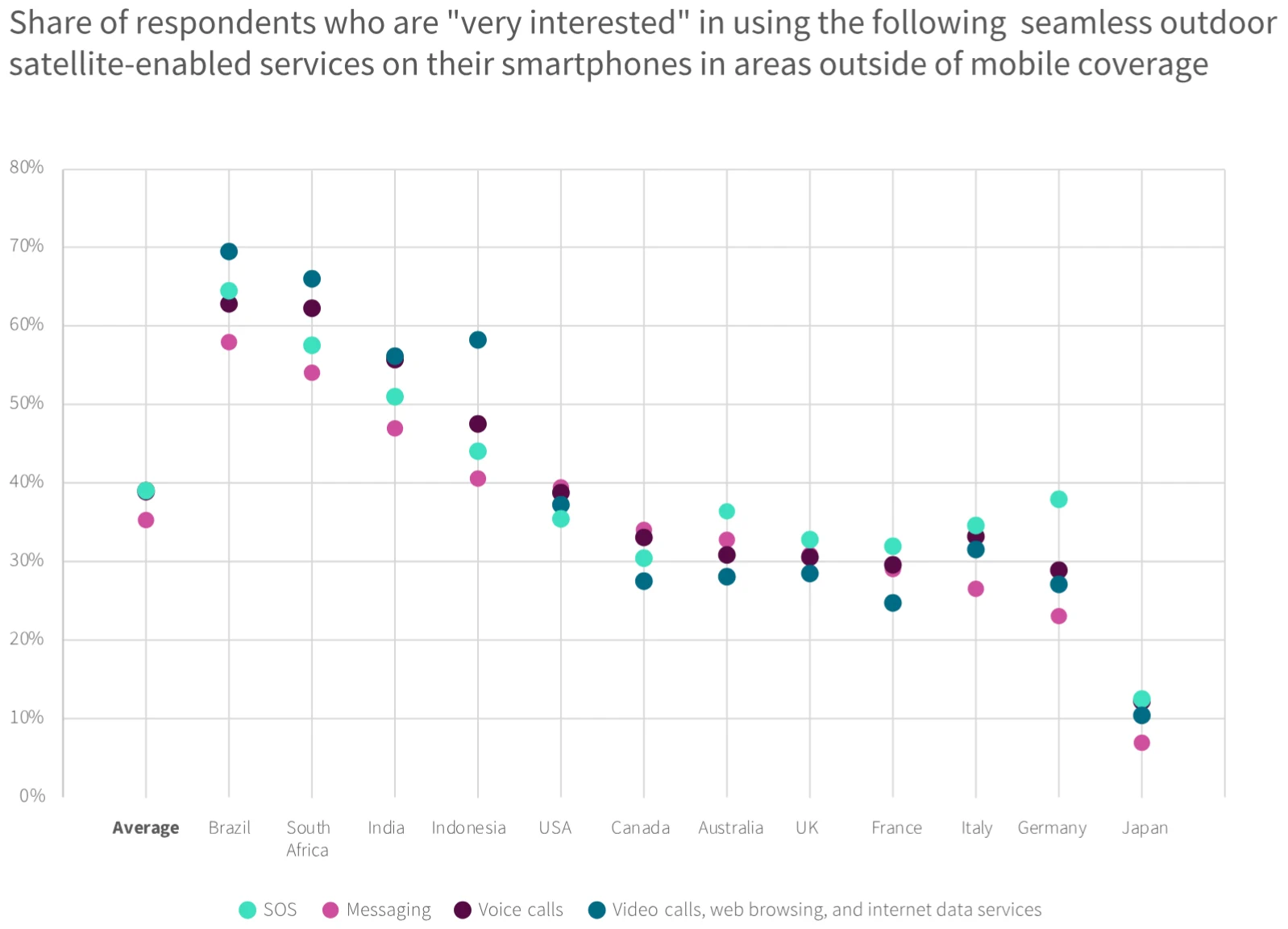
Consumers are apparently also ready to pay an additional 5-7% on their monthly phone bill for D2D satellite features, and even more in developing regions like India (9%). But awareness varies – with 74% of consumers aware of satellite features in India compared with only 25% in Japan, creating a ‘marketing gap’ which telcos must navigate to capitalise on demand.
Tim Hatt, Head of Research & Consulting, GSMA Intelligence, said:
“Six in ten say they’re willing to pay extra for D2D services, and nearly half would switch provider to get them, a decisive signal of demand and a clear revenue runway for operators. With satellite services aligned to 3GPP standards and moving from trials to commercial reality, the race is on to deliver D2D at scale, first messaging and voice, then data – so operators can differentiate on reach, resilience and customer trust.”
Advertisement






Mark is a professional technology writer, IT consultant and computer engineer from Dorset (England), he also founded ISPreview in 1999 and enjoys analysing the latest telecoms and broadband developments. Find me on X (Twitter), Mastodon, Facebook, BlueSky, Threads.net and Linkedin.












« Rural UK Broadband Altnet Gigaclear Secures £80m Funding from Banks
















Being connected to a far away satellite is one way of escaping the upcoming great Chinese firewall of Britain
How come? Your satellite connection will be downlinked to a base station in the UK. At least, that’s how Starlink works.
I think direct to cell from satellites is an interesting area.
ASTs undoubtedly has the ‘best’ system from a technical standpoint, if they can ever get it integrated into their satellites (the ones they’re launching/building right now are based on a much less performant FPGA, their new ASIC is where they have a big advantage).
The SpaceX system is technically inferior, but I believe could be ‘good enough’.
I do wonder how much need there will be for an ASTs type system, every car/public transport could have a starlink mini/amazon LEO/5g type system providing telemetry, and providing basic in car internet, and a hotspot for passengers.
Every home will have internet either through Fibre or one of the satellite providers.
So with Voice over Wifi (and wifi in general) 98% of people’s time is covered.
So that leaves when you’re not in a car/public transport, and not in a building – I’m not sure I see the enormous market that Viasat & ASTs seem to think they have, sure it would be nice to have – but I certainly wouldn’t fling a tenner a month at it, i’d rather get something like honest’s smart sim, which will cover me for most needs (at better speeds – ASTs is limited to 120mbps per beam, and each beam is upto ~24km in diameter / 450 km2)
Wouldn’t it be better if customers’ money was spent on improving coverage, so that existing masts are not oversubscribed and to bring masts to areas where there aren’t any