Ofcom Publish Telecoms and Broadband Proposals for Hull UK and KCOM UPDATE2
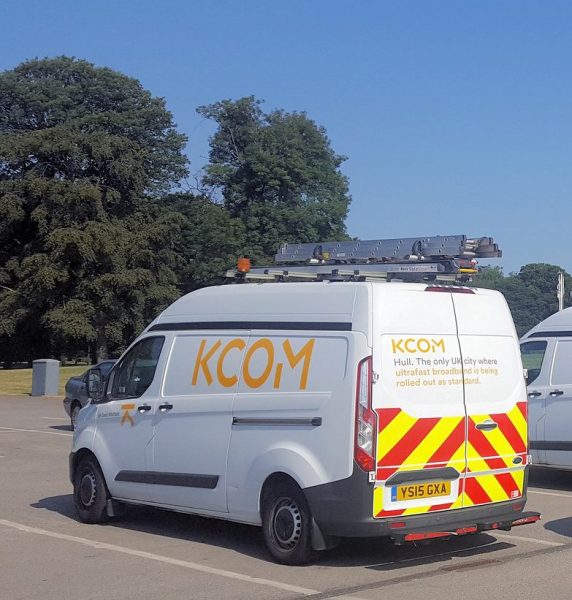
The UK telecoms regulator has today published the results of their Telecoms Access Review 2026 (TAR) for the Hull-area of East Yorkshire, which sets out how they intend to promote competition and investment in gigabit broadband (inc. business connectivity) across an area of c.198,000 premises that was previously totally dominated by KCOM’s network.
Ofcom typically conducts a single holistic review of the markets for both Business Connectivity (i.e. Leased Lines / Ethernet and Dark Fibre etc.), and the more residential focused Wholesale Local Access sector (i.e. broadband products like FTTP and FTTC etc.), every 5 years. In fact, they’ve already published their initial proposals for the rest of the UK (here), but Hull has always been a bit different.
At the last review, back in 2021 (here), the Macquarie-backed KCOM was still deemed to hold Significant Market Power (SMP) in the Hull area and its full fibre (FTTP) lines had already covered the vast majority of local premises. The operator has since expanded their fibre into other parts of East Yorkshire and Lincolnshire (England) – covering a total of 305,000 premises – but Ofcom’s review only focuses upon their SMP patch in Hull.
Advertisement
However, Hull in 2025 is not the same as it was in 2021, which is because in that time three rival alternative networks (see above) have now built their own FTTP networks across most of the city (Grain only covers a smaller patch) and have thus significantly weakened KCOM’s grip. At the same time, KCOM has been busy shifting customers off their old copper-based services (analogue phone, ADSL etc.) and on to fibre, which will shortly be followed by the full retirement of their copper line network.
The Issue of Infrastructure Sharing
Suffice to say that Ofcom’s new review has to address all this change, which would normally suggest a need to soften KCOM’s regulation in certain areas. One difficulty is that last year also saw a significant level of local protest erupt over the issue of infrastructure sharing in the city, which was fuelled by MS3 and Connexin’s deployment of 9m high wood poles – something that many people find unattractive (KCOM’s existing network is mostly underground). On the flip side, network operators see poles as a quick and cost-effective way of breaking into a market that has long been dominated by a single operator.
The law does require KCOM to fairly share access to their existing cable ducts in Hull (ATI Regulations). But rival operators expecting the same level of access, flexibility and affordability as the regulated solution (Physical Infrastructure Access – PIA) from Openreach have often run into problems with KCOM’s confidential commercial terms, which up until recently were allegedly placing an unfeasibly high price on access. The process to harness this is also still quite manual (laborious).
However, after coming under a lot of community and political pressures, KCOM eventually reached an agreement with Connexin and MS3 to co-develop a new pathway to accessing their existing ducts to run new fibre (i.e. limiting the need for new poles). Initial trials of this did take place, and the project is in its infancy, although the effort has now been somewhat impacted by wider financial / market pressures that have separately limited the ability of MS3 and Connexin to expand. Altnets also still had some cost concerns about the KCOM-led approach.
Advertisement
Similarly, KCOM confirmed to ISPreview in November 2024 that, due to the changing economic climate (i.e. high interest rates and an inability to attract fresh funding), they too had “paused” wider network expansion activity to focus on growth (greater commercialisation) within their existing footprint (here).
In short, Hull is a market that has reached an interesting stage of mature and competitive development, albeit with competitive network expansion progress having largely stalled across the board in recent months. Until today, this made it difficult to know quite how Ofcom might adjust their regulation to reflect all of this, but now we know. The phrase too little, too late comes to mind.
Ofcom’s proposals
The regulator’s review finds that, despite some strong progress from rival altnets, “network competition is not yet established and altnets face challenges in winning customers given KCOM’s incumbency advantages“. Between 71-80% of all premises in the Hull Area currently still purchase a fixed broadband connection connected to KCOM’s network. Also, although many areas now have a choice of one or more network providers, around 21%-30% of premises still have no alternative to KCOM.
In short, Ofcom states that competition within Hull still “needs to become more embedded and sustainable” to deliver long term benefits to consumers. The rules they’re proposing today will thus “continue to regulate in a way that encourages and supports competition and investment“.
Advertisement
KCOM will thus be expected to improve access to its network ducts and poles for running new fibre (as above, this arrives a little too late to help much), although they’ll no longer be expected to provide access to Dark Fibre (i.e. enabling rivals to install their own equipment at either end of the KCOM’s unlit fibre within cable ducts). But the latter will be subject to a 5-year transition.
Ofcom’s Proposed Changes for Hull and KCOM
We propose to find that KCOM has significant market power in the wholesale local access and leased line access markets in the Hull Area.
We are proposing a set of remedies to address the competition concerns that arise as a result.
We propose to:
➤ Improve access to KCOM’s telegraph poles and underground ducts:
A key element of our proposed approach to promoting network competition is to require KCOM to give other providers access to its duct and pole infrastructure. As in the rest of the UK, we propose to introduce a specific network access remedy to provide altnets with more certainty. We also propose that rental charges should be benchmarked against Openreach’s rental charges, and any costs associated with making the infrastructure usable will be recovered from all users of the infrastructure (subject to a financial limit). To ensure a level playing field between KCOM and other network operators, we propose that KCOM be subject to a no undue discrimination obligation and provides transparency over its compliance.
➤ Maintain access to existing wholesale services in both the wholesale local access and leased line access markets:
This includes a requirement on KCOM to provide an Ethernet service for the leased line access market, and to provide a wholesale local access service to meet its proposed general network access obligations. All wholesale services should continue to be provided on fair and reasonable terms with no undue discrimination.
➤ Remove the specific obligation on KCOM to provide dark fibre access:
As a result of increased network competition and the potential for this to develop further, we propose to remove the specific requirement for KCOM to provide access to its leased line access services using the dark fibre element of a leased line. We also propose a five-year transition period for any existing dark fibre purchased from KCOM.
As mentioned already, some of these changes (positive infrastructure sharing improvements) are arriving a little too late to help a consumer market where rival networks have largely stalled their deployments or at least slowed them to a crawl.
Admittedly, it’s possible the pace may pick up again in the future due to the infrastructure sharing changes, although we haven’t yet seen any concrete commitments. But this is at least a positive change and is a bit closer to Openreach’s PIA than the prior KCOM-led approach. In addition, the change could also boost business (B2B) connectivity in central Hull, which under the KCOM-led approach were perhaps not particularly viable.
On the surface, the Dark Fibre change could be more contentious, although it’s currently difficult to know quite how much of an impact that will actually have until we get more industry feedback. But we believe the take-up has been low, thus the impact would be small, and there is now competition in this area.
Overall, it’s a bit of a mixed bag, with pros and cons for different players. However, given how Australian investment group Macquarie have previously been reported as trying to sell or merge away from KCOM (here), they’ll probably be unhappy that Ofcom didn’t soften KCOM’s regulation to a stronger degree.
Ofcom now intends to consult on all this until 26th February 2026, and they’ll then publish their final decisions in October 2026, although we don’t expect much to change between then and now.
Ofcom’s Consultation on KCOM and Competition in Hull
https://www.ofcom.org.uk/../consultation-promoting-competition-and-investment-in-fibre-networks-hull-area-review-2026-31
UPDATE 9am
We’ve had a comment from MS3.
A spokesperson for MS3 told ISPreview:
“We continue to digest all the proposals but initially welcome Ofcom’s rejection of many of the unfair terms in KCOM’s duct and pole sharing offer. We urge KCOM to not wait another year to make these changes so that MS3 and others can make full use of existing infrastructure to prevent further duplication across our region, starting immediately.”
UPDATE 9:47am
KCOM has now provided a comment.
A spokesperson for KCOM said:
“We share Ofcom’s objectives of promoting investment and competition to the benefit customers in Hull and East Yorkshire. We’ll be reviewing Ofcom’s proposals in detail and will respond in due course.”






Mark is a professional technology writer, IT consultant and computer engineer from Dorset (England), he also founded ISPreview in 1999 and enjoys analysing the latest telecoms and broadband developments. Find me on X (Twitter), Mastodon, Facebook, BlueSky, Threads.net and Linkedin.




























Small point of clarification, KCOMS network is not ‘all underground’, a significant volume is overhead
It’s time Ofcom took a closer look at the new build estates that have been built by companies like OFNL/Fibrenest and appear to be operating local monopolies.
There was rumours last year that KCom was up for sale . But what does the future hold for KCom
It was. No one wanted to pay the price tag. It’s worth less than half the asking price. Likely one of the reasons why the CEO stepped down after the failed sale.
Problem is, there is no solution here. It’s a poison chalice. Unless something significant or extreme changes, it will be status quo.
They haven’t invested in XGS Pon despite what press releases would want you to believe.
So don’t expect anything fundamental to change.
They were hoping to sell before they had to offer PIA. Unfortunately for them while they could see the direction of travel and wanted to get in ahead of it so could everyone else.
Not a coincidence that they became much more open to PIA once they realised they weren’t getting the valuation they were looking for.
So exactly what will change in the short term from OFCOM’s broadband proposals for Hull and the UK ? Yes KCOM have already released their PIA and it is according to KCOM similar in pricing structure to Openreach . As far as I’m aware the difference being that if blockages to ducts are found there is a specific procedure to follow and unlike Openreach , KCOM will not foot the whole bill only half which again is suggested . At the moment because of lack of finance and interest rates plus most probably the lack of uptake of customers MS3 have put their build on hold some of it only telegraph poles with no fibre attached ! Not sure about City fibres purchase of Connexin infrastructure as to City fibres plans !
KCOM have already said they will automate the PIA if there is the demand but will either MS3 orCity fibre or any other code operator take up the offer ?.
It seems to me the telecommunications industry , ofcom and government do a lot of talking about what should be happening to provide access to FFTP and choice of providers and sharing of infrastructure to limit overbuild with telegraph poles and yet what will these proposals acheive ?.
I don’t think many in the telecommunications industry are bothered about the impact of overbuild of telegraph poles, from the amount of people concerned about telegraph poles installed across the UK . The industry should be ,as annoying potential customers will not prove to be a good buisness plan . Yes you may get the customers who are not particularly concerned about the effect of the unnecessary infrastructure, you may also get those customers who need to reduce bills to live . Do the right thing , do not overbuild infrastructure and certainly when you have no immediate plans to complete it . This is something OFCOM should be acting on urgently , and I don’t believe there is anything mentioned regarding this . With PIA I understand builds have to be completed within a time frame or removed , this should certainly be applied to incomplete telegraph poles builds
Joyce – KCOM invited you in for a meeting and told you their sharing offer was fair and that the sharing party should pay equally to fix the broken network that they then don’t own half of. They knew it wasn’t fair but told you it was anyway.
The impartial regulator has now agreed they should foot the whole bill, as Openreach does everywhere else in the country.
This will mean MS3 uses shared ducts and poles wherever they can for new network deployment going forwards if KCOM just agree to this now.
Alternatively they can string this (and you) along for another 10 months until this regulation comes into force. Let’s see what they choose to do.