Gov Detail First Public Funding to Boost Gigabit Broadband for Urban UK Areas
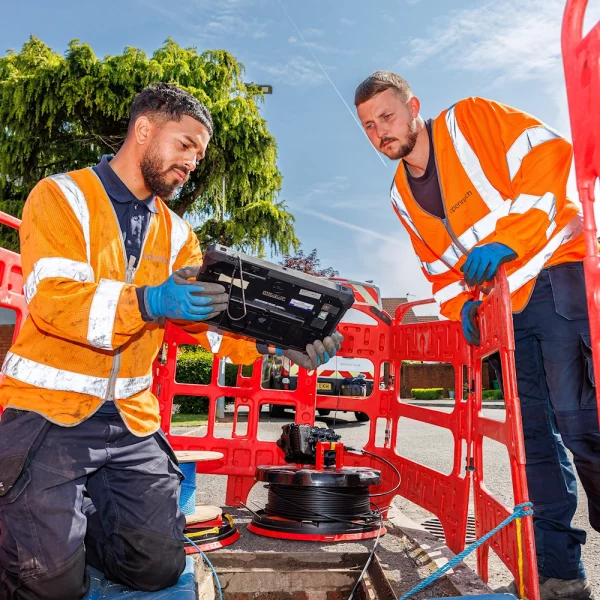
The UK Government has this morning confirmed that their recent modification to Openreach’s (BT) Call Off 5 contract for Essex and North East England (here) will be the “first Project Gigabit contract to target pockets of poor connectivity in towns and cities“, as well as the countryside. Over 9,500 extra premises in Essex “burdened with older broadband” will benefit from the £8.3m expansion (public subsidy).
Readers may recall that we first wrote about this adjustment on Friday afternoon, although at the time it wasn’t clear precisely which areas would benefit. The existing Call Off 5 contract was originally announced all the way back in January 2025 (here), although thus far most of its focus has been on upgrading the hardest to reach rural parts of Essex (where over 10,000 premises are already set to benefit and 500 have so far been completed).
However, in recent years the government’s umbrella Building Digital UK (BDUK) agency has been increasingly tasked with looking at how pockets of poor urban connectivity can also be reached, which may otherwise sit neglected as patches of poor service (typically dotted about like small islands inside cities and towns).
Advertisement
The latter problem can be caused by all sorts of challenges (e.g. high build costs, issues with securing wayleave / access and permits, major road closures, complexities from direct buried cables etc.), while competition laws often make it very difficult to use direct public subsidies in such areas (i.e. locations where private investment should normally be able to resolve without intervention).
In the case of Essex, the announcement confirms that the focus will be on the few areas that are “currently connected via underground cables“, which it says makes “them too costly for providers to reach via commercial rollout due to the additional engineering works“.
The easiest solution to the aforementioned legal and competition dilemma has historically been to use a voucher scheme, which was tried before (‘Connection Vouchers’) and eventually morphed into today’s more rural-focused Gigabit Broadband Voucher Scheme (GBVS). But vouchers aren’t always enough to solve such costly problems (here) and some MPs remain opposed to the idea of using public funding in urban areas (here).
The partial solution for Essex
The reality is that quite a few years have passed for many of the aforementioned urban areas and if they were going to be resolved then you’d hope that would have happened by now, but sadly many pockets remain. BDUK’s solution is thus being reflected in the latest contract modification to Openreach’s publicly subsidised roll-out of full fibre (FTTP) broadband across Essex under the Call Off 5 contract.
Advertisement
The contract forms part of Openreach’s wider Single Supplier Framework deal – now valued at c.£1.2bn, which is focused on Cross-Regional (Type C) procurements (no other suppliers tackle Type C) – these typically reflect areas where other attempts to find a solution have failed in one way or another.
Apparently work to connect the premises in Essex will begin immediately, covering areas including parts of Brentwood, Chelmsford, Basildon, Clacton and Ardleigh.
UK Telecoms Minister, Liz Lloyd, said:
“Project Gigabit is bringing better internet to more blackspots across the UK, thanks to government backing. This is the very first contract that’s focusing on urban areas, not just the countryside.
Pockets of our towns and cities are still left disconnected. To reach our 99% coverage target, it is vital no urban neighbourhood slips through the net.
We’ve already got the ball rolling to connect areas of Essex missing out, and now we’re extending our efforts so that even more residents can access the digital opportunities they deserve.”
Kieran Wines, Openreach Partnership Director for London and the South East, said:
“As well as reaching rural communities, it’s vital we keep strengthening connectivity in towns and cities. This Project Gigabit contract helps us extend full fibre broadband into more urban neighbourhoods across Essex, adding to the almost 575,000 homes and businesses across the county that we’ve already reached through our own rollout.”
The Government added that “connecting hard-to-reach premises in urban areas will be vital to achieving the government’s target of full gigabit coverage by 2030” and their “mission to break down the barriers to opportunity across the country“. But in saying that they seem to have forgotten that they already delayed this target from 2030 to 2032 (here).
At this point ISPreview recalls that BDUK have previously been gauging market interest in a similar expansion for other parts of the UK, so we fully expect that Essex won’t be the last region to benefit from public subsidies for urban expansion of gigabit broadband infrastructure. Overall, we think this is a positive development, although it will no doubt have its critics.
Advertisement






Mark is a professional technology writer, IT consultant and computer engineer from Dorset (England), he also founded ISPreview in 1999 and enjoys analysing the latest telecoms and broadband developments. Find me on X (Twitter), Mastodon, Facebook, BlueSky, Threads.net and Linkedin.


























Comments are closed