EE Start Engaging UK Consumer Customers over 2G Mobile Switch Off
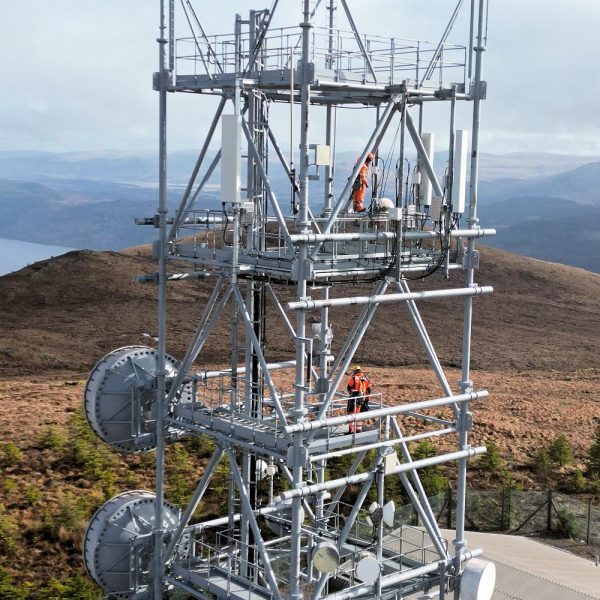
According to ISPreview’s sources, mobile operator EE (BT) appears to be starting the gradual consumer engagement phase of their plan to close down the old 2G network. The move follows last year’s earlier effort to begin engaging their business customers (here) – supporting them to move from 2G to more modern 4G, 5G or Internet of Things (IoT) services.
In case anybody has forgotten, EE switched-off nearly all of their final 3G sites back in February 2024 (here), which actually occurred well before their much older 2G network is due to be retired. The physical network switch-off phase for 2G is currently still due to start in May 2029, but there’s a lot of work to be done first.
The situation around 2G tends to be more complicated than 3G, not least because its signals still remain useful as a low-power fallback when 4G/5G isn’t present and remain necessary in certain rural areas, as well as for particular applications (e.g. certain IoT / M2M services, lift alarms, telecare systems etc.). Nevertheless, the government has previously agreed with EE, O2, Vodafone and Three UK to phase-out existing 2G and 3G signals by 2033 (here).
Advertisement
The key change occurring now is that EE are expanding their customer engagement from business users to residential consumers. Customer service agents and retail staff will now be notified if a customer is expected to be impacted by 2G Sunsetting (they can often tell this from the mobile handsets being used), which should enable them to mitigate most issues long before 2G is actually turned off.
Some customers impacted today are already unable to access mobile data on their current setup and, if EE doesn’t take any action before 2G is switched off, then those users may also lose access to calls and texts (effectively a disconnection). Naturally EE, like all UK mobile operators, are keen to avoid that outcome and want to give everybody plenty of warning, while also expanding their 4G / 5G network where needed and helping users to upgrade to modern equivalents of their older 2G handsets.
Customers using one or more of the following will lose mobile service completely, once the 2G network is switched off, without action.
1. A 2G, 3G or 4G non-VoLTE device or a device that doesn’t support 4G Calling.
2. An old 2G or 3G SIM card.
3. A 2G or 3G price plan.
Broadly the approach being taken for the 2G switch-off should be similar to the 3G process, which among other things means that some vulnerable customers will be offered free handsets. On top of that we may see some localised trials of the network switch-off, while those identified as still using the service are likely to be contacted several times to help them upgrade before the switch-off itself.
Advertisement
So if you’re still on EE’s 2G network and using an older handset (as above), then don’t be surprised to hear from the operator in the near future.






Mark is a professional technology writer, IT consultant and computer engineer from Dorset (England), he also founded ISPreview in 1999 and enjoys analysing the latest telecoms and broadband developments. Find me on X (Twitter), Mastodon, Facebook, BlueSky, Threads.net and Linkedin.











« APFN Sells Brillband’s Retail UK Broadband Customers to ISP Olilo
Advertisement
Leave a Reply
Privacy Notice: Please note that news comments are anonymous, which means that we do NOT require you to enter any real personal details to post a message and display names can be almost anything you like (provided they do not contain offensive language or impersonate a real person's legal name). By clicking to submit a post you agree to storing your entries for comment content, display name, IP and email in our database, for as long as the post remains live.
Only the submitted name and comment will be displayed in public, while the rest will be kept private (we will never share this outside of ISPreview, regardless of whether the data is real or fake). This comment system uses submitted IP, email and website address data to spot abuse and spammers. All data is transferred via an encrypted (https secure) session.















For anyone out there with old/unsupported phones, Argos sells basic Nokia devices (Nokia 105, Nokia 110, etc) for £13-£25. You can even pay in 3 payments with Klarna if financially things are tight.
They support 4G and VoLTE, battery lasts for a week, little to no options for a user to mess up, small, and cheap. Perfect for that family member that uses a dumb phone or for those who want a basic phone just for calls and texts.
No need to go waste hundreds on some Samsung or iPhone if all you need is the basics.
Agreed.
We have a Nokia 105 as our family “emergency” phone in case one of our smartphones stops working – just swap the SIM card over and let it set itself up.
@Anon Only complaint with the Nokia 105 & Nokia 110 models is their small screens and buttons. If you are looking for a phone with a larger screen and buttons than the Mokia 105/110 – the Nokia 2660 Flip can be a better choice – but comes with a larger price tag (but still well under £100).
make sure that it is specifically the 4G version though. Argos also sells Nokia phones that aren’t marked as 4G and the product description says “2G network capability”. These may be 2G-only models.
Nice ad plus ai bots bud
I think all the networks need to be doing proper assessments (similar to Streetwave and the use of devices on bin lorries thats been reported on a few occasions in parts of the country) before they start switching 2G off. It still amazes me the times that I see an E appear on my phone when signal is that poor and I live in the Black Country. And that’s not just my phone – my wife gets the same too!
O2’s advice when CLID doesn’t work on their VoLTE, “turn off 4G calling”! Some operators have issues to resolve before turning off 2G, lest we go back to the early days of landline, and the surprise of finding out who was calling. @Jango now 3G has been turned off, phone often switches to “E”, but that’s the reality not the coverage map from the network.
I wonder if it’s just a quirk in their networks with 2G being still available and a phone still happy to use 2G if it wants to
I say this because on Vodafone on my old and new phone I often would catch it connecting to 2G especially when not being used, my new phone has an option to disable 2G which I did and obviously different places and if there is no 4G signal at all that’s one issue, but for me once I removed the option to connect to 2G I haven’t had any issues with only a 4G and 5G signal available even in more rural areas
Vodafone’s 4G and 5G service didn’t work for nearly a week where I live, but 2G was fine (this was confirmed on their coverage map as well). When making phone calls from a car, 2G calls are still significantly more stable than VoLTE (although I can see some improvement).
What’s all the fuss about? Just kill it! Three switched off their 2G network 15 years ago.
Three never had one, they did have an arrangement with Orange to roam in some areas
Three never had 2G. The clue is in the name.
Three has never operated a 2g network in the UK.
Three UK never had a 2G network. They had a roaming deal with O2, and later with Orange, to provide basic voice/text coverage in areas that the 3G had not yet got to.
It was one of the reasons for the early customer dissatisfaction as it was not possible to seamlessly handover between 2G and 3G in the way that the other four networks could, so calls would drop regularly. That and the crap selection of handsets.
Then they did the deal with T-Mobile to build the MBNL and amassed excellent 3G coverage, arguably better than O2/VF/Orange, even in rural areas
Three never had a 2G network.
They can’t just kill it, there are people who still have old phones, not sure how many would, old phones would have naff batteries. But also, some I.O.T use 2g
So have to make sure that as many as possible;e have changed to 4g at least.
Well, then riddle me this. I was on Three in 2010 with a candy bar Nokia and one day it stopped working. When I visited one of their stores I was informed they pulled the plug on 2G and my phone didn’t support 3G.
2G or not 2G? That is the question.
Has Three enabled call catcher yet (you get an SMS when someone calls you but your phone doesn’t ring because the network can’t connect the call)?
So with Three, you never knew that over 25% of calls didn’t connect (I use HulloMail so I knew exactly when a call wasn’t connected).
Orange/EE/T-Mobile always had it (call catcher was part of the voicemail). Vodafone and O2 had it after 2005 (with limitations and it was disabled by default). I think by 2015, call catcher was integrated into the voicemail on Vodafone at least.
EE is probably the network which will be least troubled by the 2G switch-off.
Their 2G only ever ran on 1800mhz. The 800mhz LTE rollout has more than covered that, especially thanks to ESN.
I think it’ll be trickier for O2 and Vodafone, whose 900mhz 2G has unbeatable rural coverage still. Plus O2 has the smart meter contract.
The migration of the SmrtMeter network to 4G has been in hand since 2025.
Hi Mark. You’ve referenced Three to turn off their 2G network in the third paragraph.
Might wanna remove them from that list!
Personally don’t think 2G should be switched off until emergency satellite coverage is UK wide and offered as standard on most phones and most plans. The EE 2G network doesn’t matter too much because of the high frequencies used, however, 2G on Voda and O2 still play a massive part in emergency communications, with many areas, especially rural, relying on them if a 999 call is placed. Even many in home emergencies rely on the 2G network given it’s the only signal which can penetrate many homes, mines included.
While specific data is yet to be published regarding emergency calls via 2G networks. Using ChatGPT to estimate using multiple other datasets, it puts emergency service calls coming from 2G networks at around 7%.
Mountain rescue callouts could be significantly higher too.
This needs properly looking into before a switch off can happen imho. By the fact there is little publicly accessible data on this subject, it tells me that not enough research has been done.
I do think that 4G and 5G needs to be improved, certainly 5G.
Since 3 got rid of 3G, signal on my phone in some places is awful now.
The data is being collected and reported to DCMS under the 2G charter, which was launched in March:
https://www.gov.uk/government/publications/2g-switch-off-charter/2g-switch-off-charter
Wh, no major loss if and when 2G is switched off. I haven’t used 2G in years, literal years, because enabling 2G allows the handset to drop to it more aggressively, so you get a phone that’s on 2G when there’s still 3G or 4G coverage.
This is more so now that Vodafone and O2 have dropped their 900MHz 3G. Their 4G really does need a power boost in the same way that Three and EE are able to run their 800MHz at high power.
Erricson has estimated that Western Europe will have almost entirely migrated to 5G by 2031, with 4G usage in the low single-figure percentages.
At about that time, operators are expected to embark on their plans for the deployment of 6G services.
Put the two together, and it might be reasonable to conclude that operators in Western Europe will be looking at the shutdown of their 4G networks shortly after the 2G shutdown has been completed.