Portsmouth Water adopt Openreach’s UK fibre broadband network to detect leaks

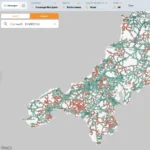
Portsmouth Water has today announced that they’re set to become the latest utility company to deploy Lightsonic’s technology, which works by harnessing Openreach’s (BT) existing Fibre-to-the-Premises (FTTP) based broadband network across the UK to help detect underground water leaks in pipes.
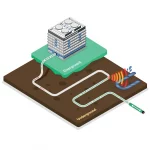
As we’ve reported before (here, here, here, and here), fibre optic cables aren’t only useful for transmitting data using pulses of laser light. Such cables can also be used to detect tiny changes in light signals (e.g. polarisation) as they move along the cable, which can help to monitor Earthquakes, Tsunamis and even to locate underground water leaks via Distributed Acoustic Sensing (DAS) or Distributed Fibre Optic Sensing (DFOS).
Earlier this year we reported on how Lightsonic and Openreach had been trialling such a technology in the UK with Affinity Water. The service has since expanded and we understand that it enables technicians to find four times as many leaks and is already saving 1.2 million litres per day per 100km every year. Last month also saw Southern Water join the service, which supplies an area of c.4,450 sq. km and serves 2.7 million customers.
Advertisement
The latest development is that Portsmouth Water have also signed up to harness the system and intend to begin adopting it in December 2026. Lightsonic states that their technology can help to pinpoint potential leaks to within 10 metres, provided the leak is occurring near to Openreach’s fibre cables of course (underground utilities often run in relatively close proximity).

England has an ageing water network with 60% of water mains being 45 years old and 13% more than 100, which are sadly prone to leaks.
Trevor Linney, Openreach’s Director of Network Technology, said:
“We’re seeing growing interest from water companies in using fibre sensing technology in this way. By combining Lightsonic’s technology with Openreach’s Full Fibre network, water companies can gain greater visibility of their assets, helping them reduce leakage and manage resources more sustainably. We’re pleased to support Portsmouth Water in adopting this new approach.”
Bob Taylor, CEO of Portsmouth Water, said:
“Reducing leakage is a key priority for us, and identifying and repairing leaks as soon as possible is essential to achieving that. This technology will help us detect leaks more quickly, find more leaks across our network and carry out repairs sooner, helping to reduce water loss. We’re excited to be working with Lightsonic and Openreach and look forward to seeing the results.”
One catch is that this presently only works across “spare” (unused) fibres within Openreach’s network. The future plan still envisages this solution being expanded to work across Openreach’s active fibre network too, rather than having to install a dedicated sensing fibre network (more expensive), although this hasn’t happened yet.
Advertisement
However, it’s worth remembering that Openreach aren’t the only fibre game in town, and it’s possible that we might also see rival networks – belonging to several different operators – being harnessed in the future in order to further improve such systems or to provide a bit of competition. But for now, it’s an Openreach dominated solution and that makes sense given the size of their UK fibre network (altnets also harness a lot of the same network).



Mark is a professional technology writer, IT consultant and computer engineer from Dorset (England), he also founded ISPreview in 1999 and enjoys analysing the latest telecoms and broadband developments. Find me on X (Twitter), Mastodon, Facebook, BlueSky, Threads.net and Linkedin.










« Broadband ISP YouFibre preparing to launch UK pay TV product
Advertisement
Leave a Reply
Privacy Notice: Please note that news comments are anonymous, which means that we do NOT require you to enter any real personal details to post a message and display names can be almost anything you like (provided they do not contain offensive language or impersonate a real person's legal name). By clicking to submit a post you agree to storing your entries for comment content, display name, IP and email in our database, for as long as the post remains live.
Only the submitted name and comment will be displayed in public, while the rest will be kept private (we will never share this outside of ISPreview, regardless of whether the data is real or fake). This comment system uses submitted IP, email and website address data to spot abuse and spammers. All data is transferred via an encrypted (https secure) session.

















Curious to see the technology out in the wild. The tech was originally a Radiodetection/Qinetiq project to monitor core fttp lines for major unplanned construction activity over hundreds of km distance (imminent strikes)