Openreach Blocking Copper Broadband at UK New Build Sites
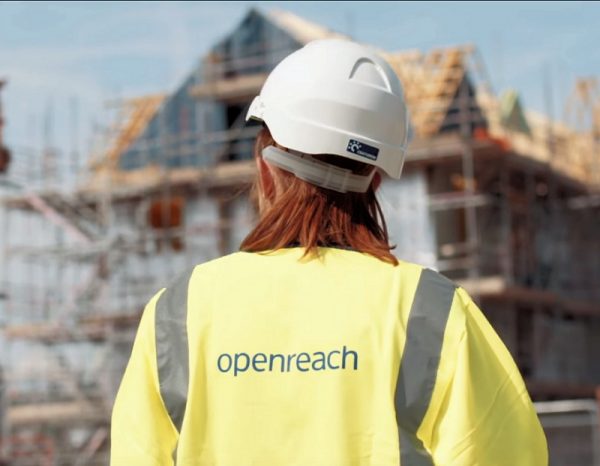
A clash between a property developer and Openreach (BT) in Buckinghamshire has confirmed that the UK network provider is “not fitting copper anymore to any larger sized developments” (defined as anything above 30 plots / homes passed). The move reflects the industry’s growing focus on “full fibre“.
For the purpose of this article we aren’t going to name the developer. The situation came to our attention after a property developer got in touch to express their “dismay” at Openreach’s refusal to connect copper at two sites (both Multi-Dwelling Unit builds of a little over 30 plots), which are in the late stages of build and all the interiors have been fitted copper only.
Openreach have been pushing 1Gbps capable Fibre-to-the-Premises (FTTP) technology for new build developments since around 2016 (see here and here) and they’ve introduced various discounts to support this. Indeed sites with 30+ plots can get the work done for free, provided the developer notifies them early enough (retrofitting fibre at a later stage of the build is more expensive).
Advertisement
All of this is in line with the Government’s policy toward fostering “gigabit-capable and full fibre broadband,” although for the past few years they’ve been encouraging developers to factor faster connectivity in during the planning stages. Likewise Ofcom are even in the process of consulting on the eventual withdrawal of copper services in areas where full fibre dominates (here).
Since the end of 2016 – Broadband Cost Reduction Directive (2014/61/EU) – it has also been a requirement that all new developments must be built to facilitate “high-speed broadband” (e.g. empty fibre ducts to homes). The Government are also aiming to mandate gigabit-capable broadband for new builds (here). Due to all of this it’s unwise for new build firms to be adopting a copper mindset.
Back to the new build developer..
In the aforementioned case the situation is a little more complicated. The developer claims that their first application was for a “fibre” service, although following an initial site visit it was agreed to go with a copper solution and subsequently all correspondence with Openreach was based around that. As such the developer proceeded to build copper everywhere.
On the flip side Openreach generally asks developers to notify them at least 8 weeks before Site Start Date and / or 6 months to the First Service Date (Virgin Media gives similar guidance to developers). This is to ensure they have the necessary lead time to build the main fibre ‘spine’ cable in the off-site public highway (sometimes requires lengthy noticing periods) and to do the on-site work with minimum fuss (internal wiring etc.).
Advertisement
However as we understand it the developer may have only given Openreach around 6-9 weeks’ notice prior to the First Service Date and, given the limited time, this left the operator with little choice but to agree a copper solution. But since April 2019 Openreach has confirmed that they’ve begun adopting a different approach and are now refusing to fit copper to sites with 30+ plots. Instead such developers are given three options.
The Three Options
1. Install the correct fibre internals.
2. Arrange to overlay the copper internals with contractors fitting a discreet product called InvisiLight, which would be paid for by the developer. The cost would be around £150 per plot (subject to survey – it may come in at a little more or less than that).
3. Use a different service provider who may be willing to use the copper, or have a different solution.
Obviously, once copper is installed on-site, developers are often very reluctant to retro fit fibre and interfere with the final interior finish to the plots (more work and cost). The discreet InvisiLight solution is one way around this but it does mean running fibre down walls and alongside skirting boards, which could expose it to a greater risk of accidental damage in the future. We believe the approach is similar to this video below.
https://www.youtube.com/watch?v=vfxjXz6-1H4
At the end of the day if Openreach were to continue rewarding late registrations with a Copper outcome then they might never stop installing it. Likewise any 30+ new build sites getting copper today would still only end up needing to upgrade to FTTP in the near future. The fact is that both policy, regulation and network operators have spent the past few years moving toward a “full fibre” future and most property developers have already adapted to that.
Advertisement
Openreach informs that they are still in negotiation with the property developer concerned. Just to put this into some context, only a tiny fraction of the 30+ sites that they have contracted this year (likely less than 1%) are in the same boat. Still we do appreciate the developer’s position on this one too, particularly after having reached a prior agreement to do copper, spending the money, and to then be told that copper won’t be done after all.






Mark is a professional technology writer, IT consultant and computer engineer from Dorset (England), he also founded ISPreview in 1999 and enjoys analysing the latest telecoms and broadband developments. Find me on X (Twitter), Mastodon, Facebook, BlueSky, Threads.net and Linkedin.









« Interview – Openreach on UK FTTP Rollout, Competition and Future Plans
















“Virgin Media does use third party network for its business services”
Usually a BT interface, with inherent issues.
Speaking as a _business_ customer who _had_ a 1GB/s intercity ethernet service from Virgin, the factor of them taking 3-5 _days_ to fix each problem (and taking at least 24 hours to show up after reports were filed) was a big factor in getting rid of them for…. Openreach.
That said, Virgin’s problems were _always_ caused by Openreach equipment – there was a particular set of kit that was constantly locking up and BT just never bothered replacing it because the Virgin techs would reset it – and when they showed up (24 hours later still!) “no fault found”, job closed.
This is how an incumbent telco exerts anticompetitive pressure on the smaller players and _why_ New Zealand forced a total cleaving of lines and dialtones services into two separate companies when Telecom New Zealand offered the BT solution to solve the monopoly abuses there – the New Zealand regulators (not just their Ofcom, their Ministry of Commerce was also involved) investigated what was happening here, documented the ways BT were still manipulating the market and the GDP damage being done to the UK and said “I don’t think so, sunshine”
Unlike the damage BT is continuing to do to the economy here and the handbrake it places on Openreach, the split into separate companies with separate shareholdings, boards of directors, etc etc and no fake “chinese wall” electrified the New Zealand communications market.
Imagine Openreach offering to lease duct access to VM for that last mile access, or a situation 2 years into this split where the former incumbent telco is crying about how the lines charges are too expensive and it can’t possibly pay them, whilst everyone else is over the moon about having their rates halved….
(The whole spiel about pensions liabilities and credit ratings put out by BT is undermined by what happened in New Zealand too – the lines company had its credit rating upgraded the day of the split (and several times since) whilst the former dialtone/services company has seen its credit rating get steadily degraded.)
Trying not to wander too much from topic, my point is that as an ISP of over twenty years, with our own core network, we use multiple carriers as well as our microwave network to feed in and around urban and rural cities towns and villages, so that should one carrier have a problem, we have another Layer 2 connection in from our core. That way we know we are doing all we can to cost effectively supply our service and not get involved in politics of the individual carrier, it is also a warm feeling when on sites like OFNL that it is true fibre to the home not to a nearby cabinet, finishing in copper made for PSTN or coax initially laid for cable TV, then labelled “fibre”, the end business user can have a microwave link/LTE as well for belt and braces.