Openreach Relax Stop Sell Rules in FTTP Priority Areas to Aid Migration of Old Lines
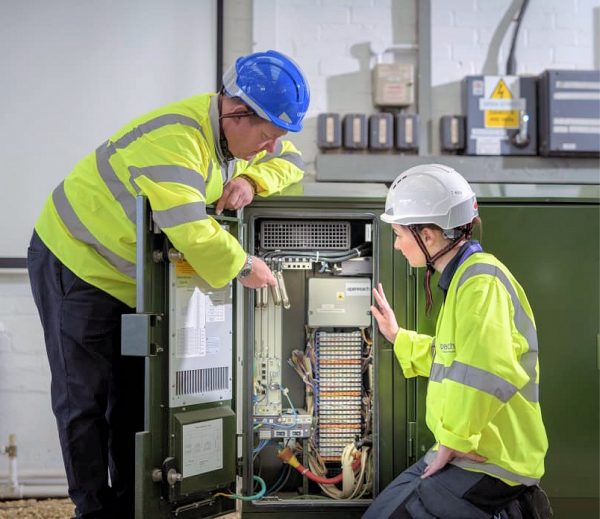
Network access provider Openreach has announced that they will soon temporarily allow a “bulk relaxation” of FTTP Priority Exchange “Stop Sell” rules across the UK (excluding Northern Ireland), under certain criteria, in order to help migrate old lines off their legacy Wholesale Line Rental (WLR) service.
The FTTP Priority Exchange programme typically involves the ongoing rollout of gigabit-capable Fibre-to-the-Premises (FTTP) broadband lines. In short, Openreach stops the sale of new copper line services (including WLR) in exchange areas where they’ve reached 75% ultrafast (full fibre) coverage. This effort also complements their semi-separate migration of traditional legacy voice (PSTN / WLR) services to digital all-IP technologies.
However, not everybody is yet ready to go fully FTTP, which can sometimes create an obstacle for retail ISPs as Openreach tries to get everybody off legacy line services. As a result, the network operator appears to be informing ISPs that they will allow a bulk relaxation of FTTP Priority Exchange Stop Sell rules between 16th February and 30th October 2026.
Advertisement
This appears to mean that ISPs in these areas will also be able to migrate customers to copper-based digital broadband alternatives, such as SOGEA (FTTC / VDSL2) and SOTAP (ADSL) or even their alternative for analogue phone lines (SOTAP Analogue); the latter is a last resort and usually only aimed at existing telecare users with no other options.
The catch is that internet and phone providers will still need to show (e.g. evidence of past communications and marketing attempts) that they have attempted to migrate / contact customers on several occasions and the customer has then “either ignored or rejected the FTTP appointments“.
Providers will also be asked to demonstrate that FTTP is inappropriate for a line to ensure migration by the January 2027 deadline, which may for example occur when the customer has given specific business reasons why they are unable to upgrade to FTTP (i.e. these may include environmental, geographical or customer risk challenges, and customer premises engineering time constraints).
Openreach’s official briefing on this keeps the details private, although they did eventually provide them after we made a request. But for matters like this we really wish they’d be more transparent on their briefings as the issue of migrations to FTTP or modern copper-based digital alternatives remains of wide public interest.
Advertisement






Mark is a professional technology writer, IT consultant and computer engineer from Dorset (England), he also founded ISPreview in 1999 and enjoys analysing the latest telecoms and broadband developments. Find me on X (Twitter), Mastodon, Facebook, BlueSky, Threads.net and Linkedin.










« Vodafone UK Add New Who’s Home Feature to Ultra Hub 7 Broadband Router















Let’s face it, not everybody wants more holes drilled in their homes or the lawn or driveway dug up to facilitate the change to Full Fibre. Some people will only respond when they have no other option. Compulsion not relaxation will be needed sooner or later.
True, but there’s always the possibility that if they bounce existing customers off copper they will lose them altogether either to VMO2 or an altnet. It could be a question of how many customers they think they risk losing.
Openreach’s customers are ISPs, not the end users.
And who are the customers of the ISPs?
But customers might have attempted to upgrade to FTTP via the ISP only to then be messed around repeatedly by Openreach.
I’m one such customer & luckily I have other network options available to me, I can’t wait to be off the Openreach network in 2026.
@Bob: l’m afraid it’s the complete opposite from what you have said. Unless the Fibre is brought from a pole or there is a duct running from the chamber to the property then gardens or drives have to be opened to bury the 14mmm sub duct, protecting the fibre from damage until it gets to the CSP.
In most cases the garden does not need to be dug up. In many cases the existing hole can be used or may just need to be enlarged a bit
Doesn’t that presume that the FTTP installer possesses the authority to remove the existing master socket and copper line?
@125us – that’s true, but if Openreach simply ignore end users needs and requirements then in turn they’ll lose (ISP) customers.
It’s upto the ISPs to give Openreach product requirements that benefit their customers. Their product roadmap is driven by what their customers demand, not what they think end users might want. It’s one of the principles that keeps Openreach fair, else they might think that what their end users want is products subtly tailored to benefit BT over their other customers.
Move to another provider.
Hacked off with repeated rows, charges for just having a number, no fttp (private road) and inflation++ price hikes [again] next year I ported to Brsk!
Sure a squirrel gnawed the fibre [on poles] first week, but even with the number transferred to Voipfone and paying BT to keep email addresses I am still paying £20 per month less for ten times the speed.
Seems like this move incentivises ISPs to have one last shot at getting their customers in priority full fibre areas onto fibre.
Then follows an eight month window for the ISP to identify the hard to reach ones who genuinely can’t get off fibre yet and at least migrate them off WLR in plenty of time to avoid getting close to jan 2027 deadline.
Whoops, I meant get those few customers who can’t get on to fibre, of course. Not off.