Openreach Tweak Guidance on FTTC Speeds for Lift and Shifts

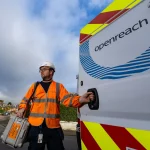
Openreach (BT) has issued some interesting new internal guidance to its UK engineers for handling Lift and Shifts (i.e. moving a line to a new DSLAM port) on Fibre-to-the-Cabinet (FTTC / VDSL2) based broadband cabinets, which now allows ports to be used if the max line speed is above 72Mbps.
Moving ports (L&S) on VDSL2 lines is sometimes done to help bypass a fault on an existing port or to tackle incorrect routing but, as it requires an engineer, such work does tend to attract a bit of a cost. In the recent past we’ve seen figures of £200+ mentioned per L&S, but they can now be done fairly quickly (c.15-45 mins for the main activity, excluding other parts of the process).
Nevertheless, thousands of these are done every year and thus annual costs can run into the £millions. Sources inform us that Openreach have recently moved to reduce “unnecessary” lift and shifts, not only for cost reasons but also because they reduce the number of available ports for customers to use (this is a bigger problem if the cabinet is already close to capacity).
Advertisement
Instead engineers have now been told to always try to repair the faulty port if possible, but that ports can now be used if the maximum speed is above 72Mbps. The catch here is that the top profile speed for this FTTC tier is 80Mbps, although most people will get less than 72Mbps anyway due to copper signal degradation but a few will be close enough for nearly 80Mbps (i.e. a small portion of lines are likely to be affected by this change).
A spokesperson for Openreach told ISPreview.co.uk: “The 72Mb/s is just guidance to engineers to help prevent them taking ports out of service where the speeds are “as good as we can expect”. Engineers can still proceed with a lift & shift if the port is faulty.”



Mark is a professional technology writer, IT consultant and computer engineer from Dorset (England), he also founded ISPreview in 1999 and enjoys analysing the latest telecoms and broadband developments. Find me on X (Twitter), Mastodon, Facebook, BlueSky, Threads.net and Linkedin.







« Virgin Media UK Launch Free Mobile Screen Repair Service
Wireless ISP Bluewave Faces Criticism for Poor Connectivity »














Comments are closed