Reminder – EE UK Aim to Begin Switching Off 2G Network from May 2029
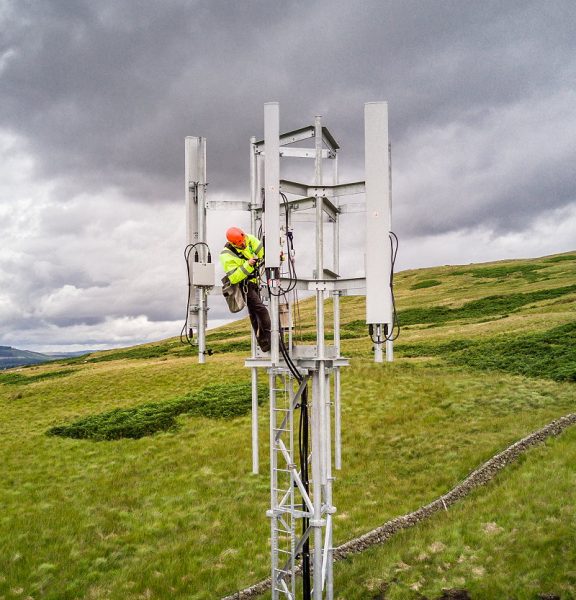
We’re playing catch-up today as, toward the latter part of 2025, EE (BT) updated their website (here) to confirm that they intend to “begin closing the 2G network from May 2029“. But as ISPreview reported a year ago (here), the broadband and mobile operator has already begun encouraging some 2G users to upgrade ahead of the closure.
Just to recap. The government previously agreed with EE, O2, Vodafone and Three UK to phase-out existing 2G and 3G signals by 2033 (here), which will free up radio spectrum bands so that they can be used to further improve the network coverage and mobile broadband speeds of more modern networks (4G, 5G and eventually 6G). The switch-off will also reduce the operators’ costs and power consumption.
In case anybody has forgotten, EE switched-off their final 3G sites back in February 2024 (here), which actually came before their older 2G network. The situation around 2G tends to be more complicated, not least because its signals remain useful as a low-power fallback when 4G/5G isn’t present and are still necessary for some rural areas, as well as for particular applications (e.g. certain IoT / M2M services, lift alarms, telecare systems etc.).
Advertisement
Suffice to say that mobile operators, particularly those like O2 with a 2G link to Energy Smart Meters, have been taking a much more cautious approach to the 2G switch-off in order to give everybody plenty of warning and ample time to adapt (while also expanding 4G/5G coverage to fill any gaps). Back in January 2025 EE could only say that they would “not be closing our 2G network until later this decade“ and indeed the latest May 2029 date appears to confirm that.
Just to be clear, mobile operators tend not to begin the actual shutdown process until well after they’ve initiated the process of encouraging all affected customers to upgrade their handsets to a 4G or 5G capable device. EE has already done this with their business customers and recently started the same for their consumer base.
The network closure is thus the last part of that process and, if the 3G switch-off is anything to go by, then it will probably take EE around a year to completely switch-off the ancient network using a phased withdrawal (i.e. likely completing in early to mid 2030). Both O2 and VodafoneThree are working to a roughly similar switch-off timescale.






Mark is a professional technology writer, IT consultant and computer engineer from Dorset (England), he also founded ISPreview in 1999 and enjoys analysing the latest telecoms and broadband developments. Find me on X (Twitter), Mastodon, Facebook, BlueSky, Threads.net and Linkedin.











« New UK Mobile Operator Rewild Mobile Launches with a Focus on Nature















Why is the focus on voice.
Just as we have the debacle of the care, lift and alarm industry not addressing the loss of the PSTN we will have same here with GSM.
I don’t blame the mobile operators maximising their spectrum nor putting a stake in the ground regarding the 2G end date but it shouldn’t be underestimated the amount of gear in use that uses as a primary or secondary.
Ofcom need to ensure Industries prepare now and that mobile coverage is better than it is today and that VoLTE and VoNR provided by the operators is as resilient.
EE has the network that is least dependent on 2G, I’d say. It was only ever on 1800mhz so didn’t have as good coverage, and has been passed by their 700/800mhz 5/4G.
I think Vodafone and O2’s 2G networks will be around for the longest. They built out the most in places like the Highlands of Scotland in the 90s, and 900mhz GSM is still unmatched for coverage.
They’ll start encourage devices to avoid using 2G. Then I’d bet money on a national roaming agreement being put in place for the last remaining 2G network (either Vodafone or O2), before being spun out to a different company like Arquiva – same as with the Pager networks
But for 99.9% of users and use cases, it’s completely reasonable for 2G to be going in the next few years, just like it has in other countries
How is 900mhz 2G unmatched compared to 900mhz 4G? Should be the exact same coverage. I know some phones and network configs measure signal differently and as 4G takes calls on data because the geniuses that invented it decided to not include a voice standard. Still should technically be the same coverage.
I thought 2G was supposed to be the network of last resort, with long range and low power consumption allowing it to continue working from backup batteries?
EE 2G is not so longe range so in terms of low power fallback, it can be just as much use as a chocolate teapot unless your 4G coverage was already good enough on B3 from the same site.
Does CSD have the same lifespan or will operators stop supporting earlier?
CSD is totally dead, unless O2 have some specific business SIMs with it – EE confirmed to me it’s now no longer available for sale, and EE/Vodafone/O2/Tesco/Spusu/1pMobile PAYG (and EE PAYM) SIMs all return an error if you try and use CSD.
Looking at my phone on EE and it says ‘No Service’ so it would be nice to get 2G as we get 0G