Removal of Mobile Mast Near Essex Villages Leaves Locals with Connectivity Woes
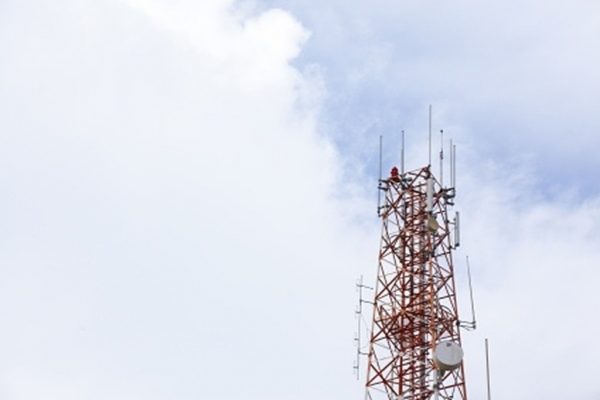
Residents in the two Essex (England) villages of Langham and Dedham, which are both home to around 3,000 people, have been left to suffer from poor to non-existent mobile connectivity after a local mobile mast at Gun Hill (Ipswich Road) was removed last month without the local authority approving a replacement site.
The situation, which reminds us of the recent and quite protracted problems in the Welsh village of Tenby (here and here), began after British gas supplier Cadent Gas requested that the old mast be removed because it was near to an underground gas main.
Civil engineering firm M Group Telecom then promptly applied for a new 20m high monopole mast site in July 2025, which would be located nearby to the old site. But this was quickly rejected by Colchester City Council (CCC) due to concerns over its visual impact on the “scenic quality of the Dedham Vale National Landscape“.
Advertisement
A Council spokesperson said:
“We want to be clear that we are supportive of improved digital connectivity in our communities. We would welcome discussions with operators to explore alternative solutions or revised proposals that meet coverage needs while respecting the area’s special landscape qualities.”
According to the BBC News, the situation has prompted complaints from residents, many of whom are now struggling to connect via a viable mobile signal. As one of those residents, Gillian Flack (from Langham), said: “This isn’t about convenience any more, it’s about safety, local businesses struggling to operate – and elderly residents feeling like they’re being cut off.”
Mobile operators would no doubt point to this as being another example of how local authorities and companies often fail to take a joined-up approach to such situations. The reality for locals is that, even once a suitable site is finally found and approved (a process that can take months), it will often then take several further months before a new mast can actually be installed due to all the extra work and planning required.






Mark is a professional technology writer, IT consultant and computer engineer from Dorset (England), he also founded ISPreview in 1999 and enjoys analysing the latest telecoms and broadband developments. Find me on X (Twitter), Mastodon, Facebook, BlueSky, Threads.net and Linkedin.












« Openreach Says No BIG BANG in Jan 2027 When UK Analogue Phones Switch-Off
Advertisement
Leave a Reply
Privacy Notice: Please note that news comments are anonymous, which means that we do NOT require you to enter any real personal details to post a message and display names can be almost anything you like (provided they do not contain offensive language or impersonate a real person's legal name). By clicking to submit a post you agree to storing your entries for comment content, display name, IP and email in our database, for as long as the post remains live.
Only the submitted name and comment will be displayed in public, while the rest will be kept private (we will never share this outside of ISPreview, regardless of whether the data is real or fake). This comment system uses submitted IP, email and website address data to spot abuse and spammers. All data is transferred via an encrypted (https secure) session.













So residents should complain to local authorities and keep this in mind until next elections.
Do anyone know what “special landscape qualities” means?
Think John Constable paintings of Dedham Vale/River Stour and you’ll likely have your answer.
Is this a case where the landowner requested removal of the mast for commercial or other reasons and hence a replacement can’t be put in the same place?
NIMBYism is destroying this country.
If you know the location then Colchester Council’s response is hilarious.
Yes it is close to Dedham Vale and the landscapes that Constable painted, but the location in question (Ipswich Road/Gun HIll) is not that. The special landscape they talk about is a giant ugly Copart site and has been for many years.
A single monopole would vanish next to that giant depot/car park! Clown council by the looks of it.
It matters not really, because if the mast is in the Dedham Vale National Landscape (AONB), which it seemingly is, then, other than redrawing its boundary, CCC is entitled to object to the planning application for the reason stated.
Actually, this is CCC effectively reasserting it’s original objection to the late 1990s application (by Orange) for a mast in it’s most recent position. That objection was overturned on appeal to the Secretary of State in 1997 and caused some uproar and questions in parliament.
So I guess the only option is to appeal again, first to CCC and then to the Secretary of State, who I would think would more likely than not approve the planning application appeal since it’s only planned to move it a few tens of metres from the original placement and so there can be no substantive reason for changing the original grounds for upholding the appeal.
The gas pipeline was already there when the mast was built. Why Transco (now Cadent), then part of BG, didn’t object to its siting at the time I don’t know. Maybe they didn’t know anything about it until they perhaps recently did an inspection of their estate in the area. Or perhaps safety guidelines have changed since the original erection.
Litrally no signal on the A12 now from the shell garages untill you get to the bottom of the hill.
People either want communications or not in this day in age the old mast was huge no one cared about that being there in an aera of outstanding beauty. The new one they wanted to put up was a single monopole on the side of a scrapyard? total madness. I dont blame the operators for taking it down.
I use a shop at Langham, when using a mobile contactless payment you have to wait possibly 20/30 sec before the transaction is approved.
Not very good when you have other customers queuing up to pay.
Local government planning system (like many things in the UK currently) is fundamentally broken.
Councils are going broke, because they have to find money to fund all the myriad of things that people ‘expect’ like social housing. Yet there isn’t enough money in the pot from central government and the lack of growth in the economy and rising costs everywhere mean that people can’t afford more and more council tax.
We have half the number of planning staff we had a decade ago – so everything takes twice as long to go through the sausage machine.