Ookla Examine UK Connections to Starlink-based O2 Satellite Mobile Service
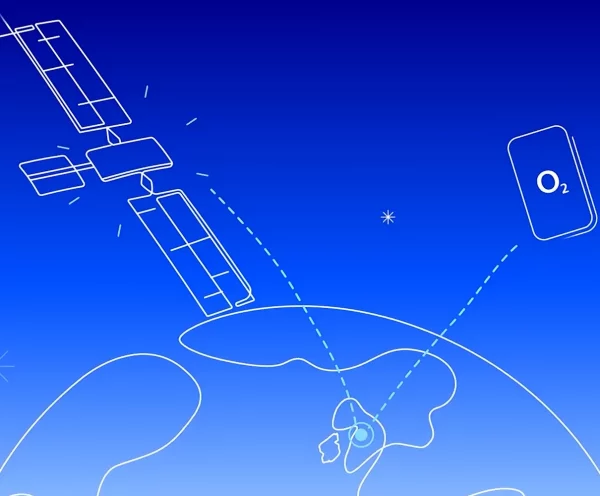
Network benchmarking firm Ookla, which operates the popular Speedtest.net broadband connection testing website and app, has published a new report today that examines the early take-up of the recently launched O2 Satellite service (here) and the geospatial profile of Direct-to-Device (D2D) usage in the UK.
Just to recap. On 26th February 2026 the UK became the first country in Western Europe where a normal Smartphone could reach a satellite directly, without specialist hardware or a separate app, through the launch of O2’s (Virgin Media) new O2 Satellite service for just £3 extra per month (details).
The service harnessed SpaceX’s global Starlink network in Low Earth Orbit (LEO) to support a satellite based 4G mobile data (broadband) connection via the 1800MHz band, which enabled connectivity in even some of the remotest parts of the UK.
Advertisement
According to Ookla’s data, the UK has quickly become “one of the largest detected D2D markets globally” and is now ranked 3rd among countries with live commercial D2D services by detected users, behind the US and Australia. But as you’d expect, most D2D connected users on the service don’t stay on it for long, before passing back to terrestrial networks (i.e. occurring as users briefly travel through or visit areas of non-existent or weak mobile signals). Only a few remain on D2D for extended periods.
D2D utilisation within the UK mobile base is said to have reached 0.30% in March 2026 (based on the share of all mobile signal scans coming from D2D), and scans per D2D user averaged 4, well below Canada’s 29. The utilisation rate is said to match the US nine months into its T-Mobile service, and within O2’s addressable base utilisation rises to approximately 1.4%, in line with more mature D2D markets.

As you’d expect, most of this D2D utilisation in the UK is primarily coming from some of the country’s well-known weak spots for mobile signals, such as across parts of the Scottish Highlands, the Outer Hebrides, the Welsh uplands, the Southwest peninsula, and the North York Moors. The industry-led Shared Rural Network (SRN) project is currently working to shrink some of these problem areas via terrestrial deployments of new or upgraded mast sites, while O2’s service provides another option – pushing landmass coverage from 89% to 95% (restrictions on satellite coverage and regulations related to international borders place limitations on cover).
Advertisement
However, Ookla makes the point that they also see D2D usage occurring in other areas too, since O2 Satellite works where the main O2 network is unavailable and satellite coverage is available (excluding major indoor coverage gaps), which means it can also matter in partial not-spots as well as total not-spots that may exist anywhere for all sorts of reasons.
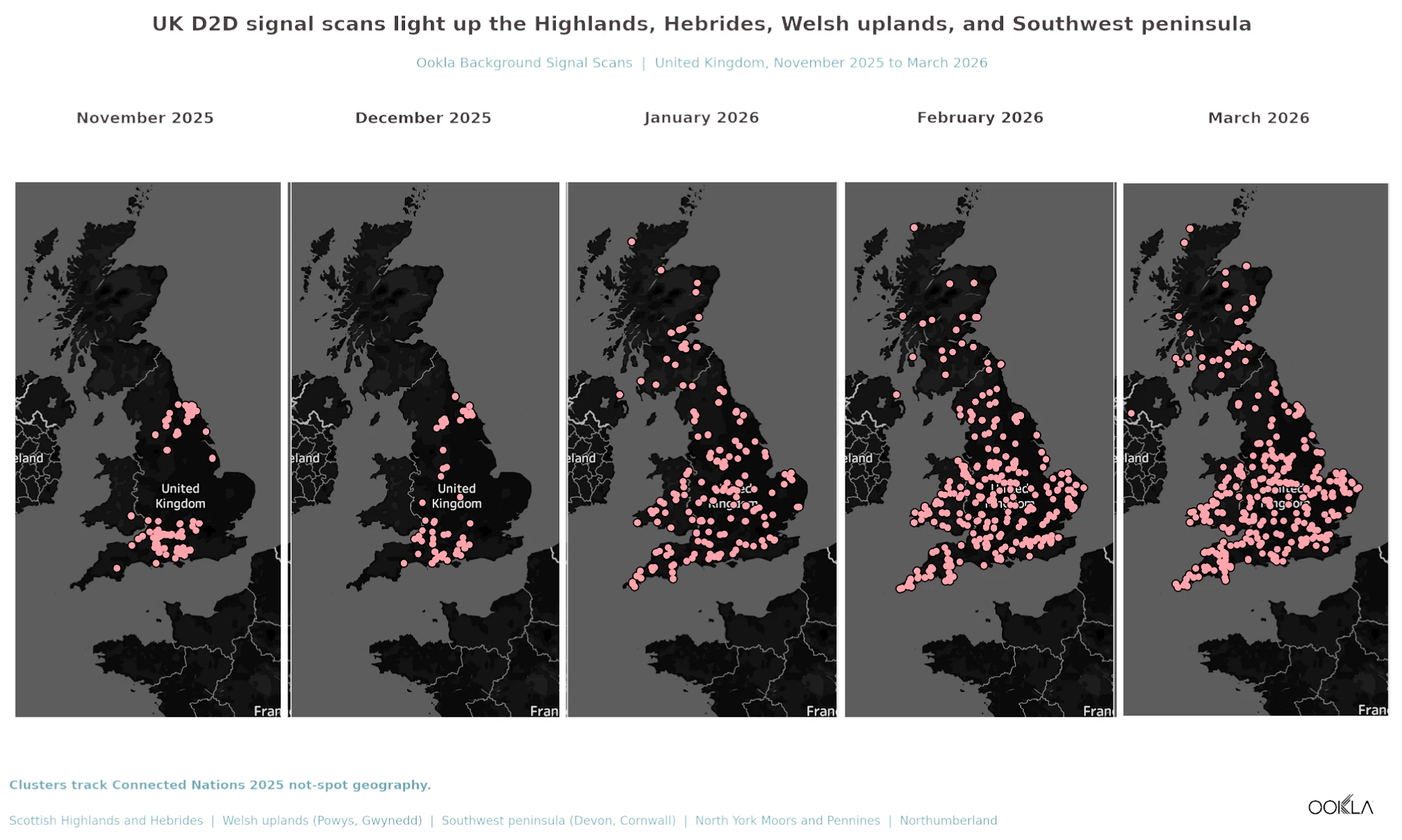
The full report (we’ll add a link once it’s sent to us) goes into a bit more detail, but doesn’t hold too many surprises. Sadly, Ookla hasn’t yet attempted to analyse the data performance of these D2D connections, which will hopefully follow once the service has had a bit more time to evolve.
The next operator to join the UK D2D mobile club will be VodafoneThree (Vodafone and Three UK), which is being supported by AST SpaceMobile, but the latter recently suffered a setback after one of its new satellites failed to reach orbit (here) and there are now concerns over wider delays. The commercial launch seems increasingly likely to follow in 2027 sometime.
Advertisement
As for EE (BT), they don’t currently plan to launch a D2D solution, although they have done a deal with Starlink to help deliver rural broadband connectivity and to act as backhaul for some of their remote mobile masts (here). The plan is for this to go live during the latter half of 2026 and details remain very limited.






Mark is a professional technology writer, IT consultant and computer engineer from Dorset (England), he also founded ISPreview in 1999 and enjoys analysing the latest telecoms and broadband developments. Find me on X (Twitter), Mastodon, Facebook, BlueSky, Threads.net and Linkedin.











« New eSIM Mobile Provider SecondSim Launches for UK Business Users















I like the tech. It’s impressive. But it’s also a sign of failure, because there’s no good reason for satellite where some of the spots are. And this is O2, which loves to paint the map with sometimes almost useless low band.
O2 have botched the lainch of this product IMO. It’s only available to a handful of Samsung smartphones, with to time frame for when they will improve on this number.
How is that botched? If you’ve got one of those smartphones and want better coverage, here’s a product for that customer to buy.
It’s a phased roll-out. I’m sure that other smartphones will be able to use the service in-time. Better to roll-out slowly and ensure it all works, especially being first to market, rather than have tabloid over-kill headlines about how it’s a pants service.
I’m guessing that EE’s lack of take-up is correlated to the fact this is a data-only facility with no voice support, and if so – good on them for maintaining the consistency.
The use of tech to improve choice can’t be denied, but I wonder how long before the first case of “my phone had signal but I couldn’t call emergency services” comes out.. I’m sure I also read a couple of reports from Cornwall or Cumbria (I forget which) of O2 phones dropping to satellite while EE’s 4G service was still available.