Operators Sign £1bn Deal for 95% Geographic UK 4G Cover by 2026
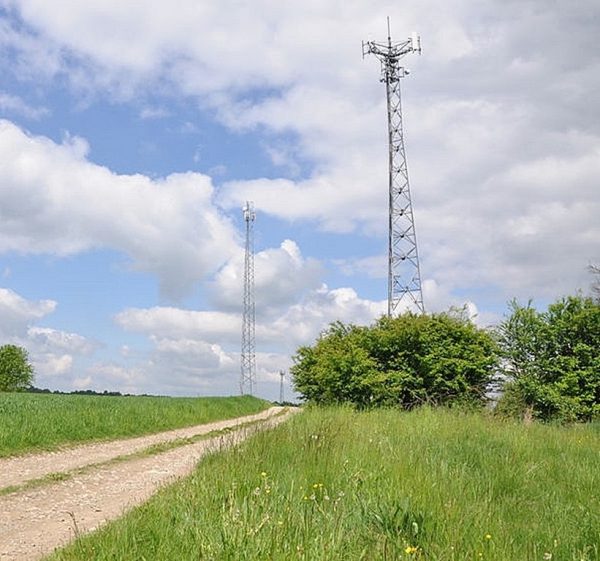
Mobile operators BT (EE), Vodafone, O2 and Three UK have today reached a final agreement on costs to support the Government’s £1bn Shared Rural Network (SRN) plan, which will work to extend geographic 4G mobile (mobile broadband) coverage to 95% of the UK by the end of 2025. But one aspect may have been watered down.
The industry-led plan essentially proposed both the reciprocal sharing of existing masts in certain areas and the demand-led building and sharing of new masts in others between all four operators. The broad outline of an agreement was signed last year (avoiding the introduction of an enforced coverage obligation by Ofcom), but the thorny issue of cost was left until the last minute (e.g. how much will be charged by each operator for rivals to access existing sites).
Catering for remote rural areas tends to be very expensive and there were fears that the issue of costs would be one area where the SNR might hit a major stumbling block. In particular BT has a fair bit more infrastructure (masts etc.) deployed across rural areas than their rivals and as such any costs proposed by them would have been extremely important.
Advertisement
At the start of 2020 BT issued their first cost proposals and they did so alongside a somewhat defensive sounding blog post (here), which read as if they were bracing rivals for hefty charges. Naturally it didn’t take long for rivals to raise concerns, with O2 warning that the proposed fees “may undermine the viability of the project.”
BT were reportedly seeking to include 320 yet-to-be-built masts into the agreement and to charge 250% more than the existing commercial rate for rivals to access them (i.e. the suggestion was that this might have made it cheaper for Three UK, Vodafone and O2 to just build their own masts). BT also offered rivals a cheaper rate for masts on its partly Government funded Emergency Services Network (ESN); several hundred of these have been built in rural areas.
The Final Agreement
The official announcement that reached out inbox today still appears to be striving for the same broad coverage target and time-scale as before, although one report (here) alleges that it has been watered down. According to that story, new mast in “some areas” will only be built by Three UK, Vodafone and O2, while in those specific locations BT (EE) will be left to run their existing equipment (i.e. no sharing).
The original SRN proposal would have seen each individual operator reach 92% geographic coverage by the end of 2025, with licence obligations taking effect in 2026 (the collective effect of this would have delivered such coverage to 95% of the UK). However in today’s announcement the Government said that each operator would instead reach 90% “by 2026“, but they still expect the collective effect to be 95% by the end of 2025.
Advertisement
The announcement notes that the SRN will be overseen by a jointly owned company called Digital Mobile Spectrum Limited, which all together will guaranteed coverage to 280,000 additional premises and 16,000km of roads. “We can also expect some further indirect improvements over time, including a boost to ‘in car’ coverage on around 45,000km of road and better indoor coverage in around 1.2m business premises and homes,” said DCMS.
SRN Coverage Targets and Ofcom Obligations
* Coverage in Scotland will rise by more than ten per cent to 91% from at least one operator and 74% from all four operators. This compares to 80% and 42% today.
* Coverage in Wales will improve to 95% from at least one operator and 80% from all four operators. This compares to 89% and 58% today.
* Coverage in Northern Ireland will reach 98% from at least one operator and 85% from all four operators. This compares to 97% and 75% today.
* Coverage in England will improve to 98% coverage from at least one operator and 90% from all four operators. This compares to 97% and 81% today.
* To ensure that these coverage targets are met, Ofcom has developed legally enforceable coverage obligations that are attached to the mobile network operators’ radio spectrum licences. These commit the operators to:
– Each reach 88 per cent coverage of the UK by 2024;
– Each reach 90 per cent coverage of the UK by 2026;
– Each reach nation-specific coverage targets in England, Northern Ireland, Scotland, and Wales by 2026;
The legally binding coverage commitments will be enforced by Ofcom, which has the power to issue fines up to 10% of an operator’s gross revenue if they fail to meet their targets.
Oliver Dowden MP, UK Digital Secretary, said:
“For too many people in the countryside a bad phone signal is a daily frustration.
So today we’re delivering on the Prime Minister’s 100-day promise to get a £1 billion landmark deal signed with industry to end poor and patchy mobile rural coverage.
This is an important milestone to level up the country, improve people’s lives and increase prosperity across the length and breadth of our United Kingdom.”
The new deal means that the four networks have committed to legally binding contracts and investing £532m to close almost all partial not-spots (areas where there is currently only coverage from at least one but not all operators). Meanwhile the Government’s £500m will be used to build new masts in total not spot areas, which are not usually commercially viable for operators to build in.
Philip Jansen, CEO of BT Group, said:
“High-speed mobile connectivity is a central part of modern life whether you live and work in a city centre or in the countryside. Building out fast and reliable access to 4G across the country is a national mission and we’re playing a leading role, collaborating with government and the other mobile network operators in the UK, to make this happen. The Shared Rural Network is something we can all be proud of.”
Mark Evans, CEO of O2, said:
“I’m proud of the work we’ve done to secure the Shared Rural Network agreement, ensuring customers living in rural areas will be able to get the fast and reliable coverage they need and deserve. The collaboration between the industry, government and Ofcom should be seen as a leading example of how to deliver infrastructure investment and we look forward to now rolling the Shared Rural Network out as quickly as possible.”
Dave Dyson, CEO Three UK, said:
“The Shared Rural Network is a game-changer for the country with coverage from each of the four operators expanding to at least 90% of the UK’s geography.”
Vodafone UK CEO, Nick Jeffery, said:
“A rural postcode should not be a barrier to receiving a decent mobile signal. Together, we have created a programme that is unmatched anywhere in the world. It will mean an end to mobile ‘not spots’ for people in the more remote areas whether they are at home, at work or on the move. We will now get on with the job of delivering it.”
The SRN will be complemented by the Government’s recent move to soften planning rules (here), which should make it easier to build newer and taller masts. Building taller masts tends to mean better coverage and safety (i.e. people on the ground are put further away from the signal source), which in turn means fewer small masts are needed to reach the same area (i.e. less clutter, not more). Sharing existing masts will also help to reduce the overall population of such infrastructure.
Advertisement
All of this sounds very good, although the National Association of Local Councils (NALC) has previously voiced opposition to any changes that would weaken local planning rules (here). In the past a lot of new masts have been rejected because a portion of local people chose to object and councils are very sensitive to such situations. But by refusing new masts communities often end up punishing those who are in need of a better signal.
Squaring the circle on such competing interest is difficult, although it will be essential if the SRN is to achieve its goals. Sadly today’s press release made no mention of whether the new mast builds will still be “demand-led” in the final agreement (we assume they will), which is a key point since by adopting this approach the responsibility is shifted more to local communities to decide their own fate.
One final point to make is that while today’s announcement may focus upon 4G, it’s fair to say that the operators will also look to make as many sites as possible 5G ready, so customers can benefit from the new, faster and more reliable technology as it is rolled out more widely. Vodafone has already committed to do this.



Mark is a professional technology writer, IT consultant and computer engineer from Dorset (England), he also founded ISPreview in 1999 and enjoys analysing the latest telecoms and broadband developments. Find me on X (Twitter), Mastodon, Facebook, BlueSky, Threads.net and Linkedin.










« ISP G.Network Seek £200m to Boost Urban UK Full Fibre Rollout














Comments are closed