Streetwave UK Tests Accuracy of Ofcom’s Mobile Coverage Data
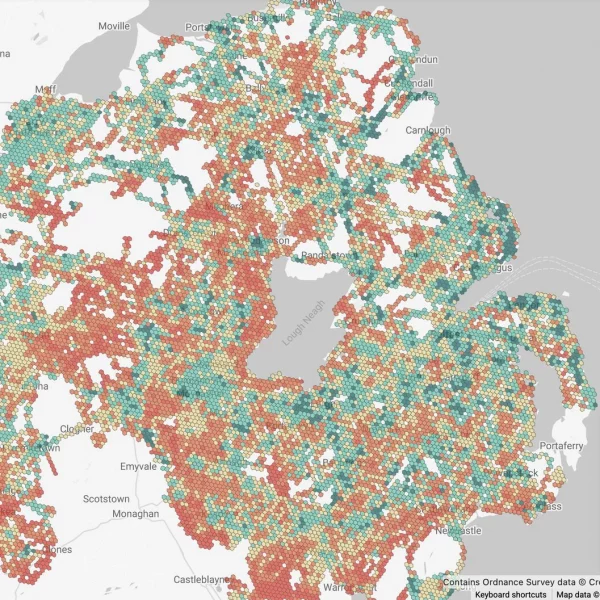
A new study from UK network analyst firm Streetwave, which recently used bin lorries to map the coverage and performance of 4G and 5G mobile (broadband) networks across Northern Ireland, has questioned the accuracy of Ofcom’s mobile coverage data after finding a big difference between the regulator’s figures and those of their own research.
Just to recap. Streetwave works by harnessing waste bin (refuse) collection lorries to map mobile network coverage and data speeds across various parts of the UK (e.g. here, here, here, here and here). In this setup, refuse trucks are installed with several off-the-shelf Smartphones using special software, which run continuous network tests (once every 20 metres in rural areas and 5m in urban areas) as the vehicles go around their routes.
By comparison Ofcom uses a mix of crowdsourced data from Opensignal, which is based off people’s real experiences but in a less scientifically controlled environment (i.e. user results will vary a lot by device type, location etc.), as well as predictive information from the UK’s mobile networks to support their Map Your Mobile Postcode Checker.
Advertisement
Ofcom’s approach assesses predicted signal strength information at a more granular level than before, going down to 50 square metres, instead of the prior 100 square metres. But their interactive checker currently only provides fairly basic / simplified results to the public and no data on mobile data speeds, latency or splits by different technologies (4G vs 5G etc.). The regulator is aware of this are they are already working to make further improvements in the future.
The latest data for Northern Ireland from Streetwave, which is arguably much more accurate than Ofcom’s, helps to underline this by showing what score they got for a “good mobile signal” in the country – using the same definitions as Ofcom. Officially, Ofcom’s data indicates that Northern Ireland gets a good mobile signal 78% of the time. But Streetwave’s data, which was collected across 20,000km of the local road network, found a much lower figure of 49%.
Angus Hay, CEO of Streetwave, said:
“The gap comes down to where the numbers are from. Ofcom’s 78% is built on crowdsourced data, millions of tests that run wherever people happen to be using their phones, which mostly means wherever most people are. The majority of measurements come from built-up areas (a well recognised urban bias).
The catch is that the worst-served places barely show up. A lot of the time there’s simply no data from them at all, which means the people who most need counting are the least likely to be counted.
So we went and measured over 80% of Northern Ireland’s roads (incl. cities, towns, villages, hamlets… the lot), covering the best and worst-served places equally, to make a comparison.
We found the good mobile signal number, on Ofcom’s own definition of good, to be 49%.
The difference is where the measurements come from, and where they don’t. One number tells you about the data. The other tells you about the country. Crowdsourced data is a really useful input, it just isn’t fit to be a national statistic on its own.
By using real-world data, Ofcom are absolutely moving in the right direction (and it is very good to see). If their goal is to produce maps and statistics that represent people’s experience (which I think it should be), then they will need to get measurements that represent everyone, from both good and poorly served areas equally.
After all, we cannot manage what we don’t measure, and the fear is people will continue to be left behind because they don’t show up in the data at all.”
Streetwave have yet to publish their full report on mobile coverage in Northern Ireland and to make their related mapping available, but this is expected to follow at some point in the next “few weeks“. As mentioned earlier, Ofcom are currently consulting on how they could improve their data on mobile network coverage across the UK (here and here), although this will close to input next Wednesday, and they aren’t expected to set out their plans until sometime in 2027. Streetwave naturally has a vested interest in all this.






Mark is a professional technology writer, IT consultant and computer engineer from Dorset (England), he also founded ISPreview in 1999 and enjoys analysing the latest telecoms and broadband developments. Find me on X (Twitter), Mastodon, Facebook, BlueSky, Threads.net and Linkedin.










« Wavemobile Reaches 5 Millionth Unique Connected UK Mobile Devices

















Googled what the colours meant, “relating to HD Video streaming(on another map) :-
Dark Orange – network failure
Mid Orange – heavy buffering
Creamy….. – buffering
Dark Green – fast.”
Looking forward to seeing Streetwave data for East Hertfordshire Veolia waste service contract area!
Less estimates and more reality must be good even if someone is making a living with it. You get what you pay for..
Not always.
Gosh this regulator is not on top, the best athlete’ for the job that consumers have to rely on, and ultimately at our expense, surely not.
Surely the ASA should have them renamed to OfCon.
Quality costs but not as much as the lack of it…