Home » UK ISP News Archive » Daily Archives: July 9, 2024 (7 Posts Found)
You are viewing a July 9, 2024 news and article archive where older items are stored for readers to access and view. This is done to keep the systems running smoothly and prevents the front page from becoming too cluttered.
ISP News Archives for July 9, 2024

9th Jul 2024 (6 Comments)
A new critical security vulnerability has been discovered in the popular RADIUS network authentication protocol, which is used by networks across the world to help users connect with their services (i.e. everything from broadband ISPs to VPNs, mobile operators and more) and thus could leave them exposed to Man-in-the-Middle (MitM) style attacks.

9th Jul 2024 (7 Comments)
Mobile operator Vodafone UK conducted another trial of Network Slicing technology on their latest 5G Standalone (SA) powered mobile broadband network at this year’s Glastonbury Festival, which despite heavy network load was able to dedicate a “slice” of capacity to help drink vendors speed up card transactions.

9th Jul 2024 (6 Comments)
Broadband ISP and mobile network operator EE (BT) has today launched a new technology service for Pay Monthly mobile customers called ‘Scam Guard’, which is a network-level security defence that harness AI to better protect users from “nuisance calls, dark web hackers and phishing scams“. But it’s not free.
Advertisement

9th Jul 2024 (2 Comments)
Mobile network analyst Streetwave has partnered up with the Caerphilly County Borough Council (CCBC) in Wales to harness local refuse (bin) collection trucks in order to map the local network (mobile broadband) performance across the area, which covers services from EE (BT), O2 (Virgin Media), Vodafone and Three UK.

9th Jul 2024 (2 Comments)
The Institute of Customer Service (ICS) have just published their second biannual UK Customer Satisfaction Index for July 2024, which reveals that three mobile and broadband (telecoms) providers made it into their table of the country’s top 50 organisations – Tesco Mobile (20th), Utility Warehouse (23rd) and giffgaff (32nd). But it’s not all good news.

9th Jul 2024 (4 Comments)
Mobile operator Vodafone has announced that they’ve worked with Meta (Facebook etc.) to trial and deploy a new mobile broadband (4G, 5G) “network optimisation” for “short-form videos” across the UK and 10 other countries, which is said to “free up network capacity” for customers and allows them to “view more high-quality short videos“.
Advertisement
9th Jul 2024 (4 Comments)
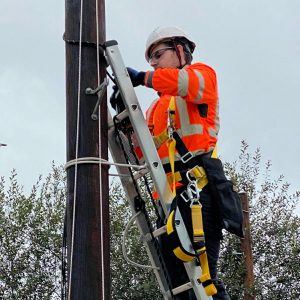
City-focused gigabit broadband ISP Hyperoptic, which has now built a full fibre (FTTP/B) network to cover “more than” 1.73 million homes across parts of 64 UK towns and cities (up from 1.6m on 3rd June 2024), has today secured £150m from the UK Infrastructure Bank (UKIB) to help “accelerate” their network expansion.
Cheapest Big ISPs for 100Mbps+


Latest UK ISP News





News Archive Calendar
Promotion
The Top 15 Category Tags
- FTTP (7151)
- BT (3989)
- Politics (3219)
- Business (2926)
- Openreach (2788)
- Mobile Broadband (2637)
- Building Digital UK (2584)
- Statistics (2229)
- 4G (2229)
- FTTC (2167)
- Virgin Media (2134)
- 5G (1899)
- Ofcom Regulation (1861)
- Fibre Optic (1662)
- Wireless Internet (1644)

Cheap BIG ISPs for 100Mbps+

Large Availability | View All
Cheapest ISPs for 100Mbps+


Large Availability | View All
Promotion
Helpful ISP Guides and Tips









Latest Interviews





Sponsored
Copyright © 1999 to Present - ISPreview.co.uk - All Rights Reserved - Terms , Privacy and Cookie Policy , Links , Website Rules , Contact