Ookla Examine Mobile Broadband Upload Speeds and Capacity in the UK

Global network benchmarking firm Ookla, which collects data from consumers via their Speedtest.net service (inc. apps), has published a new report that takes a broad look into the impact of mobile (4G, 5G etc.) upload speeds in the age of AI and also reveals how much importance UK operators place upon it (EE, O2, Vodafone and Three UK).
Historically fixed and mobile broadband connections have always tended to prioritise download speeds (i.e. the rate at which data is pulled from the internet to your device), which makes perfect sense because that’s how most of the information we want to access arrives on our devices (loading websites, downloading files, streaming videos etc.).
However, in recent years the importance of upload speeds has steadily risen (i.e. the rate at which you send data from your device to the internet), driven by increasing usage of cloud / remote gaming services, video blogging, video calls, social media and Artificial Intelligence (AI) etc.
Advertisement
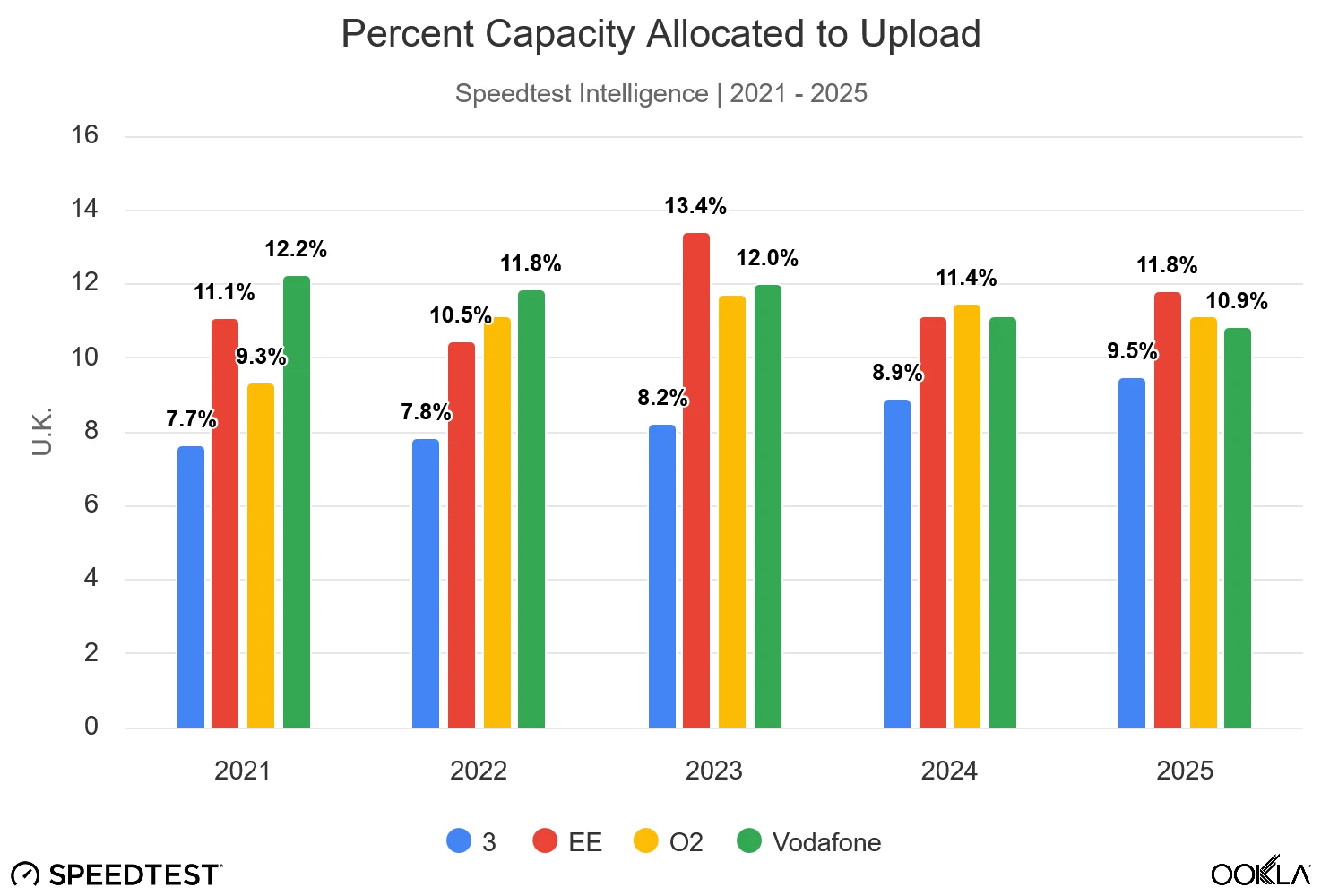
Ookla’s new report finds that upload speeds from mobile operators have been rising globally from 2021 to 2025, thanks largely to the release of additional spectrum and a variety of technological advances (both within the network and via end-user devices). But it also claims that operators have not been increasing the percent of network capacity allocated to uplink connections during this period, and some have even been reducing that percentage.
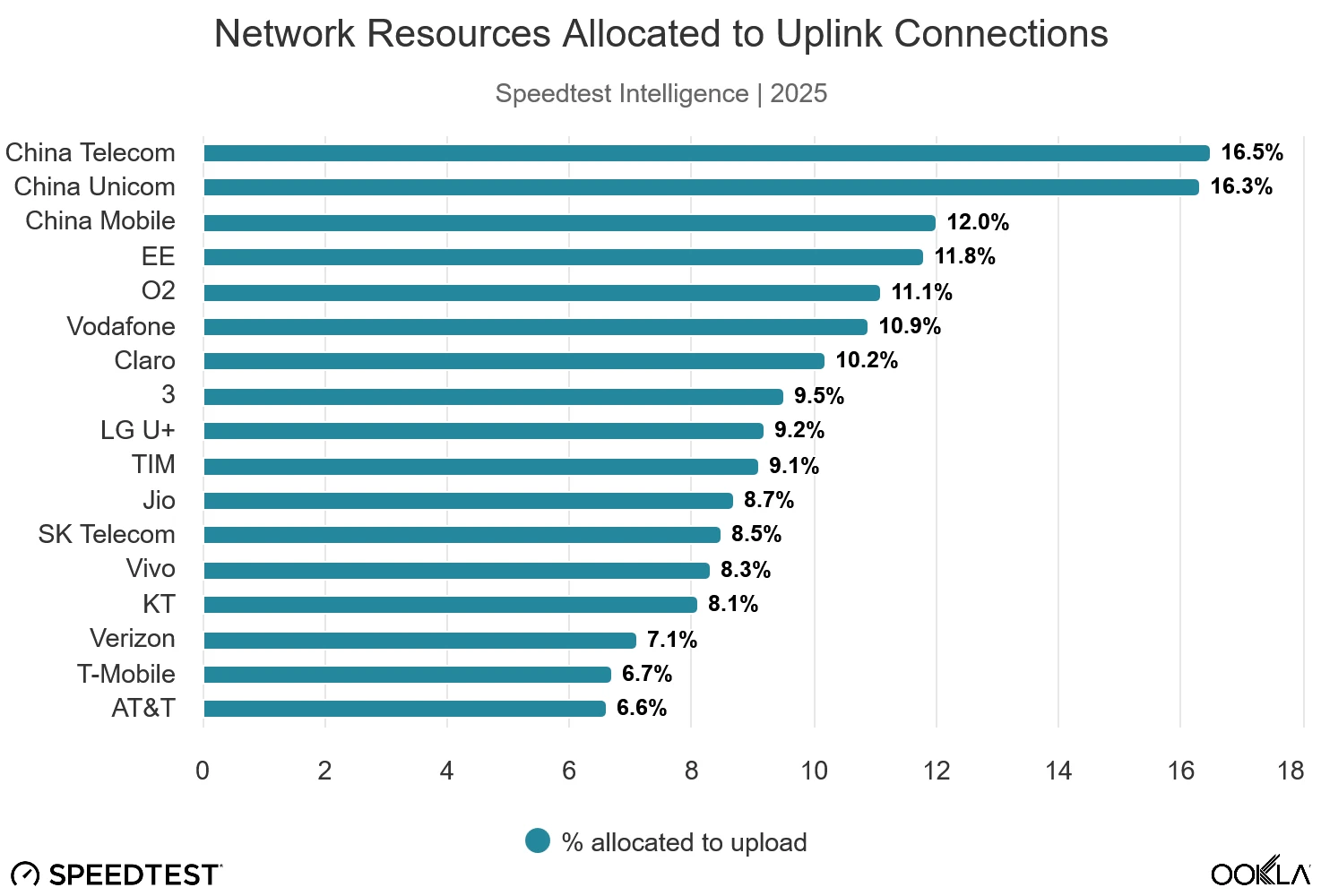
For example, mobile upload speeds for the fastest 10% of UK connections increased by approximately 36% between 2021 and 2025, while mobile download speeds in the UK increased by around 58% between 2021 and 2025. But Ookla states that, out of all the mobile operators analysed, EE (BT), O2 (Virgin Media) and Vodafone in the UK “follow Chinese operators as leaders in network resources allocated to uplink connections“. Not that you’d notice.
Advertisement
“Yes, mobile upload speeds have been rising globally, but that’s mainly because 5G enables faster overall connections, both on the uplink and the downlink. In some countries, like Brazil, the percentage of network capacity allocated to upload speeds has been falling. In other countries, like China, the capacity allocated to the uplink has been holding relatively steady. In no country in this study is the percentage of capacity allocated to the uplink rising in a significant way,” said Ookla’s report.
Suffice to say that while upload performance is improving, the proportional importance of download capacity continues to dominate mobile operator investment and network configuration choices. Overall, Ookla’s report doesn’t really say anything new or terribly surprising, but it is a useful additional piece of research to consider.
On the flip side, when we look at fixed broadband connections – where spectrum capacity is not a constraint, the rapid adoption of XGS-PON technology within Fibre-to-the-Premises (FTTP) based broadband lines has resulted in a rise in symmetric speed packages (i.e. downloads run at the same speed as uploads). But of course, that’s more an example of technology change taking precedence over changes in consumer behaviour, since end-users still make much more use of downstream than they do upstream on fixed lines.






Mark is a professional technology writer, IT consultant and computer engineer from Dorset (England), he also founded ISPreview in 1999 and enjoys analysing the latest telecoms and broadband developments. Find me on X (Twitter), Mastodon, Facebook, BlueSky, Threads.net and Linkedin.













« BDUK Updates on Project Gigabit Broadband Contract for Cheshire UK

















There’s nothing more frustrating when being out and about than a poor upload speed, especially if you rely on your phone as a backup for fixed line Internet for work purposes. The alternative would be a 90 mile round trip to work if my home connection is down.