Gigabit Broadband Cover Reaches Nearly 90 Percent of the UK in H2 2025
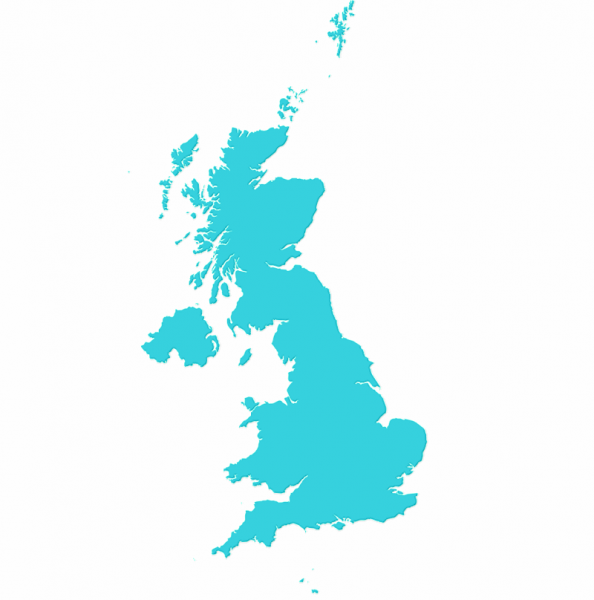
ISPreview has today published our biannual H2 – 2025 summary of fixed broadband coverage, which reveals that “full fibre” (FTTP) ISP networks have grown to reach 81.89% of UK premises (up from 78.06% in H1) and 89.6% are within reach of “gigabit” 1000Mbps+ speeds (up from 87.84%) – close to the major milestone of 90%. Read on to see details for England, Wales, Scotland and N.Ireland.
All the new gigabit-capable network (1000Mbps+ or 1Gbps+) coverage added during the second half of 2025 has come from Fibre-to-the-Premises (FTTP) based networks via Openreach (BT), nexfibre (Virgin Media), CityFibre, Netomnia (Brsk, YouFibre), Grain and a few other alternative networks (Summary of UK Full Fibre Builds). But the overall deployment pace has slowed further this year due to wider market pressures.
The reason why “gigabit” coverage is currently still higher than “full fibre” (FTTP) is down to the millions of premises that continue to be covered by Virgin Media’s older Hybrid Fibre Coax (HFC) network, which uses gigabit-capable DOCSIS 3.1 technology via a Hybrid Fibre Coax (HFC) network (there’s a lot of overbuild with FTTP in urban areas). This too will be upgraded to FTTP by 2028, but that’s a slow process.
Advertisement
In addition, most of the progress on gigabit-capable builds seen during 2025 is still down to private investment (commercial builds have already delivered the first 80%+ of gigabit cover), often with only a little support from the Government’s various schemes. But the Project Gigabit scheme, and its subsidised rollout contracts with various different suppliers, are having an impact on this, albeit primarily via the hardest to reach premises (e.g. rural) that typically take longer to cover.
H2 2025 Broadband Coverage Figures
Listed below is the latest independent modelling from Thinkbroadband to the end of December 2025 (H2 – 2025). We should point out that the figure for ‘Under 10Mbps‘ doesn’t include any mobile (4G/5G) coverage (we only looked at fixed line services), which plays a part in the official Universal Service Obligation (USO) but isn’t included in TBB’s mapping. Sadly, it’s incredibly difficult to do an accurate model for mobile networks, especially in terms of a specific performance level.
Fixed Broadband Network Availability H2 – 2025
| Area | 30Mbps+ | Full Fibre | Gigabit | % Under 10Mbps |
| England | 98.58% (98.48%) | 82.11% (78.24%) | 90.15% (88.54%) | 0.49% (0.51%) |
| UK | 98.44% (98.32%) | 81.89% (78.06%) | 89.58% (87.84%) |
0.62% (0.66%) |
| Wales | 97.78% (97.61%) | 82.75% (78.32%) | 85.13% (81.50%) | 1.30% (1.37%) |
| Scotland | 97.40% (97.06%) | 74.45% (70.20%) | 84.18% (81.89%) | 1.48% (1.65%) |
| N.Ireland | 98.83% (98.73%) | 96.74% (96.46%) | 97.06% (96.84%) | 0.64% (0.71%) |
NOTE: It’s very important to remember that Government / political coverage targets, like the previous “85%” for gigabit by 2025, reflect a national average – this can of course be better or worse for some areas (e.g. some counties may achieve higher coverage, while others could be below that).
Take note that each region (Scotland, Wales etc.) may also have its own policy and targets, which will feed into the central UK coverage figure. Furthermore, it’s worth highlighting how much of an impact newer alternative networks (altnets) are having on all this – excluding coverage by Openreach, KCOM (Hull) and Virgin Media.
Advertisement
Altnets were found to have covered 44.79% of the UK with FTTP by the end of H2 2025 (up from 42.26% in H1). This breaks down as 47.36% in England (up from 44.56%), just 20.87% in Wales (up from 18.82%), 34.81% in Scotland (up from 33.95%) and 41.65% in Northern Ireland (up from 41.08%). But the overall coverage improvement delivered from this will be reduced due to overbuild between so many networks, particularly in urban areas.
As stated earlier, this data is a modelled estimate, not least because it won’t always reflect the very latest real-world position of ever single network. But it’s still one of the best and most up-to-date gauges that we have for checking against official claims (Ofcom’s own data tends to many months behind the latest developments, so TBB’s data is usually more current).
Solutions for Slow Broadband Areas
Finally, those still stuck in sub-10Mbps speed areas will, at least for now, be left with little option but to try harnessing the flawed 10Mbps Universal Service Obligation (USO) via BT (UK-wide) or KCOM (Hull-only). Many of those who have pursued the USO say they were offered a mobile broadband (4G or 5G) connection via EE, but those considered “delivered” under the USO itself usually get full fibre (FTTP) lines.
However, the reality is that some people will find they live in areas where not even the USO can cover the colossal upgrade costs of getting FTTP (here and here). The previous government was in the process of examining support options for remote premises and had also been preparing to review the broadband USO (here), which may bring some changes in the future (the Labour Party previously called for a 30Mbps USO). But we haven’t seen any solid updates on this since 2024.
Advertisement
Failing that, consumers could either try waiting to see if the problem gets resolved or consider exploring the option of a Low Earth Orbit (LEO) based satellite service (Starlink is good, and they will be joined by Amazon’s Leo network in 2026). We would also recommend that consumers check via Three UK / Vodafone and O2 (VMO2) to see if any of those deliver better 4G or 5G mobile coverage than EE in your area (ideally by conducting your own tests, since official coverage maps are fairly useless) – see our guide to external antennas.






Mark is a professional technology writer, IT consultant and computer engineer from Dorset (England), he also founded ISPreview in 1999 and enjoys analysing the latest telecoms and broadband developments. Find me on X (Twitter), Mastodon, Facebook, BlueSky, Threads.net and Linkedin.


















I’ve got access to two providers with gigabit plus speeds BRSK and VIrgin, cityfibre was also building and their website says they are still coming and if they do that will be three gigabit providers and if openreach ever get around to upgrading here that will be 4 gigabit providers (BRSK, Virgin, Openreach and Cityfibre)
Overbuild should not be allowed while so much of Rural Britain is without even a plan. Competition is secondary to availability. Project Gigaflop continues not to deliver in the national interest.
Depends on what you mean by overbuild.
It is utterly insane for the taxpayer to subsidise additional competition in areas that already have (or are likely to get) an FTTP operator, which does seem to be increasingly common, but in (sub)urban areas where it’s all commercially funded then let them have at it and let the investors cry instead.
There seems to be so much overbuild meanwhile we just want one provider to build where we are – anyone will do! Rural Norfolk but not out in the sticks, two villages and a town all within a 3km radius. Stuck with <1mb/s copper and haven't seen anything from project gigabit. Openreach FTTP reaches one property at the end of our road and then stops, of course.
Starlink, get one!
If you and your Neighbours register with openreach.com then you will get the upgrade faster. The more the better.
Nearly as bad here on the Welsh border, though a bit faster than 1 … waiting for action by Openreach. The telephone line provider has asked me what I want to do, not realising that (for complex reasons) I use a different provider for the ADSL. I presume I’ve got to say goodbye to one of them when internet and telephone combine.
Gigaclear messed up the situation IMO by laying a f.optic cable down the lane, i.e. a duplicate telecoms cable out in the sticks. The idiots even put my connection point in the wrong place so I’d never get a Gigaclear cable to the house without digging up vast areas of (well-laid) paving.
What was so wrong with regulation of natural monopolies? It *doesn’t* make sense to duplicate the telecoms network in rural areas. I even question if it was sensible in London.