Ofcom UK Aim Next 5G Mobile Spectrum Auction at January 2021

The UK telecoms regulator has today confirmed that their much delayed auction of the 700MHz and 3.6-3.8GHz radio spectrum bands, which could boost new 5G mobile network coverage and mobile broadband speeds further into the Gigabit (1000Mbps+) territory, will not now take its first bids until January 2021.
The auction has already suffered significant delays due to the long-running dispute over coverage obligations on the 700MHz band, which was finally settled via the £1bn industry led Shared Rural Network (SRN) agreement. The SNR requires the targeted sharing of existing masts and new masts in poorly served areas, which aims to extend UK 4G geographic coverage to 95% by the end of 2025.
Since then the process has also been impacted by the COVID-19 crisis and a legal challenge from O2 (here), as well as some loosely similarly complaints from Vodafone and Three UK following the banning of Huawei. Spectrum ownership is the lifeblood of the industry and thus any auction of new bands tends to always attract competitive disputes between operators and the regulator, which frequently causes long delays.
Advertisement
Despite this the regulator has today revealed (here) that it hopes to start the formal auction process in November 2020, with a view to bidding getting under-way in mid-January 2021, although they caution that further delays are still possible due to potential litigation or COVID-19 related restrictions. As ever, when it comes to such auctions, we wouldn’t bet on bids going ahead in January just yet.
Philip Marnick, Ofcom’s Spectrum Group Director, said:
“Demand for getting online on the move is soaring, and the pandemic has only increased the importance of mobile services to people and businesses. Releasing these airwaves promptly will bring a much-needed capacity boost, helping mobile customers get a better service.”
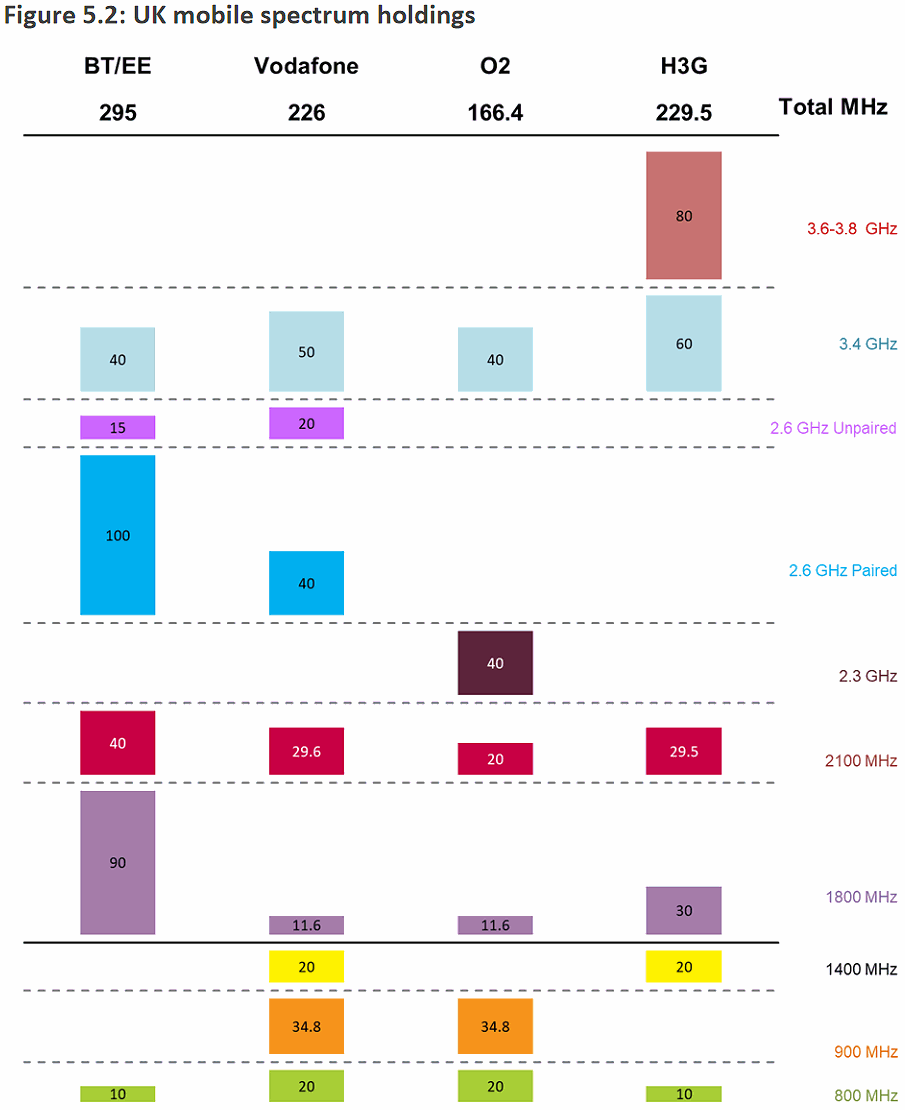
Assuming everything does proceed then Ofcom intends to auction off 80MHz of spectrum frequency in the 700MHz band and 120MHz of spectrum in 3.6-3.8GHz band. The combination of these two will increase the total amount of airwaves available for mobile in the UK by nearly a fifth (18%). A 37% (416MHz) cap will also be imposed to reflect the overall spectrum that any one mobile company can hold following the auction.
The cap effectively limits the spectrum that some operators can acquire in the award. In other words, BT will be limited to acquiring up to 120MHz, while Three UK can only acquire 185MHz, Vodafone may only grab 190MHz and no limits will be imposed upon O2 due to their current holdings.
The final outcome will ultimately depend upon who bids for what, but more spectrum tends to equal better mobile broadband speed and that’s going to be key for 5G. At present EE, Vodafone and O2 only have access to a 40MHz, 50MHz and 40MHz slice – respectively – of the 3.4GHz mobile band for their 5G services.
Advertisement
Meanwhile Three UK has 140MHz and that includes a 100MHz block of contiguous spectrum in the 3.4-3.8GHz bands (here), which is known to be the sweet spot for 5G. Rivals will also be trying to build a similar block but that will involve a secondary assignment stage of negotiation, following the main bidding war, which has made some operators uncomfortable.



Mark is a professional technology writer, IT consultant and computer engineer from Dorset (England), he also founded ISPreview in 1999 and enjoys analysing the latest telecoms and broadband developments. Find me on X (Twitter), Mastodon, Facebook, BlueSky, Threads.net and Linkedin.









« ISP Glide Brings Gigabit Broadband to Rainham in Essex UK UPDATE
















Comments are closed