Which do you prefer, a standalone broadband package or bundle?

Standalone (just the internet)
Bundle (net, phone, tv etc.)

Which service do you most desire to be bundled with a fixed line broadband connection?

Line Rental (Calls etc.)
Television
Mobile Phone (Service)
Mobile Broadband

More Polls | Past Polls Archive

Welcome

ISPreview.co.uk is an independent source of Internet Service Provider (ISP) information, ‘Listings’ and ‘Reviews’ since 1999; we also have a simple ‘Broadband Coverage Checker’ and those seeking to promote their products can ‘Advertise’. Readers looking for info. about website hosts should visit our sister site, Host-Review.co.uk.
   Latest Reader Reviews
ISP Name: XILODate: September 10th, 2010By: ChrisWilmshurstRating: xxxxxxxxx-
ISP Name: Eclipse InternetDate: September 9th, 2010By: jonnoRating: xxxxxxxxx-
ISP Name: Fast4Date: September 8th, 2010By: lwhitfield47Rating: xx--------
ISP Name: IDNetDate: September 8th, 2010By: itsJ2ORating: x---------
ISP Name: BTDate: September 5th, 2010By: dogsoldjahRating: xxx-------
ISP Complaints Advice
Info. and advice on the problems people often experience with ISPs and how to get them resolved.
Broadband Explained
Simplified descriptions of all the various broadband Internet access methods and how they work.
ISP Jargon and Acronyms
This section offers simplified descriptions of commonly used Internet access jargon (e.g. LLU).

News

News Categories: Fixed Line Broadband (1246) Satellite (93) Wi-Fi (170) Mobile Broadband (321) Video (118) Security (100) Statistics (253) Online Privacy (106) Piracy (192) Special Offers (188) Ofcom Regulation (15)
Top UK ISP News of the Past WEEK
Top UK ISP News of the Past MONTH
10 September, 2010 - 12:44 PM
bt openreach uk broadband telecom vanThe Office of the Telecommunications Adjudicator (OTA) and Ofcom have announced that, at the end of August 2010, the total number of unbundled ( LLU ) broadband ISP lines in the UK exceeded the significant milestone figure of 7 Million (7.03m)! Unbundled lines give rival ISPs, such as O2 , Sky Broadband and TalkTalk , the ability to manage and control their own services over BT's network and at a lower cost.

This means that unbundled broadband lines line account for one third of the market's 19 million broadband connections (70% are provided by companies other than BT). LLU lines are typically managed by BT's Openreach division, which is responsible for ensuring that all rival ISPs have equality of access to BT's local network.

august_2010_llu_uk_broadband_lines.gif

The move was spurred by Ofcom, which imposed legally-binding rules upon BT Group in September 2005 that forced them to make unbundled lines available and thus improve market competition. TalkTalk , Orange and Be Broadband were three of the first ISPs to take advantage, offering faster speeds and more flexibility at lower prices.

Today there are more than 30 different Communication Providers (CPs) offering unbundled services to homes and small businesses. The extra flexibility and competition has assisted in driving broadband take-up and lowering prices. In September 2005, 37% of UK households and small businesses had broadband; today the figure is over 71%.

Ofcom’s research shows that consumers were paying on average £23.30 a month (+VAT) for broadband at the end of 2005, a price that has since fallen to just £13.31 for the same service.

10 September, 2010 - 10:07 AM
ofcom ukRegulator Ofcom UK has confirmed plans to simplify the migration process between providers after its own research found that nearly half of consumers (45%) with a fixed line broadband ISP or phone provider felt that changing supplier would simply be too much trouble.

Ofcom noted that 39% of customers whom had switched broadband provider using the Migration Authorisation Code (MAC) process, which doesn't work for all ISPs (e.g. fully unbundled providers), felt it was too much hassle.
Broadband Migration Authorisation Code (MAC) Explained
http://www.ispreview.co.uk/new/complain/common_isp_complaints_migration.php#1
The research also shows that, of the consumers who have switched landline or broadband provider using the Notification of Transfer process (used by most landlines and some bundles of landline and broadband), just 22% thought it was too much hassle.

We have repeatedly called for Ofcom to address some of the remaining problems with broadband and phone migration, not least when migrating between fully unbundled LLU providers, which can sometimes result in downtime and significant additional costs.

In addition, the new generation of "super-fast" broadband services need to consider migration too. For example, customers whom adopt a fibre optic connection should be given a rout back to alternative platforms and must not feel trapped by risks of high costs and downtime. In some cases this could be difficult to achieve, but not impossible.

Thankfully Ofcom has finally agreed and today launched a new consultation of the issue, which will run until 19th November 2010. The regulator has proposed a process in which the customers new ISP would take the lead on switching the service (Gaining Provider Led (GPL)), albeit with new safeguards to protect "slamming" (fraud), where somebody is switched without consent.

The regulator correctly claims that improving migration could also lead to greater competition between providers and lower prices, since customers would no longer be fearful of the process. This is a good move, at least it will be if Ofcom can solve some of the technical as well as process hurdles involved.
Ofcom Migration Review
http://stakeholders.ofcom.org.uk/consultations/consumer-switching/

10 September, 2010 - 8:24 AM
uk project canvas surveyThe controversial Project Canvas (YouView), which claims to be developing an open standard for delivering subscription-free broadband ISP based internet TV ( IPTV ) services, has won more support from 40 consumer device manufacturers.

Canvas, which is already under pressure after Virgin Media lodged an official competition complaint with Ofcom last month (original news), will ultimately be delivered directly into homes via special £100-£200 PVR (Personal Video Recorder) style set-top-boxes.

Richard Halton, Director of Project Canvas, said:

"The response from industry has been phenomenal, and we’re really excited by the strong desire to work with Project Canvas to bring internet-enabled set-top-boxes and TVs into people’s homes next year. For us, this is a great endorsement of our open approach to working with industry partners.

Consumers need the assurance that they will get the best experience, whatever device they buy. This industry engagement programme will ensure that high standards of quality will be deep rooted throughout all of our supported products. We look forward to working with further manufacturers as we roll out more phases of this programme."

It's understood that Canvas will now evaluate the responses from consumer device manufacturers and select several, which will then be taken through to the next evaluation stage; most likely by the end of September 2010. Canvas has also released related technical documents on its web site, under the 'Industry and Technology' section.

Despite competition concerns, Project Canvas and its Joint Venture (JV) partners ( BBC, ITV, BT, Channel 4, TalkTalk, Arqiva and Five) are still pressing ahead with plans to become "incorporated this Summer". That doesn't give them long, autumn is about to begin.

Last week we reported on a new Opinium Research survey of over 1,500 adults in the UK, which found that only 35% believed Project Canvas is a good idea. Some 51% of those were waiting to see if it catches on before buying it and 19% said they were usually one of the first of their friends to buy new tech.

10 September, 2010 - 7:16 AM
ispa ukThe UK Internet Service Providers Association ( ISPA ), specifically its governing council, yesterday voted in four new heavy hitting members representing BT , Eclipse Internet , Everything Everywhere ( Orange , T-Mobile ) and O2 . The council itself is responsible for setting policies and is made up of ten people from the ISPA's 200 strong industry membership list, representing more than 95% of the UK Internet access market by volume.

The move is significant, not least because it is the first time that any of the aforementioned ISPs have had a place on the ISPA's council. In addition, most of the other council members represent smaller businesses and having some heavy weights behind the throne could be useful in giving the organisation more clout.

It goes without saying that UK ISPs are currently under mounting pressure, both in terms of adaption to new technologies and from a vast swathe of fresh government legislation (e.g. new internet copyright infringement laws, ecommerce directives and Network Neutrality policies). New rules and guidelines from the ASA and Ofcom UK are also playing a part.

Trefor Davies (blog), Chief Technology Officer at Timico UK and ISPA Council member, comments:

"That these large organisations are keen to participate in the running of the ISP industry Trade Association is a reflection of the amount of legislative activity going on surrounding the internet in the UK.

I’d go so far to say that government attempts to regulate the internet are currently at an unprecedented level – I guess as our daily lives move into the cloud this is not a surprise but should not be seen as inevitable."

It's good to see the ISPA getting a bit of extra weight, although there are some areas that could potentially cause contention, such as in regards to new fibre optic line taxation (the tax currently favours big operators over smaller ones); little and large don't always think alike.

9 September, 2010 - 2:22 PM
rutland telecom fttc walesFollowing news earlier this week that BT had quoted £550k to install broadband for just 80 homes in the rural UK village of Erbistock (Wrexham, Wales), a quote that was bested by small ISP rival Rutland Telecom (£50k), the operator has now found a cheaper solution for residents that will only cost them £100 a pop.

BT's original quote was, in fact, just one of several put forward by the operator and the company has since developed other potential solutions, although until now it hadn't said what they were or how much they'd cost.

The majority of local residents have been unable to receive a broadband service due to their homes being too far away from the nearest telephone exchange - Bangor-on-Dee. BT believes it has overcome this challenge by offering residents the option of transferring their line from the Bangor-on-Dee exchange to the closer exchange at Overton-on-Dee.

Olivia Garfield, BT Strategy Director, said:

"We have bent over backwards to find a broadband solution for Erbistock and have been exploring possible solutions for more than a year now. There have been considerable technical hurdles to overcome but we are pleased to say that we are now very close to delivering a broadband service to the community.

The proposed solution will deliver a stable copper broadband service to everyone in the village, and the open nature of our network means that local people will be able to enjoy a choice of broadband supplier and the great value deals that come with competition.

We take our responsibility to deliver broadband to as many homes in the UK as possible very seriously. We’re urging as many Erbistock residents as possible to take up the offer of moving their line to the Overton-on-Dee exchange so that they can start to enjoy the benefits of broadband."

BT claims that its solution should allow all 80 premises in the area to receive a stable copper broadband service, with speeds of between 1-4Mbps. Interested residents will still have to pay £100 to be swapped by their chosen broadband ISP, which must action the request, and will also lose their existing telephone number.

Small ISP Rutland Telecom (RT) UK, which quoted £50k for brining significantly faster FTTC broadband speeds of up to 40Mbps to the area, cried foul last week (here) and alleged that BT had shown no real interest in Erbistock until RT made an offer earlier this year. RT has historically been very critical of BT and caused them some regulatory problems, perhaps this is BT's attempt at karma.

9 September, 2010 - 12:52 PM
uk_fibre_optic_broadband_cable.jpgIt's a little known fact that even "super-fast" fibre optic broadband cables, especially those that run over very long distances (between countries), can suffer from performance loss due to unique forms of optical interference. Now scientists working at the University of Southampton's Optoelectronics Research Centre (ORC) have developed a practical solution that could result in significantly faster fibre optic networks.

The new data transmission system, which is being developed as part of the EU-funded FP7 PHASORS project, could potentially eliminate this problematic interference. The device essentially takes an incoming "noisy data signal" and restores its quality, improving both the capacity and energy efficiency of the optical communication network.

The Problem (Contains Jargon)

Transmission of data through optical networks is currently limited by ‘phase noise’ from optical amplifiers and ‘cross talk’ induced by interaction of the signal with the many other signals (each at a different wavelength) simultaneously circulating through the network. ‘Phase noise’ is the rapid, short-term, random fluctuations in the phase of a signal, which affects the quality of the information sent and results in data transmission errors. ‘Cross talk’ refers to any signal unintentionally affecting another signal.

Reducing the build up of phase noise and also any amplitude noise might not seem important to most people, although improving the capacity of existing cross-border fibre optic cables (e.g. undersea cables) might help to make bandwidth cheaper. It's conceivable that such a benefit could also filter down to broadband ISPs and subscribers.

phasors.gif

Indeed it is the very introduction of bandwidth-hungry video applications, such as popular web-based services like YouTube, and the continued growth of the internet in general that has triggered this hunt for more efficient data signalling formats.

ORC Deputy Director and PHASORS Director, Professor David Richardson, said:

"Our regenerator can clean noise from incoming data signals and should allow for systems of extended physical length and capacity. In order to achieve this result, a major goal of the PHASORS project, has required significant advances in both optical fibre and semiconductor laser technology across the consortium.

We believe this device and associated component technology will have significant applications across a range of disciplines beyond telecommunications – including optical sensing, metrology, as well as many other basic test and measurement applications in science and engineering."

At present the device has already been tested using the fastest commercial electronics, which can push data at rates of up to 40Gbps (Gigabits per second). However the novel solution could be used with networks that go much faster.

9 September, 2010 - 9:35 AM
norton_2010_cybercrime_behaviour.gifA new Norton Cybercrime Report - The Human Impact - has revealed that Copyright Holders (Rights Holders) face an uphill struggle with convincing people to stop using their broadband ISP connections for "illegal" file sharing (p2p) activity. Nearly half of respondents felt it "legal" to download a single music track, album or movie without paying (17%, 14%, and 15% respectively).

Norton's Marian Merritt said:

"The anonymous online world we live in enables many of us to engage in activities that would be clearly illegal if done in the physical world. So while we’re besieged by online cybercrime, we often engage in forms of online theft, misrepresentation, defacement and simple lying without recognizing our own hypocrisy."

The study continues on to claim that, despite these "shaky ethics and questionable behaviour", only a fifth of adults (22%) say they have online regrets. In addition, across all of the countries involved, a third have used a fake online identity and 45% lie about personal details (age, sex, income, etc.); although this could be to protect personal privacy.

However, people in the UK are relatively squeaky clean, with only 18% using a false online ID or 33% lying about personal details.

Report contributor, Joseph LaBrie PhD, comments:

"We’ve become accustomed to getting so much of what we need off the Internet for free. So it’s difficult to train people to think about paying for something in this otherwise free place. They don’t regard it in the same way as regular commerce. The psychology around the Internet is that if it’s out there, it’s fair game."

Some 7,000 adults in 14 countries around the world participated in Norton's study, which also found that 65% have been a victim of cybercrime.

9 September, 2010 - 8:52 AM
fttc cabinetThe national Civic Voice campaign group, which aims to make places in the UK more attractive, enjoyable and distinctive by having ugly signs and objects (e.g. road signs and bollards) removed, has turned its attention to the new generation of "super-fast" 40Mb fibre optic ( FTTC ) based broadband services being rolled out in St Albans and elsewhere around the country.

The situation is similar to one that we first covered during March of this year, when BT engineers trying to install an FTTC cabinet in St Albans (The Ridgeway) were thwarted after angry residents blocked them from completing its construction (original news).

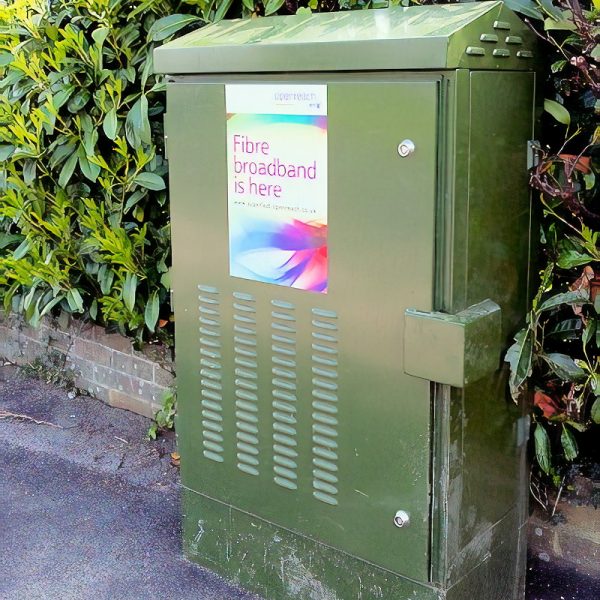
In fact BT's large new 1.8m tall, dark green, FTTC junction boxes (street cabinets) have been slated on numerous occasions in other areas too, with people accusing them of being "unsightly" and causing an obstruction. Residents in Muswell Hill, North London (here) and Brighton and Hove / Middlewich (here) have in the past raised almost identical concerns.

Now Vanessa Gregory of Chiswell Green (St Albans) has teamed up with other members of Civic Voice to take on BT Openreach as part of a national campaign to control the operators proliferation of "super-fast" FTTC broadband boxes around the country.

Ms Gregory told the St Albans Review newspaper:

"We are not against broadband - I know it is vitally important for many businesses and very useful for people. But the boxes are huge ugly things and a blight on the street scene.

The nation needs broadband but it does not have to be at the expense of the street environment. BT Openreach and other broadband infrastructure have responsibilities to the millions of people whose local environment is affected as well as to broadband customers."

Ms Gregory and members of Civic Voice are expected to meet with BT Openreach on 22nd September, where they hope to force BT into being more flexible with FTTC cabinet design and colours (pink and purple, anybody? laugh). They will also encourage BT to develop "alternative technologies", allowing the removal of street cabinets once redundant.

In fairness BT are guilty of, at times, failing to inform local authorities and councils about the exact locations of their new cabinets. Likewise some of BT's rivals have found ways of hiding the cabinets underground, raising them only when necessary, which is something that BT itself could consider.

Some 77,000 homes and businesses in Hoddesdon, Waltham Cross, St Albans, Lea Valley and Watford (Hertfordshire towns) are now able to get BT's super-fast broadband service, which aims to reach 66% of UK premises by 2015. We would be happy to have an "ugly" FTTC cabinet on our street, as would many others, if it meant getting a decent broadband speed. Credits to Thinkbroadband for spotting the news.

9 September, 2010 - 8:21 AM
statisticsSeveral new surveys today have revealed that British people continue to value their broadband ISP connection above almost everything else. A Sky News study of 1,000 people found that, in the harsh economic climate, the last thing somebody would do to save money is give up a pet or their broadband subscription; most would rather cut back on food than lose their internet access.

Research Analyst, Michael Garland, told Sky News:

"Many Sky News Panel respondents indicated increasing concern over the impact that the current economic climate is having on their financial situation. Uncertainty surrounding job security, combined with rising costs for commodities such as food and drink, petrol, and electricity and gas have led to money worries for many, with some reporting increased insomnia, moodiness and even ill health as a result."

A separate study from Clydesdale and Yorkshire Bank agreed, finding that 93% of us would only give up broadband as a last resort. Broadband was also rated as one of the most important "must haves", above cable / satellite TV and holidays in the UK.

Steve Fletcher, Head of Retail Banking at the Yorkshire Bank, said:

"Broadband internet access has clearly become a priority for those homes that have it. The increasing use of broadband for our entertainment - downloading music, viewing film and TV and linking to games consoles, shows a shift in lifestyles generally but is also a possible reflection of cuts in spending on entertainment away from the home."

The two survey results are no longer surprising and have been supported by plenty of other recent research, all of which show that high-speed internet access is now a vital service. Certainly we all love our TV's and iPod's but for most the idea of living without broadband is now almost impossible to conceive. Social networking services, such as Facebook, have had a big part to play in that.

9 September, 2010 - 7:59 AM
o2 uk broadband logoEarlier this week UK ISP O2 officially re-launched its fixed line broadband packages under new names, 'The Basics', 'The All Rounder' and 'The Works', while also doing away with its old "unlimited downloads" slogan and replacing it with a tighter Fair Usage Policy (full details). Today we learn that O2 has also imposed a much stricter Traffic Management policy, which strangles P2P and video streaming ( e.g. BBC iPlayer ) services. In some cases this will reduce customer speeds to the barely usable level of just 50Kbps (0.05Mb).

The harshest restrictions will naturally occur during the busiest times of day (typically the afternoon and evening), when O2 shape Peer to Peer (P2P - file sharing) traffic to a maximum throughput of just 50kbps.
o2 uk 2010 broadband traffic management

Customers of O2's other BT-based fixed line broadband package (O2 Access) have of course been subjected to similar restrictions for some time now, although unbundled ( LLU ) users have previously been able to avoid such tight limits.

In fairness, O2 has at least been open by publishing its restrictions (further details), while many other ISPs still prefer to keep them under wraps or behind vague lines of FUP text. Never the less this will be viewed as quite disturbing by some, especially given that the new packages already have soft FUP usage allowances (i.e. The Basics (20GB), The All Rounder (100GB) and The Works(250GB)).

However those who might be thinking about switching ISP would do well to hold tight. New Ofcom and ASA rules are due to surface soon that could force a lot more providers to be open about any restrictions they impose, although we do say "could".

One interesting point to make about Traffic Management is that, at some extremes, it could conflict with the government's promise to make a minimum download speed of 2Mb available to everybody in the country by 2015. Sadly though, the USC is not a legal "obligation". Credits to Thinkbroadband for spotting O2's change.

One final point to make, O2's new restrictions are not clearly visible or linked to from the related package detail pages. Testament to this is the fact that it took several days before the changes were even spotted and we did do some extensive hunting.

8 September, 2010 - 1:03 PM
bbc iplayer v3 ukA network optimisation specialist, Blue Coat Systems, has warned that the latest BBC iPlayer V3 update, which launched earlier this week and added lots of new social networking style features to the UK internet TV streaming service, could make office networks "unworkable".

The latest iPlayer now offers the ability to automatically download future episodes of TV Series. Blue Coat claims that anyone who uses a work PC for iPlayer and marks a series as a "favourite" will now automatically download all new episodes (possibly at 1.5GigaBytes per hour if in HD or 630MB if non). This could easily help to soak up an organisation's bandwidth.

Nigel Hawthorn, VP of EMEA Marketing at Blue Coat, told ISPreview.co.uk:

"iPlayer demands are continuing to grow. The latest iPlayer statistics showed 130 million requests for programs in May 2010 and increase of 60% over May 2009, increases in the total number of users and the frequency that iPlayer is used for live viewing more than tripled from last July.

With the launch of the BBC iPlayer V3 this week, comes a number of new features that should cause all Network Managers to re-evaluate their network capacity, infrastructure and policies to ensure that iPlayer content doesn’t impact other business-critical content being sent across their network. From a network manager’s viewpoint, iPlayer V3 potentially adds significant new demands to their network infrastructure.

BBC iPlayer is making the unmissable, unmissable, but network managers need to make sure that their users don’t make the network, unworkable."

The recent 2010 World Cup event, which was held in South Africa, illustrated that UK broadband ISPs and office networks were generally able to cope with the added load. However some matches did push a number of internet providers closer to the limit of what they could handle.

It remains to be seen whether the new iPlayer features will have a negative impact. In addition the new service upgrades don't just impact office workers but consumer broadband connections too. It will be interesting to see whether, over the coming months, UK ISPs notice a sharper uptick in usage from the BBC's service.

8 September, 2010 - 12:26 PM
uk 3g mobile broadbandOfcom has approved a request by all five of the UK's primary mobile operators ( Vodafone , O2 , Orange , T-Mobile and Three (3) ) to increase the maximum in-band power limit for 3G mobile spectrum licences from 62dBm per carrier to 65dBm. The move could improve voice capacity, Mobile Broadband internet data throughput and in-building signal availability.

The increase, which will also apply to future 2GHz MSS/CGC licences (used by the ground-based component of mobile Satellite services), would only affect base transmit power in the Frequency Division Duplex (FDD) portion of the 3G spectrum.

Ofcom claims that in practice this will have no adverse effect on the operation of services in adjacent spectrum bands. Indeed it had sought to push the figure even higher, to 68dBm, although most mobile operators rejected this because they had only planned for a rise to 65dBm.

It is necessary to point out that Ofcom's decision does not affect all future 3G and 4G allocations, such as for 900MHz and 1800MHz, which will be subject to separate considerations.

Previous News Stories
10 September, 2010
12:44 PM - UK Unbundled LLU Broadband ISP Lines Pass the 7 Million Milestone - (0)
10:07 AM - Ofcom Opens UK Consultation to Improve Broadband ISP and Phone Switching - (0)
8:24 AM - UK Project Canvas Open Broadband TV Standard Gains Significant Support - (0)
7:16 AM - Major Broadband ISPs Join UK Internet Service Providers Association Council - (0)
9 September, 2010
2:22 PM - BT Undercut Small UK ISP Rutland Telecom to Broadband Enable Erbistock - (6)
12:52 PM - Global Broadband Capacity Boosted by New UK Fibre Optic Technology - (0)
9:35 AM - Norton Study Reveals People View Internet Copyright File Sharing as Legal - (1)
8:52 AM - UK Civic Voice Campaign Targets Ugly BT FTTC 40Mb Broadband Street Cabinets - (4)
8:21 AM - Survey Claims UK People See Broadband as More Important Than Food - (1)
7:59 AM - O2 UK Broadband Traffic Management Policy Clamps Down on P2P and Video - (3)
8 September, 2010
1:03 PM - Latest UK BBC iPlayer Update to Make Office Broadband Networks Unworkable - (1)
12:26 PM - Ofcom Grants UK 3G Mobile Broadband Power Increase to Boost Performance - (0)
8:58 AM - UK Map Reveals Homes Capable of Streaming HD Video Over Broadband ISPs - (1)
7 September, 2010
2:26 PM - ACTA Draft Removes Clause Forcing ISPs to Become Copyright Police - (0)
1:51 PM - Trouble for UK ISP TalkTalk as ICO Criticises Website URL Snooping System - (1)
10:45 AM - ISP Virgin Media UK Offer 9 Month Contracts On Student Broadband Services - (2)
8:59 AM - Sky Broadband UK Throws FREE Sky HD Box into its Bundle with TV and Calls - (1)
8:11 AM - Ofcom Responds to UK ISP Copyright Infringement Consultation Delays - (1)
7:25 AM - UK East Midlands Trains Gain Wireless Broadband WiFi Internet Access - (0)
6 September, 2010
1:27 PM - ISP BT Offers Free UK Wi-Fi Hotspot Roaming App to Mobile Phone Users - (0)
12:16 PM - ISP O2 UK Details New Home Broadband and Phone Package Prices - (3)
7:07 AM - Orange UK Prepares to Launch New Fixed Line Broadband ISP Packages - (2)
1:06 AM - ISP AOL UK Raises Broadband and Phone Service Prices - (0)
4 September, 2010
6:41 PM - UPDATE BT Quote Erbistock UK Village GBP 550k for Broadband Upgrade to 80 Homes - (4)
4:52 AM - Weak Consumer Support for UK Open Broadband TV Standard Project Canvas - (0)
1:35 AM - KC Supports Move by Virgin Media to Publish Real UK Broadband ISP Speeds - (9)
3 September, 2010
1:10 PM - BT Gives UK ISPs Power to Nominate Exchanges for Fibre Optic Broadband Upgrades - (0)
9:10 AM - UK ISP ADSL24 Launch 40Mb Fibre Optic Based FTTC Broadband Packages - (0)
8:45 AM - Lord Carter Slams 2Mb UK Broadband Delay and Axing of the 50p Phone Tax - (2)
7:44 AM - ITU and UN Seek Cheaper Universal Broadband in Developing Countries - (0)
12:01 AM - UPDATE O2 UK Attacks ISP Speeds and Reveal New Broadband and Phone Deals - (3)
2 September, 2010
2:58 PM - UK Business ISP Easynet Global and BSkyB Complete Sale to Private Equity LDC - (1)
2:40 PM - Orange UK Joins 3 and T-Mobile in 3G Mobile Broadband Network Share - (1)
1:02 PM - Virgin Media UK Provides Broadband ISP Speed Clarity to Customers - (3)
7:16 AM - UK Consumer Panel Urges Gov to Get Tough on Misleading Broadband ISP Speeds - (1)

Copyright © 1999 to Present - ISPreview.co.uk - All Rights Reserved (Terms, Privacy Policy, Links (.), Live Chat & Website Rules).